Cowpeas and Food Insecurity in West Africa
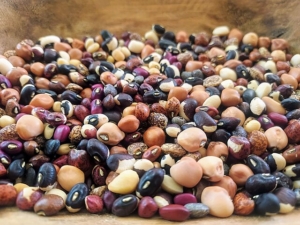 African farmers and consumers alike rely on a food you might never have heard of: cowpea. You may know it by one of its many other names, such as the Black-Eyed Pea, the Field Pea, the Southern Pea, the Catjang or the Yardlong Bean. Regardless of what it’s called, it’s a truly remarkable food that is helping to reduce food insecurity in West Africa
Its significance is vital when examining poverty and food insecurity in Nigeria. This country is crucial to understanding cowpea’s importance, as Nigeria alone produces 45-58% of all cowpeas worldwide. That’s about 3.6 million tons every year.
Cowpea
Cowpea is a grain legume, similar to pinto beans, chickpeas and regular green peas. It’s often dried and is a staple food in many rural recipes across sub-Saharan Africa. It is incredibly rich in protein (25%) and carbohydrates (53%) and very low in fats (2%).
It has many vitamins and minerals. Even the stalks and flowers are edible and the plant can be used in fields for grazing animals to forage and can be turned into hay for long-term feeding. It has an extensive root system that helps prevent erosion and it also grows well as ground cover under trees.
It’s also very important for the health of the soil for planting other crops, as its roots harbor nodules that soil bacteria use to fix nitrogen for the plant and, subsequently, for the soil. Most importantly, the crop helps prevent millions of people from going hungry each year. It grows easily in the tall grasses of northern Nigeria’s savannas, making it cheaper and more accessible for nearby communities.
Because it matures quickly, reaching full maturity in about 55-70 days, it provides a fast and reliable source of much-needed protein. Studies also show that cowpeas grown in West Africa have played a major role in reducing food insecurity and chronic malnutrition among women and children in countries such as Burkina Faso.
Challenges
The main drawback of cowpea is its short shelf life. Many farmers lack adequate storage facilities, which reduces the market value and nutritional quality of both seeds and leaves. Another challenge is limited access to the best farming practices.
Some farmers do not know the most effective ways to plant and harvest cowpeas, which lowers yields without them knowing it.
FarmSahel works with rural women farmers in Burkina Faso by providing equipment and training to help increase crop yields. The organization supplies pesticides and sprayers, as well as tools for drying and long-term storage of cowpeas. The most valuable support was the one ton of dried cowpeas.
These were ready for planting and were also used to demonstrate proper packaging techniques to keep crops fresh. The women also received training on harvesting cowpeas more effectively to improve yields.
– Eddie Hofmann
Eddie is based in Seattle, WA, USA and focuses on Technology and Global Health for The Borgen Project.
Photo: Wikimedia Commons
