Addressing Hunger in the Democratic Republic of Congo
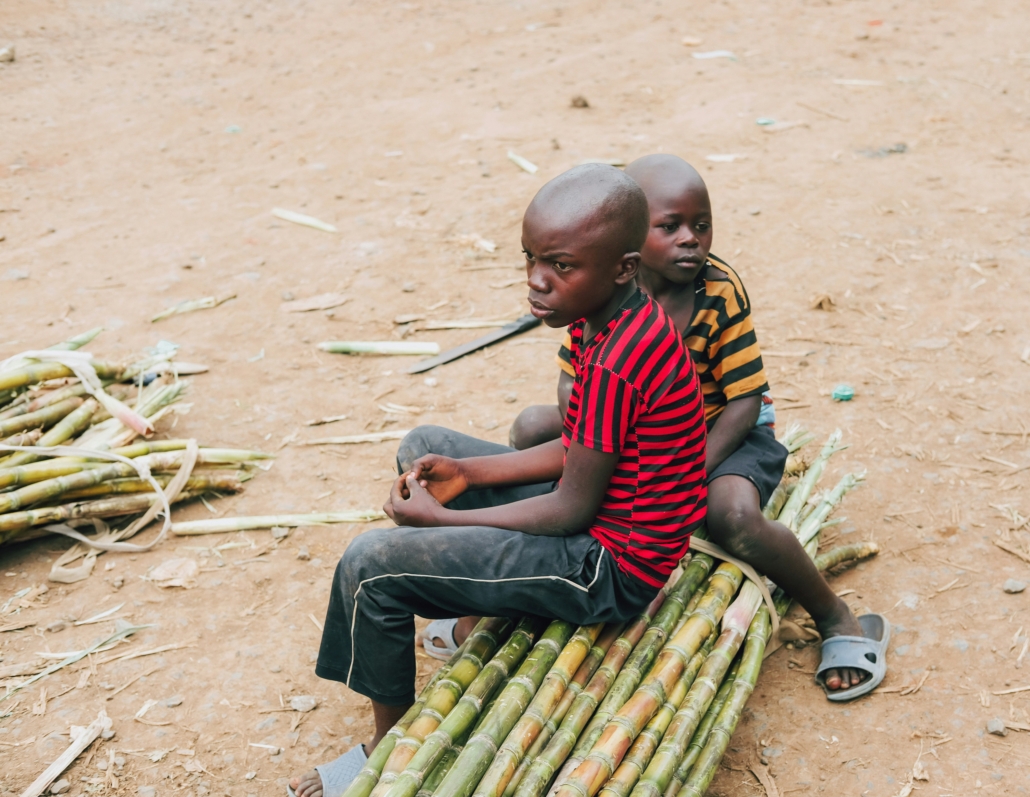 Repercussions of the ongoing conflict in the Democratic Republic of Congo (DRC) have reached critical levels. The World Food Programme (WFP) estimates that for nearly 27 million Congolese, access to food has become urgently restricted.
The most recent violence in the eastern region reignited in early 2025, by the M23 rebel group, has roots in the 1994 Rwandan genocide. History between the DRC and Rwanda is long and fraught, punctuated with political violence, rebel insurgence and ethnic genocides. Alongside terrifying figures of M23’s ongoing civilian executions, equally concerning are the statistics that track hunger and poverty in the region, both of which are now rising. Research that the United Nations Human Rights Commissioner (UNHCR) conducted determined that war and conflict in developing regions has direct repercussions for rates of famine and further entrenching poverty. Here is more information about hunger in the Democratic Republic of Congo.
About Hunger in the Democratic Republic of Congo
The DRC currently ranks 121st of 123 in the Global Hunger Index, with more than a third of the population experiencing hunger directly related to undernourishment, stunted growth and child mortality. The World Food Programme deems food insecurity as acute and a threat to life and livelihood. Rates had fallen between 2008 and 2016, but have since increased and continue to rise compared to other countries in the region, which have either maintained or improved on previous years’ data.
More than 6 million Congolese are currently displaced within the country’s borders, meaning they have had to flee their homes due to violence and food insecurity. Integrated Food Security Phase Classification (IPC) mapping shows that the situation in 10 separate regions of the DRC has reached critical levels. The north and south-eastern corners of the country are only a few percentage points away from famine. The U.K. National Institute for Health (NIH) says that hunger in developing nations and displacement are directly linked because pre-existing access to food becomes more restricted and increased pressure on food in host regions causes inadequate resource distribution.
At the end of 2025, the Red Cross estimated that hunger levels for as many as 14 million children were critical, and for a further two million, levels were at an emergency status. Hunger in children is among the more dangerous chronic illnesses with potentially life-long repercussions ranging from stunted growth in infancy and childhood to delayed developmental achievement. Data from the NIH suggests that moderately malnourished children may have upper-arm circumferences no larger than that of a small apple whereas those with acute malnutrition can have even smaller upper-arm circumferences. With an additional three months of conflict and displacement, millions more children could be facing “acute malnutrition and a heightened risk of hunger-related death.”
The Impact of Conflict and Weather Changes
Conflict has a disproportionate impact on women and children, for whom consequences are often systemically-entrenched and abiding. According to the UN, social and political decision-making in the region, which has restricted two-thirds of Congolese women from accessing prenatal and postnatal care and vaccinations, compounds such violence. As a result in February 2025, the Women’s International Peace Centre projected that close to four million Congolese women and children would suffer violations of their human rights for as long as peace remains unchartered.
Recent weather events in the region have also impacted reliable access to food for Congolese people. Specifically, conflict in the otherwise arable region of the north-east corner of the DRC have compounded oscillating drought and flooding, creating food insecurity for millions which will likely grow with weather developments. The Norwegian Institute of International Affairs published data in 2023 which confirmed that the pre-existing impact of temperature rises, insufficient preparedness to deal with volatile weather patterns and the pressures of internal displacement had collapsed the agricultural capabilities of the DRC, leaving its citizens hungrier than since records began in the 1990s.
Actions Addressing Hunger in the Democratic Republic of Congo
Congolese government officials and M23 representatives signed a treaty to work towards peace near the Rwandan and Burundi borders in November 2025 in Qatar. The purpose of the Doha Agreement was to establish guidelines for ceasefire commitments, political dialogue and allow humanitarian access under international observation. While the situation in the DRC remains volatile and M23 have yet to meet the agreements in the treaty, one can find some hope in the presence of such multilateral structures that the U.S., French and Qatari governments, as well as the African Union, employs.
Further to ongoing written resolutions, the UN Security Council announced at the end of December 2025 that it would extend its peacekeeping presence in eastern DRC until at least the end of 2026, in what is the third such mission to the DRC in more than 60 years. This includes intervention from the specially trained ‘Force Intervention Brigade’ which specializes in military stabilization. Also, in 2025, the UN Development Program revealed a five-year project to provide institutional and infrastructure support to communities in the DRC’s hungriest regions, undertaken in accordance with five of the UN’s Sustainable Development Goals (SDGs).
Entering their seventh year of presence in the eastern region and 32nd in the DRC, Médecins du Monde have been providing urgent health care interventions to those who conflict and its consequences impacted. This intervention has included more than 11,000 sexual health lessons, food aid to treat malnutrition, especially for children and infants, as well as monitoring widespread measles, cholera and mpox epidemics with the refurbishment of four health care centers in the region.
Hosting more than 500,000 volunteers across the DRC, in 2026, the Red Cross announced that societies from several European countries would use a combined €8 million in pledged funding to prioritize climate recovery and disaster relief. In 2025 alone, the Red Cross delivered food, shelter and clean water aid to 475,000 people in the DRC, showing that such efforts can substantially alleviate suffering, particularly among vulnerable populations if implemented consistently and at scale.
Looking Ahead
The NGO Explorer database suggests that as of February 2026, 229 of the 600 U.K.-based humanitarian groups active in the region are explicitly dedicated to combatting hunger in the DRC, more than any other mission. Humanitarian intervention is a lucrative source of change in developing countries because they allow for swift, apolitical and targeted action following crises and disasters in order to promote human rights across the globe. With sustained humanitarian access and coordinated intervention, it is possible that the DRC could make significant progress, provided political and armed actors allow for stability and unimpeded aid delivery to those most in need.
– Hannah Michie
Hannah is based in France and focuses on Good News and Politics for The Borgen Project.
Photo: Unsplash
