How AI Crop Monitoring in India Is Improving Food Security
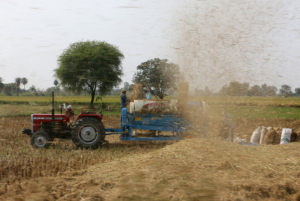 For generations, farming in India has relied on experience, careful timing and more than a bit of luck. Farmers read the sky for signs of rain, test the soil with their hands and wait, hoping the monsoon comes when it should. Today, that way of farming is becoming harder to depend on.
Climate instability is making weather more unpredictable, water shortages are becoming more common and pests are spreading into new regions. In a country where about 54.6% of the workforce depends on agriculture and related industries, these changes affect far more than just farmers. They shape the nation’s food supply and economic stability.
Agriculture in India
For millions of families, farming is their main source of income. Around 42% of India’s population relies on agriculture for employment. Most farmers work on very small plots of land, with 85% owning less than two hectares.
When crops fail, the consequences are immediate and profound. One failed harvest can trap families in debt, pull kids out of school to help at home and leave entire communities struggling to find enough food. This is where AI crop monitoring in India is beginning to make a real difference.
By using satellite images, local weather data and simple smartphone tools, AI helps farmers see problems coming before it is too late. Instead of reacting after crops are already damaged, farmers can take action early and protect their livelihoods.
How AI Crop Monitoring Helps Farmers Stay One Step Ahead
In the past, farmers judged crop health by walking through their fields and looking for visible signs of diseases. By the time leaves turned yellow or pests became noticeable, much of the damage had already been done. AI tools now analyze satellite images, soil conditions and weather patterns to catch early warning signs that people might miss.
The World Bank explains that digital agriculture enables farmers to adopt a precision-based approach, using water, fertilizer and pesticides only where and when needed. This saves money and reduces environmental harm. Instead of spraying chemicals across entire fields, farmers can treat only the areas that actually need attention.
This matters in India because agriculture accounts for nearly 80% of the country’s freshwater use. As droughts become more frequent, wasting water can mean the difference between a stable harvest and total crop failure. AI crop monitoring helps farmers use limited water more wisely, which makes their farms more resilient in tough seasons.
Real Farmers, Real Results
The impact of AI crop monitoring in India is already showing up in real communities. In Telangana, the state government worked with Microsoft and the International Crops Research Institute for the Semi-Arid Tropics to create an AI-based sowing advisory system. More than 3,000 farmers across several districts received text messages with the best times to plant, based on weather forecasts and soil conditions.
This led to yield increases of 10-30% without farmers needing to buy new equipment. Private agri-tech companies are also helping farmers. An Indian startup called Cropin uses satellite imagery and predictive analytics to provide farmers with real-time updates on crop health and early warnings of droughts and disease outbreaks.
This gives farmers time to prepare instead of feeling helpless when something goes wrong.
Why AI Crop Monitoring Matters for Food Security
AI crop monitoring in India is spreading because farmers can easily use it in their daily routines. Many tools are available through simple smartphone apps in local languages such as Hindi, Telugu and Kannada, so farmers do not need specialized training to benefit from them. The Food and Agriculture Organization (FAO) explains that AI helps close the information gap for small farmers by giving them access to tools that were once available only to large commercial farms.
When more farmers can protect their crops, the benefits reach far beyond individual families. More stable harvests help keep food supplies steady nationwide and reduce sudden price spikes in foods like rice, wheat and onions. These spikes hit low-income families the hardest.
AI crop monitoring in India is not just changing how farms operate; it is helping build a more stable food system for everyone. Technology alone will not solve every problem in agriculture. However, AI crop monitoring in India gives farmers something they have rarely had before: clear, real-time information they can actually use.
By helping farmers make smarter decisions, protect their land and increase their yields, AI is becoming an important tool for strengthening food security and protecting livelihoods across the country.
– Dylan Chandran
Dylan is based in Danville, CA, USA and focuses on Business and Good News for The Borgen Project.
Photo: Flickr
