€1.9 Billion: European Commission’s Humanitarian Aid Budget
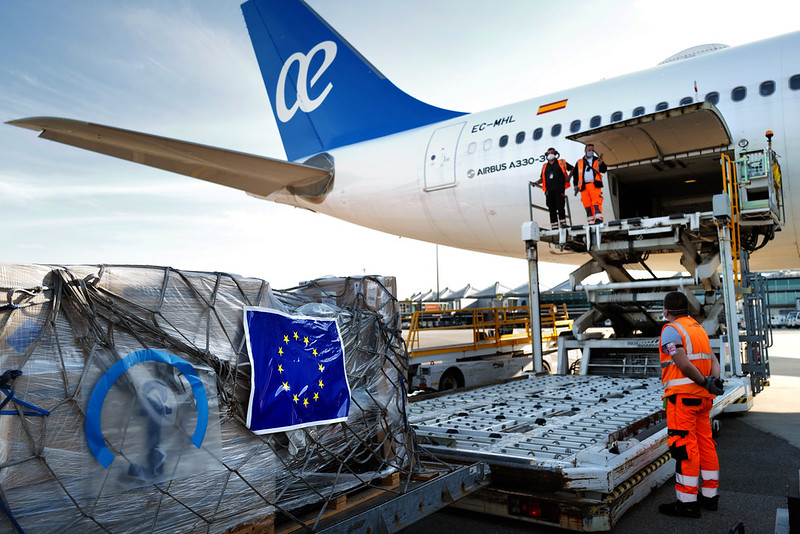 The European Commission has announced its €1.9 billion humanitarian aid budget for 2026. With 239 million people in need worldwide and major donors drawing back their support, this budget marks the EU’s sustained commitment to humanitarian assistance. Holding firm in its position as the world’s leading aid donor, the EU delivers life-saving assistance in its efforts to provide emergency food, shelter, and healthcare to those in need. This article first explains the structure of the EU’s humanitarian budget, then breaks down where the European Commission’s €1.9 billion in humanitarian aid will be allocated and the types of life-saving assistance it supports, and finally situates the commitment within the broader context of the EU’s leadership as a global humanitarian donor.
How the European Commission’s Humanitarian Aid Budget Works
The European Civil Protection and Humanitarian Aid Operations (ECHO) distributes and manages the EU’s annual Humanitarian Aid Budget. However, more broadly speaking, the budget falls within the EU’s 2021-2027 Multi-Annual Financial Framework (MFF). The 2021-2027 MFF allocates approximately €1.65 billion annually toward humanitarian assistance, amounting to a total of €11.57 billion for the six years. To reach a specific figure, the EU budgeting authority presents drafts informed by the status of global humanitarian need before their eventual adoption by the European Council and European Parliament.
In addition to the initial budget, the EU Solidarity and Emergency Aid Reserve can be called upon in instances of unforeseen crises in order to finance humanitarian emergency response, civilian crisis management and protection operations. The scale of the EU’s humanitarian commitment is matched by the breadth of its delivery network, with more than 200 organizations responsible for translating funding into action.
What does the funding support?
The EU’s humanitarian assistance partners implement EU-funded programs that prioritize life-saving assistance for vulnerable populations. These programmes represent an ethos of “principled aid that reaches people in need, wherever they are,” operating on needs-based objectives. The assistance provided takes many forms, ranging from supplies such as medicine, shelters, or water-purification units to specialised response teams, including firefighters or search and rescue personnel. To activate a humanitarian response, any country may alert the EU’s Civil Protection Mechanism, which serves as a single point of contact for EU countries and participating states to coordinate assistance. The EU activated the mechanism 64 times in 2025, responding to the conflict in the Middle East, the war in Ukraine and many other situations of emergency. With this in mind, central to the EU’s humanitarian response is the strategic prioritisation of funds, determining where limited resources can have the greatest impact.
Regional Allocation
When broken down by region, the €1.9 billion allocation prioritises areas experiencing protracted armed conflict, food insecurity, and weather-related shocks.
- €557 million for West and Central Africa, the Sahel, the Lake Chad Basin, North-West Nigeria, Central and Southern Africa, the Great Lakes region and the Greater Horn of Africa, reflecting the scale of protracted conflict, displacement and climate-driven food insecurity across the continent.
- €448 million for the Middle East, with a particular focus on Gaza following last year’s fragile ceasefire, as well as continued humanitarian needs in Iraq, Yemen, Syria and Lebanon.
- €145 million for addressing humanitarian needs in Ukraine as Russia’s invasion enters its fourth year, alongside an additional €8 million to support humanitarian operations in Moldova.
- €126 million for Afghanistan, Pakistan and Iran, where overlapping crises continue to drive acute humanitarian needs.
- €95 million for Central and South America and the Caribbean, a region affected by complex emergencies linked to armed violence, political instability, deep inequalities and environmental pressures.
- €73 million for Southeast Asia and the Pacific, with particular emphasis on the humanitarian crisis in Myanmar and its cross-border impact in Bangladesh.
- €14.6 million for North Africa, where persistent political, economic and social challenges continue to generate humanitarian needs.
- €415 million for responding to sudden-onset global emergencies as well as maintaining a strategic supply chain.
The EU’s Global Role in Humanitarian Assistance
The EU’s humanitarian engagement extends beyond annual budget commitments, reflecting a long-standing role in coordinating international responses to crises. Through its partnerships with international organisations, non-governmental organisations and specialised agencies, the EU supports humanitarian operations in more than 110 countries. As pressures on the global humanitarian system intensify and funding gaps widen, this sustained engagement positions the EU as a key actor in maintaining predictable, needs-based assistance. Efforts to mobilise additional resources, including engagement with private-sector actors, further reinforce the EU’s approach to sharing responsibility for addressing humanitarian crises.
The European Commission’s €1.9 billion humanitarian aid budget for 2026 underscores the importance of structured, targeted and cooperative approaches to humanitarian assistance. By directing resources toward regions facing the most acute needs and preserving flexibility for emerging crises, the EU aims to maximise the impact of limited funding. In a global context marked by growing humanitarian demand, continued leadership and international cooperation remain essential to preventing further deterioration in conditions for vulnerable populations.
– Andrew Geddes
Andrew is based in Edinburgh, Scotland and focuses on Politics for The Borgen Project.
Photo: Flickr
