From Scholar to Baker: Gaza’s Education System
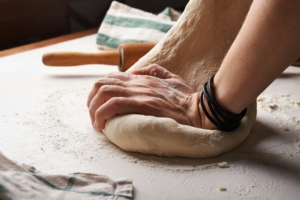 Years of war and restricted access to humanitarian aid have disrupted food systems and education across the Gaza Strip, forcing residents to rely on informal survival strategies as basic services collapse. As bakeries shut down and supply routes falter, families increasingly depend on community-level solutions. One such effort comes from Bader Slaih, a Palestinian academic who now bakes bread to help feed his family and neighbors.
Gaza’s Education System Disrupted by Conflict
Before the current war, Bader Slaih earned master’s and doctoral degrees in education while studying in Egypt. He returned to Gaza, intending to teach at local universities, according to an Al Jazeera report published in January 2026. Fighting interrupted those plans.
Airstrikes and ground operations forced Slaih and his family to flee their home in the Bureij refugee camp multiple times, the report said. The destruction of Gaza’s education system has been extensive. According to Save the Children, nearly 90% of school buildings in Gaza have sustained damage, leaving hundreds of thousands of children without access to formal education.
UNICEF also reported that all universities in Gaza suffered damage during the conflict, halting higher education for students and faculty. Despite these conditions, Slaih has continued to express a commitment to education. He told Al Jazeera that he intends to teach whenever possible, even in informal or temporary learning spaces.
Turning to Bread for Survival
As food supplies declined, Slaih and his relatives built a small brick oven using salvaged materials to bake bread for their children and nearby families, Al Jazeera reported. Food insecurity across Gaza has intensified as fuel shortages and access restrictions disrupt production and distribution. The United Nations Office for the Coordination of Humanitarian Affairs (OCHA) reported repeated interruptions to food supply routes throughout 2025.
During periods when flour and cooking gas ran out, all subsidized bakeries in Gaza closed temporarily, OCHA reported. The World Food Program (WFP) previously supported dozens of bakeries producing hundreds of thousands of loaves daily. However, those operations depended on consistent fuel deliveries, according to U.N. humanitarian updates.
As bakery closures increased, families turned to community kitchens and shared ovens. OCHA reported that community kitchens provided close to one million cooked meals per day during periods of severe aid disruption. Slaih’s oven became part of that informal food network, supplying bread when commercial options disappeared.
Feeding the Present While Preserving the Future
Although baking bread now occupies his daily routine, Bader Slaih continues to view education as central to recovery. He told Al Jazeera that meeting children’s nutritional needs supports their ability to learn when schooling resumes. UNICEF has linked hunger directly to learning outcomes, reporting that malnutrition undermines concentration, memory and school attendance.
Across Gaza, professionals from various fields have taken on emergency roles as institutions collapse. The U.N. has noted that community-driven responses often provide the most immediate relief during prolonged crises. Slaih’s experience reflects that shift.
Baking bread does not replace humanitarian assistance or rebuild schools, but it helps sustain families while broader recovery remains uncertain. In Gaza, survival increasingly depends on adaptation. For one academic turned baker, feeding his community now remains closely tied to the goal of returning to education when conditions allow.
– Angela ‘Phoenix’ Garrett
Angela is based in Chicago, IL, USA and focuses on Good News and Global Health for The Borgen Project.
Photo: Unsplash
