The Relocation of Poverty in Colombia
 Poverty in Colombia has shifted geographically, moving away from major cities and increasingly concentrating in rural and coastal areas. Colombia’s National Administrative Department of Statistics (DANE) confirms that rural areas have a 41% poverty rate compared to urban poverty, which is 30%. As a whole, 33% of Colombia is experiencing monetary poverty, the classification that determines the basic income and consumption minimum for day-to-day life. However, DANE claims that 65% of the country is vulnerable to poverty.
HelpAge International
The Borgen Project spoke with Daniela Vasquez Moncaleano, project officer for HelpAge International.
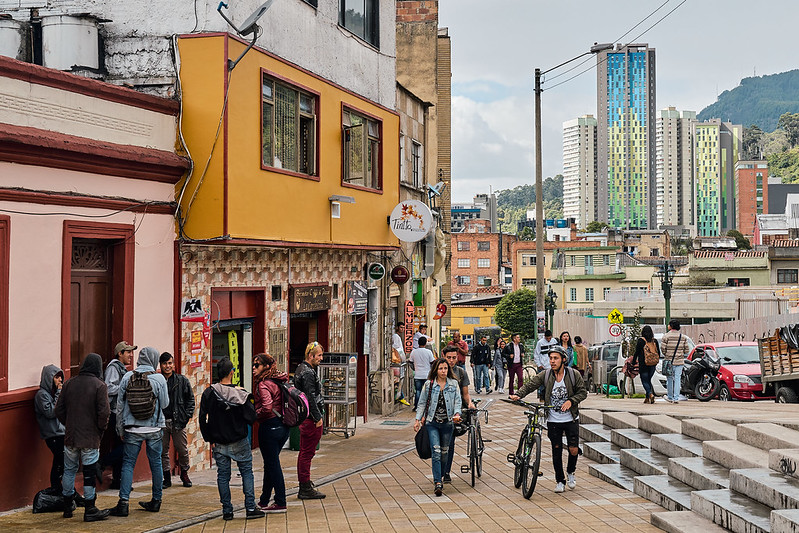
Moncaleano works for HelpAge International in Bogotá, the capital of Colombia. A city once rumored to be one of the most dangerous cities in the world during the 1990s has since transformed into a thriving, tourist-friendly capital and one of the most developed cities in Colombia.
Specifically, HelpAge International is a nongovernmental organization that aims to support the aging population by protecting its rights and helping it live healthy, fulfilling lives away from poverty and homelessness. Moncaleano is a project officer for the organization and works explicitly on poverty-prevention projects.
Observed Changes in Poverty
She has observed a decrease in poverty. “Yes, poverty has decreased in Colombia.” Statistical poverty reduction suggests that its steadily declining rate will yield long-lasting positive effects.
A primary reason for the poverty decrease is Colombians moving out of rural areas and into city life. “There is internal immigration that is heading to cities like Cali. But not many migrate to Bogota.” Many people who are experiencing poverty move to urban areas for job opportunities and income.
Common Misconceptions About Poverty
“There are more forms of poverty than just monetary poverty,” says Daniela Vasquez Moncaleano, a manager who works for HelpAge International, a nongovernmental organization that supports the elderly experiencing poverty. Moncaleano explains that there are two main types of poverty. The most common type is monetary poverty, a measuring system that financially classifies households by income. Then there is multidimensional poverty, which is difficult to measure since it considers many aspects beyond finances, such as education, health care, sanitation and environmental safety.
“Multidimensional standards are important to consider,” Moncaleano says. Poverty is experienced differently depending on the situation and geography. For instance, rural areas grow their own food, whereas urban areas buy groceries from supermarkets. In other words, rural areas are not poor in access to food like urban areas are; instead, rural areas are poor in resources such as access to local schools or hospitals.
Hope for Addressing Poverty in Colombia
To explore this broader national shift, Daniela Vasquez Moncaleano has shed light on the evolving landscape of poverty in Colombia and provided a human lens through which to understand its many dimensions. “I have so much hope for poverty reduction.” Moncaleano began working with HelpAge International because she believed in the Colombian community and the power of generations working together. “When the skies are gray, you can make the sun appear.”
Solutions to Poverty Reduction
Moving forward, Colombia will continue to reduce poverty but may have some gray-sky days. Moncaleano suggests two solutions to reduce the poverty rate. Her expertise lies in the elderly, and she suggests creating aging-friendly cities. Moncaleano has shared that there are few job opportunities or activities for the elderly past the age of 40.
The creation of more jobs or community-based events for elders can potentially provide income and purpose and reduce poverty among the elderly population. “The elderly always want to work. They want to feel life and want to feel productive.”
– Mireya Aguilar
Mireya is based in Layton, UT, USA and focuses on Politics for The Borgen Project.
Photo: Flickr
