Advancing SDG 1 in Lebanon: Building Livelihoods
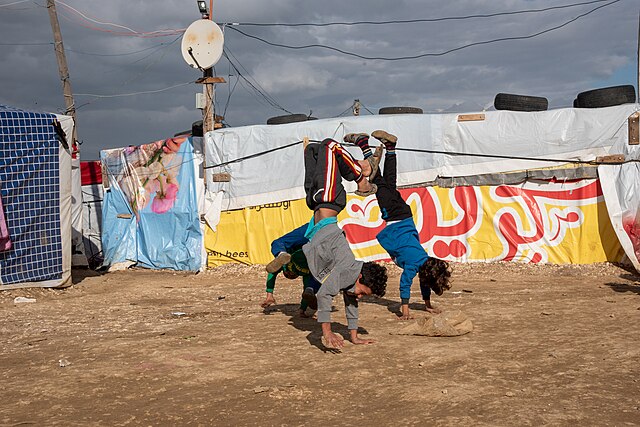 With nine out of 10 Syrian refugees in Lebanon unable to meet their basic needs, eight out of 10 Palestinian refugees in Lebanon living in poverty and almost a million citizens internally displaced, sweeping international aid cuts in 2025 threaten to plunge hundreds of thousands deeper into destitution. The U.N. Refugee Agency (UNHCR) reports a 74% funding shortfall for its Lebanon operation, forcing severe reductions in health, shelter and cash assistance programs. As the world pursues Sustainable Development Goal (SDG) 1, the mission of ending poverty in all its forms, the current crisis in Lebanon serves as a poignant reminder that emergency aid alone cannot break the cycle. In response to this reality, innovative programs are pivoting to build sustainable refugee livelihoods in Lebanon, creating economic stepping stones for the most vulnerable while fortifying fractured local communities. Here is information about SDG 1 in Lebanon.
A Multilayered Crisis for Refugees
Lebanon hosts more than 660,000 registered Syrian refugees and around 450,000 Palestinian refugees, a population whose acute vulnerability is layered upon the host country’s own profound economic collapse, ranked among the world’s worst since the 19th century. A 2025 socio-economic assessment by the International Rescue Committee (IRC) found that 90% of Syrian refugees in Lebanon now live in extreme poverty, while a U.N. Relief and Works Agency (UNRWA) report found that more than 80% of their Palestinian counterparts to be in similar circumstances of pauperism.
On top of this economic devastation, the war with Israel which began in late 2023 has compounded the plight of the most vulnerable immensely with Israeli hostilities still ongoing despite an official ceasefire. As of late 2024, the warfare has displaced more than 878,000 people within Lebanon, damaged vital infrastructure like water facilities and schools and further constricted the already narrow space for economic activity, particularly in southern border regions.
The Systemic Barriers to Livelihoods
For refugees and the undocumented internally displaced, legal and systemic barriers obstruct the path to a secure livelihood in Lebanon. Restrictive work permit policies and the collapse of formal labor markets has pushed refugees into informal, precarious and often exploitative work. This reality traps families in a cycle of aid dependency, just as that aid is being withdrawn, while impeding any viable path toward real economic recovery. The humanitarian sector itself faces internal challenges in fostering sustainable solutions. Research from the Norwegian Refugee Council (NRC) highlights that despite commitments to “localization”—the effort to empower national and community-based organizations—funding and decision-making authority often remain centralized within large international agencies. This disconnect has hindered the development of responsive, culturally attuned livelihood programs that are integrated into local economic ecosystems.
A Model for Empowerment: The IRC’s Social Recovery Project
A concrete example of an approach designed to overcome these barriers is the Support for Social Recovery Needs of Vulnerable Groups Phase II (SRP2) project, a $5.6 million initiative that the World Bank funded and the IRC implemented. Through a strategy designed to pivot away from the conventional myopic, top-down, stop-gap unilateral relief funding that perpetuates cycles of dependency, the project finances a network of Lebanese NGOs to deliver integrated capacity-building interventions. This includes critical support services such as case management for gender-based violence survivors and mental health counselling, which address the profound psychosocial distress that can prevent individuals from seeking or maintaining employment.
The project explicitly links recovery services to long-term economic empowerment through a design that integrates vocational training, digital skills development and job placement support directly into its recovery framework. Increased access to and improved quality of services for its target groups—including GBV survivors, individuals with mental health challenges and persons with disabilities—measure its success. For instance, a survivor of violence receiving psychosocial support can also access market-relevant skills training, breaking the isolation of trauma and building practical avenues to income. By channeling World Bank funds through the IRC to local NGO partners, the model actively builds in-country organizational resilience. This “graduation” approach to partnership seeks to foster stronger, self-reliant local institutions, directly addressing the localization gap identified in sectoral research.
The Imperative for Strategic Investment
Broader humanitarian planning reflects the strategic shift towards livelihoods. The International Organization for Migration’s (IOM) 2025 Crisis Response Plan for Lebanon allocates $12.6 million specifically for “livelihoods and economic recovery” operating on the rationale that investing in people’s economic agency is a cornerstone of stability. IRC research has found that NGOs run nearly 70% of primary healthcare centers in Lebanon, corroborating the sector’s pivotal role where state capacity is still limited. Supporting these local actors to deliver economic programs is not only a natural extension of their work, but also a prudent use of already established and experienced local networks.
The Path Forward for SDG 1 in Lebanon
Achieving SDG 1 in Lebanon demands a layered, forward-looking strategy to confront the livelihood crisis for refugees and the internally displaced. Immediate humanitarian support remains critical to prevent a catastrophic deterioration in living standards, making the current funding shortfall an urgent priority. Concurrently, donors and implementers must strategically and significantly scale up investments in sustainable refugee livelihoods and rebuilding efforts. This means funding integrated programs that pair protection services with skills training, advocating for policies that expand legal work rights, and, most importantly, following through on localization commitments by providing flexible, direct funding to native organizations with the community knowledge to run effective programs. A durable cessation of Israeli military aggression in the south remains a fundamental prerequisite for stability and economic recovery.
Programs like SRP2 demonstrate that by intentionally linking recovery to economic opportunity and by strengthening local partners, international aid can transition from sustaining dependence to fostering self-reliance. For SDG 1 to move from aspiration to reality in Lebanon, enabling the displaced to resettle and empowering refugees to build their own sustainable livelihoods is an indispensable approach.
– Georgio Moussa
Georgio is based in London, UK and focuses on Good News and Politics for The Borgen Project.
Photo: Wikimedia Commons
