International Community’s Reaction to Famine in Gaza
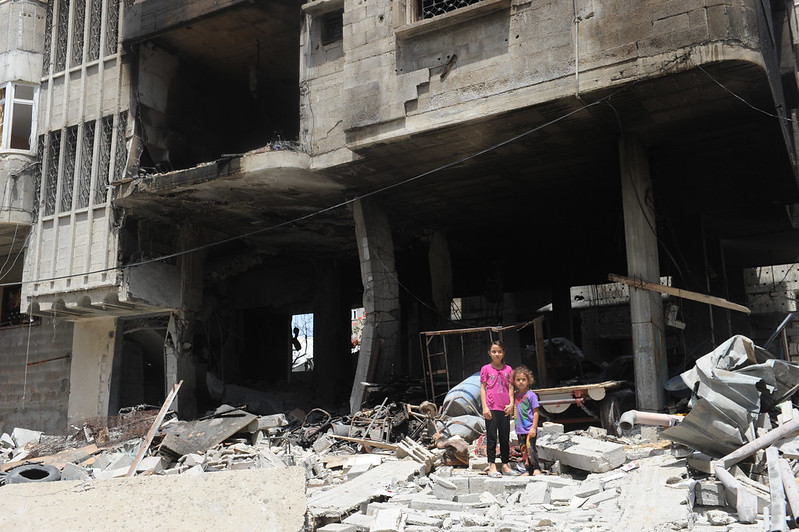 On August 22, 2025, the war in Gaza reached a sobering milestone when the U.N.-backed Integrated Food Security Phase Classification (IPC) declared a famine in the Gaza Governorate. In a speech by the United Nations Under-Secretary-General for Humanitarian Affairs and Emergency Relief Coordinator, Tom Fletcher, he called this the world’s famine, underscoring what he saw as the abject failure of the international community to prevent Gaza’s suffering.
Just weeks later, the Independent International Commission of Inquiry on the Occupied Palestinian Territory, including East Jerusalem, and Israel found that Israel had committed four of the five genocidal acts defined in the 1948 Genocide Convention. Pedro Sanchez called the declaration of famine a “shame for all of humanity.” Such words of shame have ramped up as nations across the world call for an end to the suffering of Gazans, the release of hostages and a ceasefire to allow aid to reach the Gaza Strip unencumbered.
IPC Classifications
The IPC has individually assessed four of the five governorates in the Gaza Strip, according to the 2025 report. This has been evaluated on the Acute Famine Index and the Acute Malnutrition Index, each with five stages. The Famine Review Committee, which operates within the IPC, concluded that a Phase 5 famine was affecting the Gaza Governorate. This represents the most catastrophic classification and requires “extreme critical levels of acute malnutrition and mortality.”
North Gaza faced similar or worse conditions, but evidence was insufficient for an official Phase 5 classification. Both the Deir al-Balah and Khan Younis Governorates face a Phase 4 emergency, which the IPC projects will imminently rise to Phase 5 by September 30, according to the August 2025 review. While these classifications provide vital structure, it is crucial to recognise the lived realities they represent.
As of September 25, 2025 Israeli forces have killed almost 65,000 Palestinians, according to BBC, and have damaged or destroyed an estimated 90% of homes. Each of these fatalities is a life, each fatality has a story, and each fatality has a family that will be mourning their death. The human aspect of this conflict must always remain its primary framing.
Previous Warnings
Even before the official declaration of famine in Gaza, the IPC had been warning that the humanitarian crisis was reaching catastrophic levels. As early as March 2024, the IPC warned that “Famine is now projected and imminent in the North Gaza and Gaza Governorates.” Just a week before the official declaration of famine in Gaza, more than 100 organizations signed a statement calling on Israel to stop the “Weaponization of aid.”
Furthermore, in a statement on September 17, 2025, the leaders of more than 20 aid agencies called on world leaders to intervene after the declaration of genocide by a U.N. Commission. They called the situation on the ground “unconscionable” and recounted meeting Palestinians who had lost limbs and even children who wished for death to join their parents in heaven. Amnesty International echoed these appeals with a statement on the 25th September, asserting that “Words alone will not stop the atrocities.”
They called for all states to use every diplomatic, economic and political tool to exert influence over Israel to secure a ceasefire. These escalating appeals highlight a growing agreement among humanitarian groups that action on an international level is desperately needed.
The International Community
The realities of geopolitics in the region make it difficult for international actors outside of the U.S. to make decisions that could decisively end the war. In recent months, many of Israel’s allies, frustrated with the continuing conflict, have recognized Palestine in an attempt to revive the two-state solution that Netanyahu has said he will strongly oppose. However, some are calling for European states, particularly, to go further.
At the recent U.K. Labour Party conference, members of the governing party backed a non-binding motion calling for the full suspension of arms trade with Israel. This follows the Spanish government, which had already announced a full arms embargo on Israel in response to what Prime Minister Pedro Sanchez called a genocide. The European Commission has also announced plans to restrict trade with Israel and impose sanctions on extremist Israeli ministers.
Israel’s number one trading partner is the EU, and it accounted for 32% of Israel’s trade in 2024, positioning the EU well to apply meaningful pressure. However, experts predict the impact to be somewhat limited, with trade commissioner, Maroš Šefčovič, estimating the effect to be just €227 million a year, if the measure passes at all, which currently looks doubtful.
President Trump has also proposed peace with the backing of Netanyahu, which would see the demilitarisation of Gaza, the release of prisoners by both Israel and Hamas, a surge of aid into the strip and the creation of a temporary committee tasked with the transitional governance of Gaza. The success of this deal in the long term remains uncertain; however, leaders in the Middle East and Europe have signalled support for the plan.
Final Thoughts
International agencies described the humanitarian situation in Gaza as unprecedented in scale and severity. In September 2024, a U.N. commission declared that acts committed by Israel in Gaza met the legal definition of genocide, a finding that has intensified appeals for urgent international intervention.
Reports from the IPC, U.N. bodies, and humanitarian organizations continue to highlight widespread food insecurity, mass displacement, and the near-total collapse of essential services. Aid groups warn that without immediate and sustained access to food, water, and medical supplies, famine will deepen.
While long-term political solutions remain uncertain, humanitarian actors stress that the immediate priority is securing life-saving assistance for civilians. These repeated calls from agencies, governments, and human rights organizations are part of a growing international consensus that words of shame are insufficient without tangible measures to prevent further civilian suffering and loss of life.
– Adam Walsh
Adam is based in Burnley, UK and focuses on Global Health and Politics for The Borgen Project.
Photo: Flickr
