Oxfam Fights Poverty Through Gender Equality
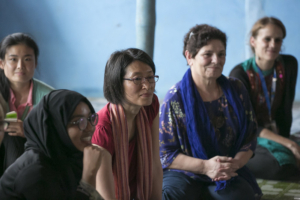 Across the globe, countless women face threats to their security and dignity due to systemic inequality. Marginalized groups struggle to assert their basic rights in societies built on patriarchal values that prioritize control over care. Women’s sexual and reproductive freedoms are under increasing pressure, even as they carry much of the unpaid and underrecognized labor that sustains families and communities. Yet despite their essential contributions, many women continue to endure violence, economic hardship and exclusion in systems designed to favor the wealthiest.
Those at the sharpest edge of these injustices often include women of color, immigrant caregivers and individuals living with disabilities. Oxfam places gender equality at the center of its work as it fights against poverty, aiming to create a world where people can thrive no matter their gender identity or sexual orientation. The organization supports feminist leadership by helping women take control of their resources, defend their rights and live free from violence. Oxfam also works to expand girls’ access to education in conflict-affected areas, while encouraging men to challenge harmful stereotypes and share household responsibilities.
Beyond individual empowerment, Oxfam pushes for systemic change. It highlights the vital role of caregivers and care workers and advocates for policies that protect both paid and unpaid care, such as paid leave and stronger workplace protections. The organization also campaigns for equal pay and calls on corporations to contribute fairly through taxation to help fund care programs and reduce the gender wage gap.
Oxfam Promotes Gender Equality
Across the world, women are often excluded from the spaces where important choices are made—whether within families, local communities, courts, governments or corporate offices. To counter this imbalance, Oxfam and its partners focus on building inclusive leadership models that strengthen gender equality and amplify women’s rights. This approach helps women activists and leaders better understand how systems of power operate and how they can be influenced to drive meaningful change.
In Kenya, this has taken shape through civic education initiatives that equip marginalized women to engage in politics and remove obstacles to voting. Meanwhile, in Nepal, Oxfam’s “Raising Her Voice” initiative showed that nearly 42% of almost 2,000 women participating in community dialogue groups felt confident enough to influence local and regional development councils. This has resulted in financial resources being directed toward advancing women’s priorities.
In Ghana, Oxfam’s work in shea, sorghum and cocoa supply chains has helped women farmers gain financial access and a stronger voice, fostering entrepreneurship and long-term, sustainable livelihoods. Countries such as Ethiopia, Malawi, Mozambique and Zambia, where adolescent pregnancy rates remain among the world’s highest, Oxfam partners with local groups to ensure young women and girls have greater control over their sexual and reproductive health. In Latin America, Oxfam has supported indigenous women’s movements in Peru by helping them gain a stronger role in governance processes related to land, territory and forest rights, ensuring their voices are heard in spaces that directly shape their futures.
Advances
Since 2013, initiatives led by Oxfam and its partners have tackled the issue of unequal unpaid care and household responsibilities in more than 25 countries. In Ethiopia, these efforts played a pivotal role in enforcing a national policy that requires government agencies to provide on-site child care facilities for employees. Meanwhile, in Kenya, Uganda and Zimbabwe, women’s rights and caregiver organizations are being supported to strengthen their presence in political arenas where policies on unpaid care and domestic labor are shaped.
Oxfam fights poverty by recognizing that advancing women’s economic empowerment is key to breaking the cycle. By promoting equal pay, expanding access to land and credit and addressing the heavy load of unpaid domestic work, Oxfam creates opportunities for women to thrive. Fair wages and safe working conditions uplift women and strengthen their families and communities.
Oxfam Fights Poverty
Oxfam views education as key to unlocking opportunities for girls, who are often forced out of school by poverty, early pregnancy and restrictive social norms. By promoting access to learning alongside financial literacy, health awareness and cultural attitudes shifts, Oxfam ensures girls can stay in school and build brighter futures.
In Ghana, efforts focus on creating school environments that support girls by addressing obstacles to attendance, fostering critical thinking and inspiring them to continue their studies. In Pakistan, young women have received scholarships and opportunities to strengthen their leadership abilities. Similar programs in South Sudan and Uganda work to equip both students and educators with the tools needed to build stronger, more resilient education systems.
Gender equality in the fight against poverty is both essential and transformative. By expanding girls’ education, advancing women’s leadership, protecting reproductive rights and addressing unpaid care work, initiatives across Africa, Latin America and beyond show that empowering women strengthens entire communities. When women and girls have equal opportunities, societies become more resilient and the fight against poverty gains momentum.
– Gabriella Luneau
Gabriella is based in Raleigh, NC, USA and focuses on Good News and Global Health for The Borgen Project.
Photo: Flickr
