How Landlocked Developing Countries Become Global Players
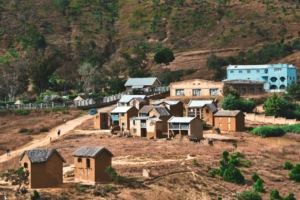 Of nearly 200 countries, 32 tend to be overlooked in global discussions. Because landlocked developing countries (LLDCs) lack direct access to seaports, they must rely on more complex and costly routes to reach international markets. While they make up more than 7% of the world’s population, in 2024 they accounted for only 1.2% of global trade. Being landlocked slows their economic growth and widens the development gap with other developing countries.
As countries that are directly cut off from access to the sea, they must face many challenges. These include slow delivery times, high transport costs and border procedures directly impacting economic success and progress. Beyond economic and geographical barriers, the climate emergency worsens the problem. It damages roads and disrupts supply chains, threatening the fragile infrastructure with droughts, floods and other forms of extreme weather.
Despite these barriers, LLDCs are progressing toward becoming active global trade players, working to develop as they adopt goals that could successfully lift millions out of poverty.
Turning Point and Success
More recently, a United Nations (U.N.) conference in landlocked Turkmenistan has led to hope regarding LLDCs. The conference brought together Heads of State, development partners, private sector leaders and U.N. officials. Leaders highlighted the Awaza Program of Action for 2024 to 2034. The Program encompasses five priority areas:
- Trade and regional integration;
- Economic and structural transformation;
- A focus on the development of transport and infrastructure;
- Adaptation to climate change and the reduction of disasters;
- The mobilization of partnerships and financial assistance.
Seeking to accelerate progress, the Awaza Program sets a clear direction. Its focus spans trade facilitation, transport connectivity, climate resilience, the mobilization of international support, structural transformation and technology. It aims to align domestic and global nations within a shared framework for sustainable development.
A U.N. Economic and Social Commission for Asia and the Pacific (UNESCAP) report examined Asian LLDCs. It argued that to accelerate structural transformation, these countries must diversify their economies and reduce dependency on extractive industries. Regarding poverty alleviation and structural transformation, what matters most is a reallocation of production factors that leads to the growth of labor-intensive sectors. Since labor is the primary input of those experiencing poverty in production processes, expanding the labor sector is key to long-term poverty reduction.
What’s Next
Looking forward, LLDCs are working to turn these commitments into real progress. Several initiatives worldwide show that development is truly possible, stressing the need for smarter infrastructure, broader economic diversification and simplified customs procedures. In Africa, electronic cargo tracking and Central Asia’s use of electronic TIR carnets have reduced delays and encouraged private sector participation in cross-border trade.
Upcoming global forums, such as COP30 in Brazil in November 2025, the UNCTAD conference and the 2027 Global Mountain Summit, will give LLDCs opportunities to push their priorities higher on the international agenda. The international community must continue to foster cooperation among LLDCs so they can more easily access global markets. Stronger cooperation will drive regional integration and build an international framework of shared rules, standards and goals.
Conclusion
While the precarious geographical position of LLDCs presents many obstacles, recent developments show that their future does not need to be limited by borders. Through international cooperation, domestic policy development, structural transformation and the adoption of innovative trade systems, LLDCs are steadily moving from “landlocked” to “landlinked.”
This transformation goes beyond economic development, improving the lives of millions. Lower transport costs allow for the development of domestic industries and cheaper goods for families. Infrastructure projects create jobs, economic diversification raises wages and climate-resilient systems protect vulnerable communities. These projects contribute to the reduction of poverty and to narrowing the gap between LLDCs and other developing countries.
– Rafaela Paquet
Rafaela is based in Montreal, Quebec, Canada and focuses on Business and Good News for The Borgen Project.
Photo: Unsplash
