The Seville Commitment: Goals, Challenges and the Future
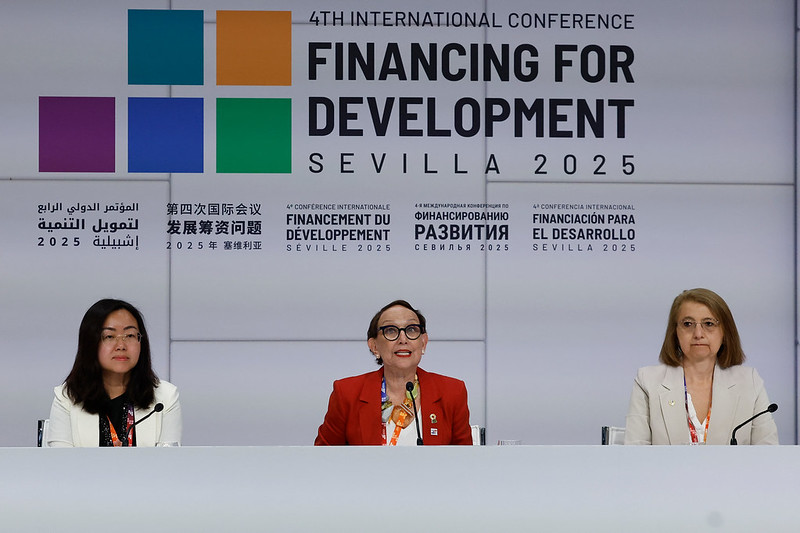 The Seville Commitment is the outcome document of the Fourth International Conference on Financing for Development, held on June 30, 2025, in Seville, Spain. This agreement aims to close the annual $4 trillion gap required to achieve the Sustainable Development Goals (SDGs) by 20230 by mobilizing sufficient financial resources through boosting investments, addressing debt challenges and creating a fairer financial system.
The Background
In 2000, leaders endorsed the Millennium Declaration, which focused on poverty reduction and development as major priorities. They highlighted the challenges developing countries faced in securing sufficient financial resources. In response, they called for a high-level conference to tackle this issue. In 2002, the First International Conference on Financing for Development took place in Monterrey, Mexico. Leaders adopted eight Millennium Development Goals, emphasizing the imperative need for mobilizing financial resources to eradicate poverty and improve living conditions.
In 2008, the second conference held in Doha, Qatar. Leaders adopted an expanded list that includes boosting foreign investment, increasing international cooperation and providing developing nations with debt relief. In 2015, the third conference took place in Addis Ababa, Ethiopia. Leaders produced the Addis Ababa Action Agenda, a new global roadmap for financing development. This new global framework includes protecting the environment, promoting peaceful societies, employment, public services, hunger, sustainable industrialization and infrastructure. In this event, leaders pointed out the gap in financing required to fulfill the development goals. After that, the United Nations (U.N.) substituted the eight Millennium Development Goals with a more demanding 17 SDGs.
In 2025, the fourth conference was held in Seville, Spain. Leaders discussed the issues for financing development that emerge in a challenging time as countries face increasing debt levels, ongoing conflicts and a decelerating economy. In response, they adopted the Seville Commitment that focuses on solutions to bridge the annual $4 trillion gap in financing development and 130 initiatives were introduced by a coalition of countries, international organizations and other partners.
The Seville Commitment Goals
The Seville Commitment aims to bridge the annual $4 trillion gap required to achieve the SDGs through several actions, including:
- Increasing the minimum tax revenues to at least 15% of Gross Domestic Product (GDP)
- Tripling the lending capacity of the multilateral development banks.
- Overhauling corporate governance, which includes transparency in how corporations manage funds and measure impact.
- Addressing the debt challenges by establishing a UN-led group to set guiding principles for lending and borrowing, promoting state-contingent clauses and creating a global debt data registry
- Creating a fairer financial system by strengthening developing nations’ voices in international financial institutions, such as the International Monetary Fund
Ongoing Challenges
Despite the international cooperation in financing global development, challenges persist. The challenges are as follows:
- Cutting the official development assistance by many donors, including Germany, Italy and France, to pay for other priorities such as defense spending
- The absence of the U.S, a leader of international development throughout history, at the fourth conference and the termination of many of its foreign assistance programs.
- Lack of monitoring and accountability systems in markets
Looking Ahead
Reductions in official foreign assistance remain a concern, as they widen the financing gap and slow progress on development efforts. Nonetheless, the Seville Commitment is a major milestone that illustrates the significance of global cooperation in fulfilling the global development goals.
– Eiman Elsawy
Eiman is based in Kirkland, WA, USA and focuses on Business and Politics for The Borgen Project.
Photo: Flickr
