Financing Africa’s Green Transition: Global Climate Investment
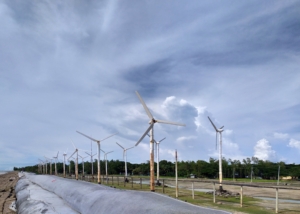 Africa is at a critical juncture in its expansion, straddling the line between delivering rapid economic development and addressing adverse climatic conditions. The continent faces some of the highest levels of climate vulnerability, including persistent droughts and desertification, extreme flooding and coastal erosion.
However, Africa has enormous potential to lead in a global green transition, particularly given its abundant renewable energy resources, youth population and expanding clean technology market. Financing Africa’s green transition is imperative for environmental, economic and geopolitical reasons.
Financing Africa’s Green Transition
Despite its potential, Africa has about 5% of global climate finance. Yet, the continent is home to 17% of the world’s population and is one of the most climate-vulnerable regions. Wealthy countries have pledged $100 billion annually in climate finance to developing countries through the Paris Agreement, but these commitments have consistently fallen short.
This means that for millions of people, a funding gap slows renewable energy deployment, prevents critical infrastructure projects and raises the cost of adaptation. Without urgent and scaled support financing, Africa risks being locked into a fossil-fuel-dependent future just as the world transitions to cleaner energy.
The economic rationale for Africa’s green transition is compelling. Expanding renewable infrastructure, solar, wind and hydro, would drive millions of jobs, increase energy access for more than 600 million people without electricity and stimulate industrial growth using clean energy.
Countries are already leading the way: Kenya, with more than 80% of its electricity from renewables; Morocco, home to one of the world’s largest concentrated solar plants; and South Africa, which is turning to wind and solar to diversify its coal-heavy grid. Together, these examples show the potential to meet domestic energy needs sustainably and position Africa as an exporter of renewable energy and hydrogen.
Why Global Climate Investment Can’t Wait
Financing Africa’s green transition is critical to achieving global climate objectives from an environmental perspective. The continent produces a small share of global emissions, approximately 4%, but its future emissions path will depend on the energy systems it deploys today.
Financing its transition to renewable technologies now has the potential to prevent a new increase in emissions, conserve biodiversity and preserve critical ecosystems, such as the Congo Basin rainforest, which is a global carbon sink.
From a geopolitical viewpoint, a green transition with sufficient finance would increase Africa’s global standing. Renewable sources would lessen overall dependence on imported fossil fuels. Energy security could be improved, too. African countries could also become influencers in the global clean technology sector.
However, for this to happen, strong international cooperation is essential. African governments, development banks, private investors and technology suppliers need to work together to mobilize the billions of dollars required for renewable energy. These funds are critical not only for infrastructure investment but also for climate adaptation and the growth of green industries.
Looking Ahead
The way forward requires innovative financing mechanisms. These include blended finance to de-risk private investments, sovereign green bonds and regional investment platforms to pool resources for cross-border projects. Development finance institutions can assist by guaranteeing loans, offering concessional rates and providing technical assistance in project design and implementation.
Africa’s green transition is already underway, but at a pace that is too slow to meet the Sustainable Development Goals or the Paris climate targets. With international support, the continent can unlock its renewable energy potential, drive economic growth and lead in clean energy innovation. The message is clear: the world cannot afford to leave Africa behind in the fight against the ongoing climate crisis.
– Sophia Scelza
Sophia is based in Lindenhurst, NY, USA and focuses on Good News and Global Health for The Borgen Project.
Photo: Wikimedia Commons
