Recognizing Women’s Unpaid Labor: A Growing Global Priority
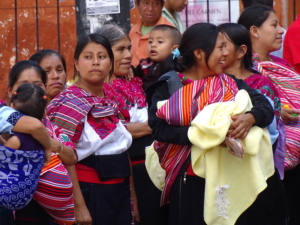 Every day, women and girls worldwide perform 12.5 billion hours of unpaid labor, accounting for more than three-quarters of all unpaid care work globally. Women’s unpaid labor is vital in supporting and strengthening families, communities and society. However, a commitment to care responsibilities prevents female economic participation.
According to the International Labor Organization (ILO), these duties keep 708 million women out of the labor market. Recognizing, valuing and supporting women’s unpaid labor by integrating care duties into policy and infrastructure creates greater access to women’s education, employment and leisure.
The Impact of Women’s Unpaid Labor
The effects of unpaid care work are especially pronounced for women in impoverished areas. In low-income countries, women in rural areas spend up to 14 hours daily on unpaid domestic duties. Among women aged 25 to 54, 379 million cite care responsibilities as why they are not part of the workforce. Those with lower levels of education and those living in rural areas face some of the highest barriers to economic participation.
This makes including care and investment in support systems critical to reducing poverty and advancing gender equality. However, countries worldwide are beginning to acknowledge the value of unpaid care work and taking steps to redistribute domestic responsibilities across public and private sectors.
Making Care Visible: Mexico
Increasing the visibility of women’s unpaid labor through empirical evidence is essential to recognizing its importance. According to the National Institute of Statistics and Geography (INEGI), unpaid domestic work accounts for 26.3% of Mexico’s gross domestic product (GDP). To help bring this issue to the forefront, U.N. Women has played a key role in generating and promoting access to data on care work. The economic value of women’s unpaid labor is now visible through tools like Supported Time Surveys and Satellite Account.
In partnership with institutions like El Colegio de Mexico and the National Institute for Women, U.N. Women launched the Care Map, a tool more than 21,000 people used to access information on care services. Its support for local governments also led to evidence-based strategies for establishing care districts, which can now be adopted in other states. Building on these national efforts, U.N. Women Mexico joined the Government of Mexico to create the Global Alliance for Care. The platform has more than 300 members, placing care at the center of public policy.
Creating a quality care system in Mexico is important in recognizing the value of unpaid domestic duties. Barriers preventing women’s economic participation can be overcome by reducing the burden of unpaid labor and treating care as essential infrastructure.
Addressing Time Poverty: Peru
Women in Peru average nearly 40 hours a week on commitments to unpaid labor, which accounts for 52% of their total work time. The physical and emotional burden of care work leaves many women in Peru time-poor, limiting their educational opportunities, political participation and professional advancement. Findings from the 2023-2024 Young Lives Surveys reveal that women and girls are less likely to be employed than their male counterparts, spending more daily hours on unpaid care work.
However, Peru has taken significant measures to lessen the demanding domestic duties placed on women. The Transforming Care Economies project, led by U.N. Women and funded by the Spanish Agency for International Development, has advanced opportunities for caregivers. Since its launch in 2023, more than 350 caregivers have enhanced their basic and personal care skills, improving the quality of support given to those in need.
Alongside this, 70 public officials have received training in care policies and 16 civil society organizations are actively supporting local care facilities. These achievements lay the groundwork for securing the right to quality care and improving caregivers’ lives locally, paving the way for broader institutional recognition and support. By addressing time poverty through improved care systems, Peru actively supports women’s empowerment and greater access to education, employment and participation in public life.
Transforming Women’s Work: Kenya
Oxfam’s 2019 Household Care Survey shows that women in Kenya spend an estimated five hours daily on care work, while men spend just one. The COVID-19 pandemic deepened this disparity, pushing many women out of paid employment as they took on increased caregiving responsibilities due to school closures, the shift to remote learning and the shutdown of child care services.
Access to quality child care reduces the burden of unpaid care work on women. Yet, services remain expensive for low-income families and are often limited to urban areas. This lack of access forces many mothers out of the workforce, especially in rural communities.
Kidogo, a Kenyan nonprofit founded in 2014, works to expand affordable, high-quality child care in low-income areas. Supporting working mothers in informal settlements improves their chances of securing better employment. Kenya’s largest child care provider, Kidogo, serves more than 9,500 children aged less than 5, consistently exceeding development milestones and performing well in primary school. The organization has also influenced key policy reforms, including the Nairobi City County Child Care Facilities Act (2017) and the County Early Childhood Education Bill (2018).
By recognizing and addressing the unequal distribution of care, Kenya can promote professional and personal growth for women.
Looking Ahead
Valuing and supporting unpaid care work is key to reducing poverty and advancing gender equality. Creating access to quality care systems allows women to gain time and opportunities for education, work and leadership. Investing in care as essential infrastructure empowers women, strengthens communities and builds a more just and inclusive economy.
– Beatrice Punt
Beatrice is based in Manchester, UK and focuses on Business and New Markets for The Borgen Project.
Photo: Flickr
