Empowering Refugees in Kenya Amid Poverty
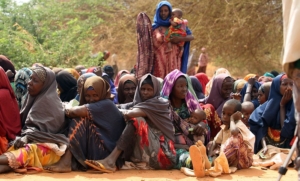 Kenya has launched several groundbreaking initiatives to empower refugees in Kenya and reduce long-term poverty and dependency. As of 2025, according to the Operational Data Portal, the total number of refugees and asylum-seekers in Kenya is 854,876, with the majority coming from Somalia (54%).
According to the Hebrew Immigrant Aid Society, economic constraints, bureaucracy, little refugee engagement and little infrastructure hinder the improvement of empowering refugees in Kenya. However, despite struggles, initiatives have continued to progress.
Transforming Camps Into Municipalities
In March 2025, according to the Ministry of Interior and National Administration, President William Ruto unveiled the ambitious “Shirika Plan.” This signals a paradigm shift in empowering refugees in Kenya. Inspired by the Swahili word for “cooperation,” this 11-year initiative aims to integrate refugee camps into formal municipalities, notably Kakuma and Dadaab.
With more than 830,000 refugees across Kakuma, Dadaab and urban zones, the plan’s initiative marks a historic step toward sustainable, development-led inclusion. According to the Ministry of Interior and the National Administration, some of the key components include:
- Ensuring refugees access national services such as education, health care and financial systems alongside Kenyans.
- Issuing the Kenya Education Management Information System school registration and the Social Health Insurance Fund enrollment.
- Streamlined service delivery under the Turkana and Garissa county administrations.
- A projected budget of around $943 million, overseen by a multi-agency steering committee.
Microloans for Refugees and Hosts
In February of 2024, Equity Bank, with backing from the International Finance Corporation (IFC), launched a $20 million risk-sharing facility. According to Equity Group Holdings, this is aimed at expanding unsecured microloans to refugees and host-community entrepreneurs across 14 counties, all empowering refugees in Kenya. This marks the world’s first such dedicated facility for forcibly displaced individuals.
Some of the major highlights of the facility, according to Equity Group Holdings, include:
- Covering 50% of the risk exposure.
- Financial literacy and agribusiness capacity-building delivered via Equity Group Foundation.
- Projecting 25 million new jobs to empower refugees in Kenya by 2030.
Equity Group CEO James Mwangi underlined the initiative’s goal of transforming lives, dignifying refugees and fostering wealth creation.
Scaling Refugee Entrepreneurship
Rwanda-founded social enterprise Inkomoko has played a transformative role in supporting refugee and host-community entrepreneurs in Kenya. According to the organization, its support model has:
- Served more than 12,00 clients and deployed more than $6 million in capital.
- Helped create more than 2,500 jobs.
- Supports more than 4,000 entrepreneurs annually, delivering business advisory, training and low-interest loans.
Examples illustrate the real impact, such as tailor Adele Mubalama, who grew her Kakuma-based business to employ 26 people and earn approximately $8,300. Similarly, according to Finance Commerce, former Ethiopian soldier Mesfin Getahun expanded his “Jesus is Lord” retail chain using a $115,00 loan from Inkomoko.
“We find that refugee business owners actually have the characteristics that make world-class entrepreneurs,” Inkomoko runner Julienne Oyler said, reporting on Finance Commerce.
Digital and Leadership Empowerment via Amahoro Coalition
Founded by Isaac Kwaku Foku, the Amahoro Coalition champions digital inclusion and leadership among refugees. Some highlights, according to the Kenya Private Sector Alliance (KEPSA), include:
- 2022 partnership with Kenya’s Aijira Digital Program to enable Kakuma and Dadaab residents to work online, delivering business solutions to Kenyan companies via digital platforms.
- Offering digital training free of charge to help transition to online jobs.
Mandating the country a “digital freelancing hub” supporting youth in accessing jobs online. Additionally, in June 2024, Amahoro launched a 12-month mentorship program for women with lived displacement experience within the Amahoro Fellowship. Amahoro is moving refugees beyond humanitarian aid toward genuine economic participation and leadership by merging digital capacity-building, mentorship and private-sector engagement.
Rights, Resources and the Road Ahead
While these strides signal hope, key challenges remain. Refugees still lack full freedom of movement and citizenship rights, limiting mobility and economic opportunity. Camp schools run at 300% capacity and water sanitation infrastructure remains inadequate.
Observers warn that prioritizing livelihoods over rights could jeopardize long-term inclusion. Broader legal protections and clear citizenship pathways are still urgently needed.
– Clarissa Dean
Clarissa is based in Bowling Green, KY, USA and focuses on Good News and Celebs for The Borgen Project.
Photo: Flickr
