Translators without Borders: Fighting Misinformation
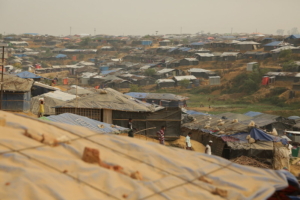 Myanmar is one of the least politically stable countries in the world, having been in some state of civil war since its independence in 1948. Amid the cycle between civilian democracy, autocracy and military dictatorship, ethnic minorities have been subject to persecution and harassment. The ongoing Rohingya genocide has prompted a mass exodus to neighboring Bangladesh, which shares their Islamic faith. With the majority lacking formal education and access to a reliable and diverse media diet, the Rohingya have become a bellwether for internet-fueled misinformation.
Donor Fatigue and Repercussions
As the Rohingya crisis stretches further, aid givers are warning of the growing trend of “donor fatigue,” a phenomenon whereby major philanthropists and the public decrease interest and donations. Donor trust is fragile: it can be damaged by a single viral hoax about corruption or a misconstrued image that goes viral.
The real-world effects of donor fatigue and funding cuts are severe. As noted, food rations have already been reduced — in March 2023, monthly aid per person dropped from $12 to $10. It was on track to fall further until a last-minute funding injection stabilized it.
Diminished funding creates a vicious cycle: misinformation reduces public support, leading to funding cuts, worsening conditions and making the crisis even more challenging to resolve. As a result, displaced populations remain trapped in prolonged dependence and growing risk. Refugees International recently warned that declining aid and “ongoing restrictions on the ability to work” are forcing more Rohingya to risk dangerous sea journeys in search of survival.
Translators without Borders: Community-Led Solutions
Calling out and confining online misinformation requires a coalition of individuals, platforms, governments and nonprofits. Organizations like Translators without Borders are working to provide accurate and fact-based reporting to refugees. A particular successful program is the “Flying News” rumor bulletin. This periodic flyer, written in clear terms and translated orally by field staff for those who can’t read it, takes the latest prevalent rumors and provides verified answers and facts.
Media platforms are also mobilizing to counter misinformation. In response to international outcry, Facebook has altered its Myanmar site to contain additional algorithms automatically detecting inflammatory language. Questions arising from Facebook’s role in the Rohingya genocide have led a group of refugees to file a landmark $150 billion lawsuit against its parent company, Meta. First filed in 2021, the suit alleges that Facebook’s negligence helped fuel the violence in Myanmar. Although initially dismissed, the refugees appealed and the case is now progressing through the U.S. Ninth Circuit Court of Appeals. The appellate decision remains pending.
Furthermore, Bangladesh-based fact-checking groups such as BD Fact Check and Boom Bangladesh have begun debunking viral falsehoods about the Rohingya in national media, helping curb the spread of misinformation in host communities. In 2018, Bangladesh’s unicameral legislature passed the Digital Security Act, which criminalizes the dissemination of “rumors” or “false information” that could destabilize the country. In theory, this law could apply to those inciting violence or spreading hoaxes about the Rohingya in refugee camps.
Meanwhile, in Indonesia, the spread of inflammatory TikToks made international headlines. It prompted the country’s security agencies to investigate the online hate campaign that sparked violence in Aceh. Authorities are working to identify the masterminds and bots behind the coordinated effort.
Moving Forward With Innovation
Since the genocide of the Rohingya began, breakthroughs in artificial intelligence have complicated things. Researchers in Indonesia have started using AI to collect and analyze data on social media. Using natural language processing and sentiment analysis, they hope to gauge public attitudes toward Rohingya refugees accurately. One recent study analyzed Indonesian Twitter and news commentaries using a BERT-based model (a form of AI language model). It found that around 65% of online sentiments about Rohingya refugees were negative.
Although long-term ramifications are poorly understood, the findings as of 2025 have demonstrated that community-led dramatizations are the most successful initiatives. Training aid organizations and expanding localized fact-checking trends in refugee camps resonate strongly. These posts are often in the local idiom and usually laced with humor to gently correct false beliefs.
In summary, Translators without Borders and others within the humanitarian sector’s approach has evolved to “fight fake news alongside the pandemic” and other crises. Aid workers now see information management as a core part of aid, not an optional add-on. These evolving strategies offer hope for protecting vulnerable populations from the dual threats of displacement and digital misinformation.
– Maxwell Marcello
Maxwell is based in Pittsburgh, PA, USA and focuses on Technology and Politics for The Borgen Project.
Photo: Flickr
