Fragility and Rule of Law in Ukraine
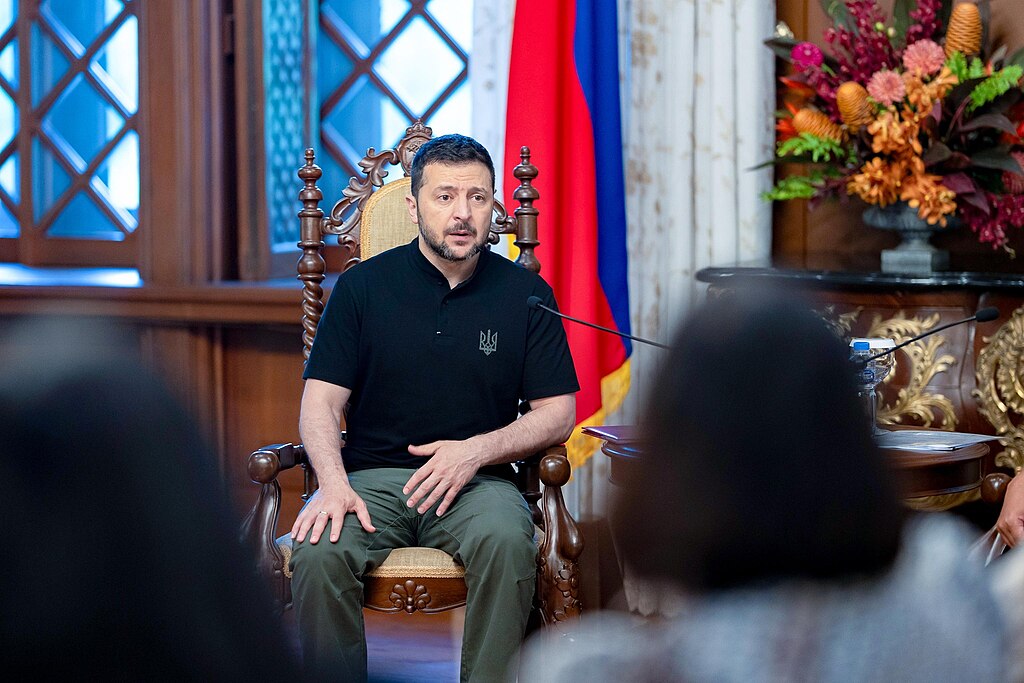 Russia’s full-scale invasion in February 2022 has strained the rule of law in Ukraine as the country navigates maintaining human rights and order amidst unprecedented challenges. While the invasion has caused the oppressive influence of the post-soviet Oligarchy to diminish with aid from Ukrainian President Zelenskyy’s introduction of the anti-oligarchy law in 2021, millions of people have sunk further into poverty due to key factors such as rising costs of basic resources, loss of livelihoods and forced displacement. The stability of civilian rights has become even more fragile, with more people falling into poverty and insecurity due to the state’s adoption of martial law to preserve overall national security.
Post-Soviet Rule of Law
The collapse of the Soviet Union in 1991 brought about the power of the Oligarchy, which due to the privatization of state-owned assets such as transport and utilities controlled a large majority of the political-economic landscape, using extra-legal methods to maintain severe monetary inequalities. Economic stagnation led to at least 30% of families living below the poverty line with heavily restricted access to health care and food security, creating a declining population.
At the turn of the century in 2000, Ukraine’s capital management and utilization improved and the economic output recovery was astounding; a rapid increase in labor activity resulted in a decrease in the poverty rate from 32% to 8% from 2001 to 2005, allowing the poverty rate to reach a stable plateau. However the power of the Oligarchs did not diminish and two revolutions followed; The Orange Revolution from 2004 to 2005 and The Revolution of Dignity in 2014, both sparked by political corruption traced back to the Oligarchs.
Effects of the Russo-Ukrainian War on the Rule of Law
Following the Kerch Strait incident in November 2018, Ukraine introduced martial law for 30 days and it has been in effect again since February 2022 due to the invasion of Russian forces. As Amnesty International outlined, martial law has a devastating impact on socioeconomic rights such as freedom of expression, violence against minority groups and the right to a healthy environment.
Personal liberties are under threat, with Ukrainian men aged from 18 to 60 unable to leave the country without special exemption and the conscription age reduced from 27 to 25 in April 2024 to support a larger military. Ukraine allows forced alienation of property and the use of enterprises’ facilities for the need of the state, providing compensation only upon presentation of correct documentation. The Ukrainian government also postponed the Parliamentary elections, which were due in late 2023, for as long as the country remains under martial law to preserve government stability.
Additionally, World Bank data reports that the percentage of Ukrainians living in poverty spiked from 5.5% to 24.1% in 2022 when the full-scale invasion began. This translates to a further 7.1 million people living in poverty, setting the country back 15 years of progress.
Organizations Working to Stabilize the Rule of Law
Despite infringements on civilian rights, positive steps are occurring to help those forced into poverty because of the conflict, alongside legal forces working to ensure that the government does not overstep its jurisdiction while operating under martial law. The World Bank’s PEACE project is helping essential public support services from the government continue. It has reached 15 million Ukrainians since 2022, providing wages for essential workers, pensions for the elderly and social programs for vulnerable individuals.
Amnesty International has also recently launched a campaign to end war crimes against Ukrainians in Russian captivity, detailing that since the invasion in 2022, thousands of Ukrainian POWs (prisoners of war) have experienced detainment or torture. The campaign is still currently in its grassroots stages, however has gained the support of more than 100 former POWs and relatives of POWs, calling for messages to Russian authorities to end the widespread abuse of captive Ukrainians.
Furthermore, The International Bar Association reports that Ukraine as of late 2024 has been formally granted to join the International Criminal Court (ICC), having sworn in 250 judges at an oath-taking ceremony aimed at abolishing remaining corruptive forces and strengthening the rule of law in Ukraine within the current state of martial law.
Closing Remarks
The rule of law in Ukraine is currently in a delicate position, with the Russo-Ukrainian war and the introduction of martial law causing numerous setbacks in their post-soviet socioeconomic progression towards a stronger economy and a reduced poverty rate. However, the events have catalyzed hugely positive changes that have eroded the long-standing corruption within the government dating back to the Soviet era. The Russo-Ukrainian war is still in a volatile state and at the height of violence hitherto, however, the steps taken by the key nonprofit and legal institutions will prove pivotal in allowing for further progression and protection of civil liberties within Ukraine’s current compromised state of martial law and conflict.
– Helena Pryce
Helena is based in Nottingham, UK and focuses on Politics for The Borgen Project.
Photo: Wikipedia Commons
