Renewable Energy in Bahrain
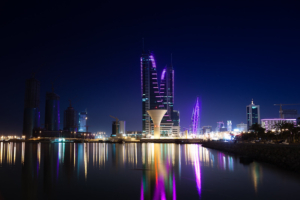 Bahrain, a small island nation in the Arabian Gulf, with a population of 1.5 million, has historically depended on oil and natural gas to meet its energy and economic needs. The nation has limited land area and high per capita energy consumption. Bahrain now faces a challenge in transitioning from fossil fuels to sustainable energy sources. To address this, Bahrain’s government is prioritizing the diversification of its energy mix to have renewable energy play a central role in its development strategy. Bahrain aims to establish itself as a regional leader in the sustainable energy shift by investing in renewable technologies.
Current Renewable Energy Landscape
Renewable energy in Bahrain is still very limited as progress is in development. A prominent project is a collaboration between Bahrain Petroleum Company (Bapco) and Abu Dhabi Future Energy Company PJSC– Masdar, which has shown potential for wind energy that can help meet both industrial and domestic demands in the country. The agreement between the two energy companies could help improve the development and investment in Bahrain’s wind projects. Previously, Masdar has helped build and invest in the Dumat Al Jandal wind farm in Saudi Arabia, the largest wind project farm in the Middle East. In addition, Bahrain is also planning a heat waste recovery pilot program, which gathers excess heat to be captured and converted to electricity.
Future Potential
Bahrain’s renewable energy targets align with the nation’s Vision 2030, including the goal to generate 5% of its energy from renewable sources by 2025 and 10% by 2035, according to the UNDP report. This includes starting more renewable technologies to diversifying to the mix of solar, wind, and waste-to-energy technologies.
Bahrain, due to its geopolitical position, should focus on expanding its solar capabilities. Solar energy is the most viable option due to the nation’s abundant sunshine, which averages more than 3,000 hours of sunlight annually and can be the most advantageous.
The country’s strategic location and expertise in financial services position it to attract foreign investment in renewables. Public-private partnerships and international collaboration, particularly with organizations like the International Renewable Energy Agency (IRENA), are being leveraged to fund and implement large-scale projects.
The installation of solar panels in Bahraini households under the Sustainable Energy Authority (SEA) initiative is providing a reliable and sustainable source of electricity for rural and urban households alike. Businesses are also adopting rooftop solar solutions to reduce energy costs and minimize their carbon footprint.
Challenges and Opportunities
Despite Bahrain’s progress, challenges remain as the nation faces limited land availability, high initial costs, and the need for skilled labor and technical expertise. The country’s reliance on natural gas for power generation shows the need for gradual transition strategies that balance economic and environmental priorities. Opportunities from solar energy development to waste-to-energy efforts can increase Bahrain’s renewable development and help address the country’s energy challenges.
– Avery Hazard
Avery is based in Segovia, Spain and focuses on Technology and Solutions for The Borgen Project.
Photo: Flickr
