UNICEF and Partners Address Water Crisis in Afghanistan
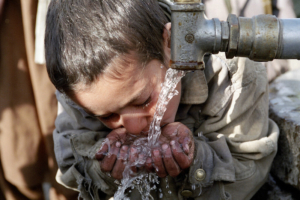 Access to safe water is vital for ensuring good hygiene practices and protection from disease. However, in Afghanistan, water is far from accessible. Afghanistan’s political climate has rendered access to vital resources, such as water, limited across many regions. After years of economic challenge, poor management and political instability, water crisis remains an urgent issue in Afghanistan.
This situation has only worsened with the Taliban’s power resurgence in 2021. However, as of 2024, the United Nations Children’s Fund (UNICEF) has partnered with the Afghanistan Humanitarian Trust Fund (AHTF). This collaboration has reduced the water crisis in Afghanistan by supplying sustainable water systems.
Water Crisis in Afghanistan
Clean water is vital; it ensures children are less vulnerable to diseases like diarrhea, which exacerbate malnutrition. However, this resource is difficult to find in remote areas of Afghanistan with very little rainfall. Due to agricultural demands, an over-extraction of groundwater has significantly reduced the water supply from underground aquifers.
Furthermore, changing climatic conditions have depleted available water sources. Afghanistan has held record-breaking droughts for more than two decades. Consequently, only about 42% of Afghans can access safe drinking water.
UNICEF’s Work to Supply Sustainable Water Sources
UNICEF has been working to support Afghanistan for more than 70 years, with increased efforts directed toward water supply in the past few years. It is Afghanistan’s lead provider of water, sanitation and hygiene (WASH) services. By installing solar-powered pumps, UNICEF has ensured that the power to access clean water is returned to local communities.
One hundred percent of the facilities are small-scale and solar-powered, meaning the communities can run them. UNICEF has collaborated with 30,000 community-elected councils, ensuring management and decisions regarding the resource remain at the local level.
Partnership With the AHTF
UNICEF has partnered with the AHTF to complete the installation of “Climate-Resilient and Sustainable Water Supply Services in Remote Rural Communities.” This has given more than 30,000 people in 18 remote communities with sustainable water supply systems. The community-elected councils led the construction of these systems.
Community mobilizers supported by UNICEF worked to help the locals on essential parts of the water supply projects. Additionally, local mechanics have been equipped and trained to maintain these systems.
Real Life Application – Fauzia
Each day, 10-year-old Fauzia would walk half an hour to the water tap in the Charkh district, a remote part of the Logar province. She would push a wheelbarrow full of jerry cans to fetch water for her family and wait in a queue for more than an hour. The journey back would mean pushing a heavy wheelbarrow full of water. Only after this does she reach for her school backpack.
As a result of UNICEF’s collaboration with the AHTF, Fauzia doesn’t need to miss any more school time. Now, her family has a new water tap. Safe water is available right in their home from a piped system installed in their village. Fauzia states, “The engineers installed the tap in our house, so now we have water all the time. We can cook whenever we want and I am happy.”
In the coming year, the AFTH, in partnership with UNICEF, will set up water supply systems in 32 remote communities in Faryab, Helmand and Farah provinces. This will support more than 64,000 people, resulting in fewer and fewer people having to make the journey, like Fauzia.
– Amelia Short
Amelia is based in Bradford, UK and focuses on Good News for The Borgen Project.
Photo: Flickr
