Fourth Line: Creating Sustainable Livelihoods for Zambian Farmers
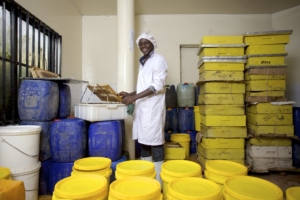 Fourth Line is an agribusiness bringing agricultural and financial services to Zambian farmers in impoverished rural areas. The enterprise empowers rural inhabitants with income-generating activities such as honey production, beehive making and sustainable forest use in the provinces of Zambia. The Borgen Project spoke with the founder of Fourth Line, Chiyanika Nakasamu, to learn about how the initiative’s work is helping to alleviate rural poverty in Zambia.
Rural Zambia in Context
Zambia ranks as one of the most impoverished countries worldwide, with more than 60% of the population living in poverty in 2022, according to the World Bank. Rural inhabitants consistently face even starker levels of poverty, with limited access to essential services like electricity and water supply.
Nakasamu adds that Zambia is experiencing another severe drought, causing power shortages and adversely affecting food production. “It’s hitting people so hard,” he told The Borgen Project. The United Nations Environment Programme (UNEP), a partner to Fourth Line, has described this situation in Zambia as a vicious cycle, where the methods they use to survive further aggravate climate emergencies and their effects on vulnerable countries.
Fourth Line: Its Vision and Strategy
In 2019, Nakasamu founded the Fourth Line. He aimed “to empower smaller farmers with beekeeping to move them away from charcoal burning.” Growing up, he had witnessed firsthand the struggles of poor farming communities, particularly in drought. When crops failed, his community relied on the forest for charcoal production and other environmentally harmful practices.
Describing their strategy to tackle this situation, Nakasamu said, “We couldn’t come up with a one-size-fits-all solution.” However, he came up with “a solution here and there,” pairing his background in finance with his passion for conservation and rural communities. When combined, his initiative combats the various problems faced by Zambian farmers.
Buzz-Worthy Initiatives
The success of Nakasamu’s initiative is based on two lines of action. Firstly, it designs innovative, low-cost beehives made from unwanted wood waste, whose yields have increased productivity from 15 kg to 70 kg per season. This approach creates income-generating opportunities for smallholder farmers while allowing communities to use the forest environment for their beekeeping without contributing to deforestation or greenhouse gas emissions.
Secondly, Fourth Line is trying to tackle the need for more access to financial services, another obstacle that prevents economic growth in rural areas of the country. Nakasamu explained that farmers “are not actually considered in the financial chain, commercial or traditional financial systems.” To combat this, Fourth Line is currently creating an SMS/USSD-based system to connect Zambian farmers to weather, agricultural and financial services and to facilitate the safe distribution of loans.
A Restored Future
The UNEP’s “Becoming #GenerationRestoration” report estimates that with half the world’s gross domestic product dependent on nature, every dollar spent on restoration projects generates up to $30 in economic benefits. Fourth Line reflects a growing interest across developing countries in creating long-term economic incentives for forest restoration.
Regarding future goals, Nakasamu said that Fourth Line is looking to extend its model to help African countries beyond Zambia and access global markets for its honey products, thereby building on its work to lift communities out of poverty.
– Hannah Dunford
Hannah is based in Edinburgh, Scotland and focuses on Global Health and Politics for The Borgen Project.
Photo: Flickr
