How the Regime Affects Children in North Korea
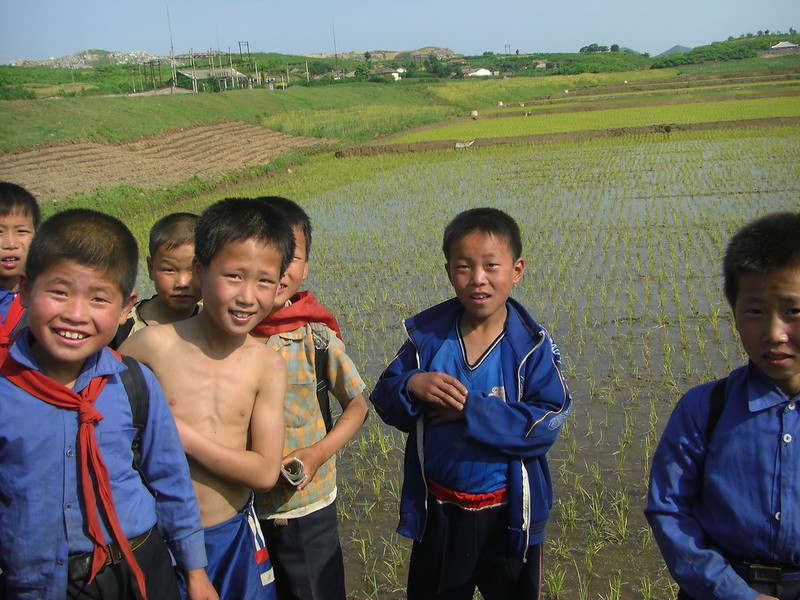 North Korea, once known as the Democratic People’s Republic of Korea, is a country in East Asia, bordered by Russia, China and South Korea. Formed in 1948 in the aftermath of World War II, North Korea has long been defined according to its authoritarian models of government. In the early ‘50s, North Korea’s first leader, Kim Il Sung, attempted to conquer South Korea, but an ensuing conflict with U.S. and U.N.-backed forces forced North Korea’s defeat. Since then, North Korea has typically eschewed Western influence, centralizing instead the concept of juche or self-reliance and structuring itself around a dynasty of autocratic leaders. North Korea’s current leader, Kim Jong-un, exercises supreme authority, bolstered by tight party control and the subjugation of the nation’s ranking elites.
However, economic mismanagement, inadequate food production and military overspending have hindered North Korea’s potential for growth. At the mercy of an authoritarian regime, its population of 26 million grapples with restrictions on travel, free expression and economic opportunity. According to some estimates, 60% of North Koreans live in poverty, ranking it among the poorest countries in Asia. Children in North Korea often suffer the worst, denied adequate resources and even subjected to forced labor.
Lack of Opportunity Hinders Children’s Potential
In the mid-’50s, Kim Il Sung, aiming to neutralize political opposition, implemented a country-wide class system, ranking citizens according to their perceived political loyalty. The Songbun system arrives at its determination by closely considering ancestral ties, patriotism during the Korean War and associations with South Korea or China. Those with better songbun–those more politically loyal–receive better education, health care and employment opportunities.
In the early ’90s, widespread famine and the fall of the Soviet Union necessitated that the Songbun system ease its ban on independently earned wealth. However, its emphasis on conformity still haunts North Korea’s children. Often judged according to their family history, North Korean children face a shortage of opportunities. The quality of their education and job potential suffers accordingly and many struggle to enjoy upward mobility.
Children in North Korea Are Subjected To Forced Labor
As a nominally communist country, the North Korean state tightly controls all facets of its economy, promoting state-run industries and funding military upgrades instead of resource production. To support this economic system, North Korean officials mobilize adults and school-age children to contribute to various sectors, including agriculture, mining and construction. Schools sometimes send children to complete short-term projects in fields or factories in exchange for a boost in funding. Similarly, children who are unable to join the military or whose families are too poor to bribe government officials are enrolled in military-like shock brigades, working long hours in hazardous conditions.
Vaccination Rates Have Plummeted
Hoping to counteract the spread of COVID-19, North Korean officials closed the country’s borders, stymying foreign trade. Without any influx of supplies, vaccines and other medical necessities have grown extremely limited. As the World Health Organization (WHO) and the United Nations Children’s Fund (UNICEF) reported, North Korea’s childhood immunization coverage dropped from 97% in 2020 to 0% by 2022, risking the reemergence of diseases like measles, polio and whooping cough. Any outbreaks could strain the country’s health system, weakening its communities’ herd immunity. Without access to routine vaccination, children’s health can only suffer.
Children in North Korea Struggle Against Food Insecurity
In the ’90s, North Korea experienced a severe famine, exacerbated by the fall of the Soviet Union. Though technically recovered, the country still faces widespread food shortages, especially after closing its borders in the wake of COVID-19. Committed to a model of self-sufficiency, North Korea has turned to its agricultural resources to nourish its population despite recent drought and typhoon rains severely undercutting crop production. As a result, in 2020, UNICEF estimated that 10 million people were food insecure, with 140,000 children under 5 suffering from acute malnutrition. In some cases, families have even dropped off their children at local orphanages, hoping to ensure better care and a chance at proper nourishment.
Looking Ahead
In striving to protect children across the globe, UNICEF has maintained a presence in North Korea. In 1990, the nation signaled its support for the Convention on the Rights of the Child, a UNICEF-sponsored international agreement that protects children’s rights and freedoms. However, in many ways, North Korea has failed to maintain its promise, compromising children’s well-being through mandated labor and oppressive class systems.
As a result, UNICEF has worked to restore children’s rights, developing a strategic program that would target food insecurity, social development, sustainability and data management. Also, as COVID-19 restrictions have eased across Asia, North Korea has gradually re-opened its borders, resuming conversations with neighboring Russia and China. Hopefully, renewed trade and foreign support can direct vital resources toward children in North Korea.
Finally, a committed humanitarian and international community remains focused on North Korea’s struggles, noting the oppression of its citizens and pushing for political reform. In advocating this, UNICEF and other organizations hope to restore children’s rights, freedoms and potential for self-determination.
– Sydney Verdi
Photo: Flickr
