Grassroots Humanitarian Efforts In Ukraine
 The latest estimate from the World Bank put the cost of Ukraine’s recovery at $411 billion. This figure encompasses the expenses associated with rebuilding damaged infrastructure, agriculture, housing and education in the country. The World Bank, as of November 2023, has given $29 billion to support basic social services in Ukraine, with more than $20 billion spent on the salaries of civil servants, teachers, health workers, first responders and pensions.
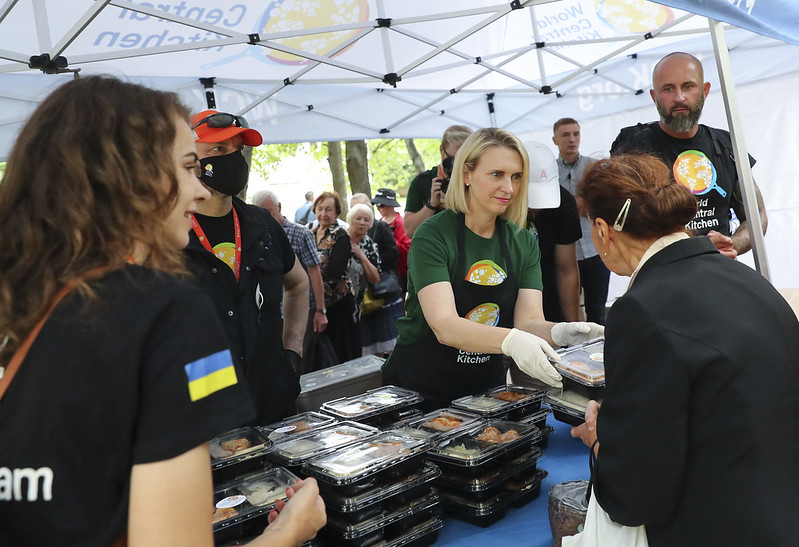
Furthermore, charitable contributions have also been widespread. In December 2023, Ukrainian President Volodymyr Zelensky said that the government-run United24 had raised $500 million from donations across the globe. The significant aid received by Ukraine has led to the impression that the country relies solely on external assistance. However, from the outset, it is crucial to recognize grassroots humanitarian efforts in Ukraine have played a pivotal role in their recovery.
Civil Society in Ukraine
Vyacheslav Hardikov, a deputy director in the Ukrainian Ministry of Justice, said in October 2023 that since the resumption of the invasion, 9,000 charities and 6,000 public organizations had officially registered with the Ukrainian government. In its 32 years of independence from the Soviet Union, Ukraine has gone through periods of democratization and regression to authoritarianism. When democracy or independence has been perceived as being under threat, participation in grassroots humanitarian efforts has spiked. Thinktank Chatham House has put it that Ukrainians have a “strong sense of autonomy from the state.”
As of September 2023, a survey by the Center for Insights, funded by the United States Agency for International Development (USAID), found that 33% of Ukrainians were volunteering part-time and 6% full-time. Another found that after 18 months of war, 68% of Ukrainians had volunteered in some capacity. The remaining 32% primarily consists of individuals who, for the most part, require assistance. Volunteerism is more prevalent among 18-29-year-olds, with 75.8% actively participating, compared to 49% among those aged 60 or above. Additionally, volunteering was more common among those who reported living well (85.9%) than those who reported barely making ends meet (46.7%). Among the 15,000 new organizations are groups formed spontaneously in reaction to the Russian invasion. Likewise, organizations that already existed altered themselves almost completely to the needs of the war.
Feminist Workshop in Ukraine
Feminist Workshop (FemWork) was formed in Lviv in 2014. For the last decade, Ukrainian women have earned more than 20% less than men, equivalent to $6000. Additionally, two out of three women have experienced gender-motivated violence. Apart from holding workshops and lectures, Femwork was created as a space “that would allow the feminist community of Lviv and Ukraine to feel safe.”
Located near the border with Poland, millions of refugees passed through Lviv. At its height, the city of 700,000 had 100,000 people moving through it daily. Speaking with The Borgen Project, FemWork said that in early 2022, they planned to close due to a lack of funding. “But when a full-scale war started, our community organized itself.”
Like thousands of others in Lviv, FemWork found refugee beds in their friends’ apartments, gave out food and clothes and helped at the train station. A psychological support workshop was revived on the night of the invasion. “Then there was no time to think, doubt or fear,” FemWork said. “Each of us did everything we could and even more.”
With Ukraine’s GDP dropping by more than 30% and poverty rising from 5.5% to 24% in 2022, what was once the basics of living have become out-of-reach for millions of Ukrainians. The 51% of 60-year-olds who had not volunteered are often pensioners with no means to move or find alternative income. FemWork coming to help grannies, as they put it, reflected that with food and medicine prices rising, the “pensions of many elderly women don’t come close to covering their basic needs.”
Trouble Getting International Help
Ukrainians have faced difficulties in receiving assistance from international organizations due to their large size. The bureaucratic processes they are obligated to employ are often impossible for ordinary people to navigate, let alone those who have been forced from their homes, leaving passports and documents behind. “We often work with elderly people who don’t even know how to use a phone,” FemWork told The Borgen Project, “so it’s obvious that they are afraid to send their documents to someone or they don’t even understand what is required of them.” People need help getting to the help waiting for them. In other words, “(We) go to the bank with them, help collect documents, defend their rights to receive assistance, explain what is required of them and what personal information is safe to transfer.”
Grassroots humanitarian efforts in Ukraine, in tandem with funding from international organizations, have been able to meet some of the daily needs of the Ukrainian people, during a time of instability and war within the country.
– Frederick Lake
Photo: Flickr
