Tigray: Two Years Under A De Facto Blockade
 When Ethiopian citizens elected Abiy Ahmed president of Ethiopia in April 2018, he represented a beacon of hope for Ethiopians, even winning a Nobel Peace Prize in 2019 for resolving conflict at the Eritrean border. However, on December 1, 2019, Ahmed launched The Prosperity Party (PP), attempting to join all the Ethiopian political parties into a single national political party. The Tigray People’s Liberation Front (TPLF), a leftist and dominating political party in power of Tigray’s regional government, refused to join the PP as they viewed “the formation of the Prosperity Party as a move to end the Federal form of government and introduce unitary government.”
By the start of 2020, the national elections that Ahmed promised experienced indefinite delay. In June, his term as prime minister received an extension without an election, causing backlash from the TPLF for their failure to uphold democracy. Ahmed attacked those suggesting a transitional government should take power. At the same time, elections were delayed due to COVID-19, threatening, “we will be forced to take action against those who attempt to hold fake elections.” Despite this warning, regional elections took place in Tigray in September 2020, where more than 2.7 million Tigrayans voted for the TPLF to represent them as their regional government.
In November 2020, the TPLF forces launched an assault on a federal military base in Tigray, describing it as a preemptive move against federal forces that were reportedly gearing up to attack from a nearby region. Within hours, Ahmed ordered a military operation against the TPLF, tainting his previous association with peace and igniting the civil war.
Humanitarian Crisis
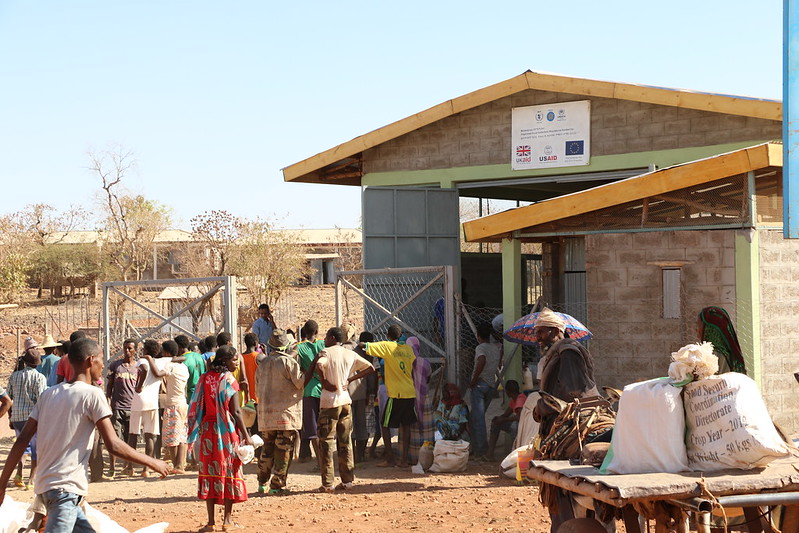
Since the civil war began at the end of 2020, 90% of Tigrayans are in need of aid. Over the last two years, Tigray has been under a de facto blockade as the Ethiopian Government has cut electricity, fuel and telecommunication to the region, even restricting humanitarian assistance. Within only a few months, by Jan 2021, the EU High Representative criticized Ethiopia as they received “consistent reports of ethnic-targeted violence, killings, massive looting, rapes, forceful returns of refugees and possible war crimes.”
Despite international pressure from the EU and the U.S. Secretary of State, who also accused the government of ethnic cleansing, Ahmed declared total war on the TPLF on July 18, 2021. The conflict, and specifically being under a de facto blockade, continues to deeply impact the lives of Tigrayans as they struggle to operate with no electricity, banks, hospitals, medicine, vaccinations and insecure supplies of food or water. According to the WHO’s Incident Management System and Emergencies Operation team leader Ilham Abdelhai Nour, 89% of Tigrayans are food insecure and almost 30% of those under five years old are acutely malnourished. Not only do these malnourished children need urgent and almost constant care, but diseases such as malaria, measles and acute respiratory tract infections are also on the rise, all while only 3% of health facilities in Tigray are fully functioning.
The Effects on Health Care Services
As a result, maternal health services have completely collapsed, causing high maternal mortality rates across Tigray as 55% of pregnant and breastfeeding women are severely malnourished and incapable of eating for one, let alone two. Meanwhile, vaccination programs and access to preventative medicine for diseases such as HIV, diabetes and malaria have been stalled, increasing the risk of disease and death.
Unfortunately, there have been reports of all sides committing war crimes, as the TPLF, Ethiopian National Defense Force (ENDF) and Eritrean Defense Force (EDF) have engaged in sexual violence against women as they participate in gang rapes. The EDF’s crimes have been marked with extreme brutality as they target Tigrayan women, using them as sex slaves.
Humanitarian Response
The International community has stood by Tigray as they condemn ethnic cleansing and the war crimes committed against civilians. In September 2021, the United States imposed economic sanctions on Ethiopia and Eritrea before providing $313 million in humanitarian assistance in April 2022. This funding helps to deliver emergency food and nutrition for almost 7 million people while rebuilding local health facilities and mobile health teams to combat disease and deliver aid to remote regions. Child protection and psychosocial services for survivors of gender-based violence and those suffering from trauma have also been provided by the U.S.
Furthermore, in February 2022, the Pan-African Lawyer Union and Legal Action Worldwide filed a complaint to the African Commission on Human and People’s Rights against Ethiopia for mass human rights violations against Tigrayan civilians. They argue Ethiopia is in violation of multiple human rights under the African Charter as they participate in military targeting of civilians and civilian structures, mass murders, sexual violence against women and enforced information blackouts.
The World Health Organization’s (WHO) Efforts
The World Health Organization (WHO) and its 23 partners are also on the ground, supplying emergency medical support whenever possible while attempting to strengthen prevention and preparation as disease outbreaks continue to rise. Being under a de facto blockade limits humanitarian access into Tigray. Between January and September 2022, WHO and its partners assisted 3 million people with health care services. Finally, the EU Commission dedicated €4 million to support displaced Ethiopians, as by the end of November 2020, 29,000 Ethiopian refugees had already fled to Sudan.
It is imperative that the international community continues to support the people of Tigray who are struggling to survive under a de facto blockade by demanding an end to the de facto blockade and providing aid whenever possible.
– Alice Isola
Photo: Flickr
