Vocational Education Training Centers in Brazil
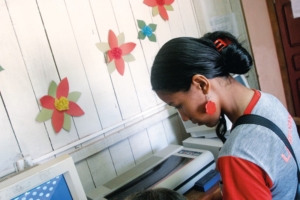 Beyond the often grim statistics of the country’s poverty, vocational education training centers in Brazil are emerging as a glimmer of hope for numerous people from the grassroots. Although not a traditional career path, they are transforming and empowering the impoverished to break through glass ceilings and end the seemingly endless cycle of poverty.
For years, Brazil has grappled with grievances about unfair wealth distribution. In 2021, according to World Bank statistics, Brazil’s poverty rate and Gini coefficient were 5.8% and a staggering 53.4, respectively, indicating a high level of disparity and that 12.5 million of the population were still under the international poverty line. The UN says one in four youth are unemployed. There is no silver bullet for the issue, but now vocational education training centers in Brazil offer an opportunity to change this narrative.
Bridging the Skill Gap
Brazil is now struggling with a significant skills gap. Companies, especially those in the technical and specialist industries, struggle to find employees with the right skills. A survey of employers by Fortune 500 corporation Manpower Group has revealed candidates in technology, logistics and marketing are now much sought after by the industries, while other estimates put vacant IT positions in the South American country at up to 400,000.
That is when vocational education training centers step in. By offering accredited and tailored courses, they help upskill Brazil’s next generation and, in a labor force that barely more than 10% receive tertiary education, provide an alternative for many.
Localized Solutions
Perhaps what sets vocational education centers in Brazil apart from other countries is their increasingly localized approach. Understanding the unique challenges of each community, government-operated institutes and corporate training programs are crafting courses that cater to local industries. In a report, the Organisation for Economic Cooperation and Development (OECD) said: “Ideally, national/regional prerogatives are combined with local freedom whereby schools can often adapt the content to the local labor markets.”
SENAI, a network of secondary-level professional schools maintained by the Brazilian Confederation of Industry, has designed the Industry Work Map for its regional bodies to decide what vocational education training programs should be offered. Specific and targeted education helps ensure students have higher chances of employment upon graduation, directly alleviating poverty within a community. However, scholars have suggested there needs to be increased communication between vocational education training centers and employers to help identify market trends in demand for skills.
Empowering Women and Marginalized Groups
A spiral of racism, poverty and exploitation has historically left women and marginalized communities facing barriers to accessing quality education and employment. Vocational education training centers are arguably the key to change.
According to the Brazilian Institute of Geography and Statistics (IBGE), women earn on average 22% less than men. OECD has found women are more likely than men to pursue a vocational track in Brazil and are overrepresented in upper secondary education, contrary to the case in most member countries of the organization. The Thousand Women Program, which started by providing 1,000 disadvantaged women in the country’s north access to vocational education, was successful and expanded in 2009. Estimates have indicated that 100,000 women have benefited from the program by 2014.
With vocational training education centers actively encouraging female enrolment and offering courses in sectors traditionally dominated by men, Brazil is tackling poverty for all.
Supporting Entrepreneurial Endeavors
Not all graduates of vocational education training centers seek traditional employment. Recognizing the potential of Brazil’s entrepreneurial spirit, many centers offer courses in business management, financial literacy and start-up development. These skills are crucial in a country where small businesses contribute to over 27% of the GDP, according to the Brazilian Service of Support for Micro and Small Enterprises (SEBRAE). Through entrepreneurship, these centers are not only creating employment opportunities for graduates but also helping stimulate local economies, fostering innovation and driving forward Brazil’s global economic position.
Fostering a Culture of Lifelong Learning
Perhaps one of the most significant impacts of the vocational education initiative is the cultural shift toward valuing education. As more success stories emerge, there is a growing realization that education is a sustainable way out of poverty. This change in mindset is critical. With a focus on continuous learning, Brazilians are better equipped to adapt to the ever-evolving job market, ensuring long-term economic stability for themselves and their communities.
The Future
As Brazil advances towards what many hope will be a more equitable and prosperous future, the role of vocational education training centers cannot be understated. These institutions, with their pragmatic approach to education and employment, are not only addressing immediate economic concerns but also cementing the country’s resilience and tenacity in the long run.
Brazilian educator and philosopher Paulo Freire once said: “Education does not transform the world. Education changes people. People change the world.” By promoting vocational education, Brazil will stand as a living testament to this ethos, reflecting the power of focused, skill-based training to help the impoverished break glass ceilings — and, ultimately, to succeed.
– Reagan Yip
Photo: Flickr
