How Tobacco Production Impacts Food Security
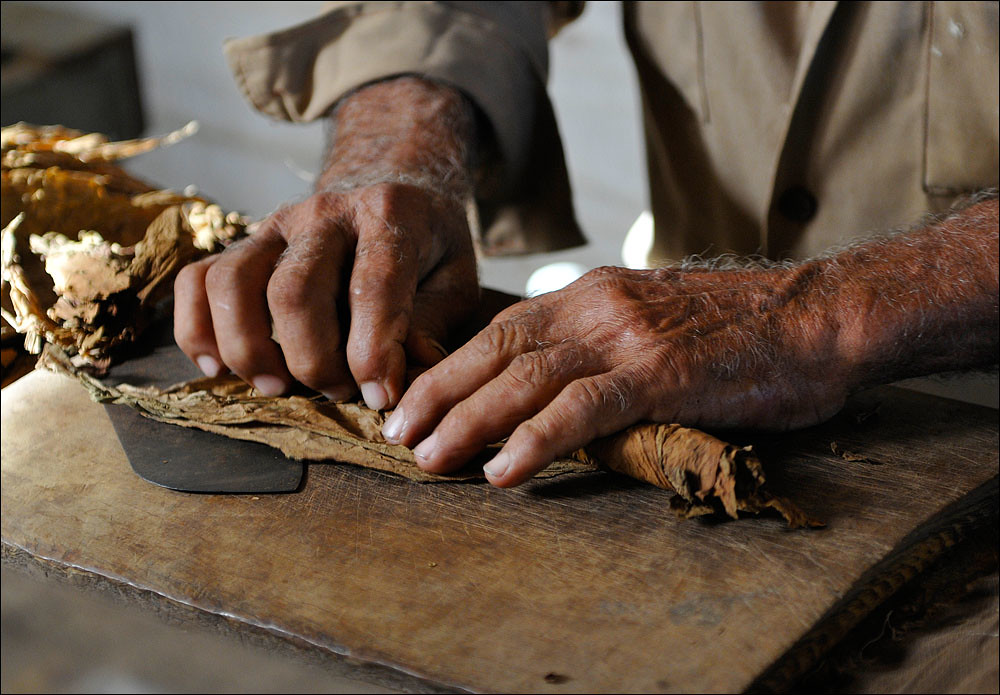 The same land that provides life also causes death: The same soil that produces energy resources, fruits, vegetables and minerals also yields a product that kills 8 million people each year: tobacco. Here is how tobacco production impacts food security.
How Tobacco Production Affects Farmers
Unfortunately, tobacco not only causes death and diseases to those who are smokers or breathe secondhand smoke. Dr. Ruediger Krech, Director of Health Promotion at WHO, points out that tobacco production causes illnesses to farmers, as they are “exposed to chemical pesticides, tobacco smoke and as much nicotine as found in 50 cigarettes.” Furthermore, it is estimated that more than 1 million children work in tobacco farms, being deprived of education.
The countries with more need to produce food are paradoxically those that produce the most tobacco. Nine of the 10 nations with the highest tobacco cultivation rates are low- and middle-income nations, according to WHO.
How Tobacco Production Impacts Food Security
Also, because tobacco production takes up fertile land, it exacerbates the food security issues in these countries. As a result of the crop’s growth-induced deforestation, water source contamination and soil deterioration, the environment and the populations that depend on it also suffer.
A record 349 million people experience extreme food insecurity across 79 countries. Many of them are in more than 30 African nations where tobacco growing has expanded by 15% over the past 10 years, according to the agency’s new report “Grow food, not tobacco.”
Transitioning Tobacco Farming to Food Crops
More than 124 countries cultivate tobacco, occupying 3.2 million hectares of arable land that farmers could use for food production. In order to shift this situation, WHO, the Food and Agriculture Organization (FAO) and the World Food Programme (WFP) have partnered to back the Tobacco Free Farms initiative. Through this plan, more than 5,000 farmers in Kenya and Zambia will receive assistance in switching from tobacco to sustainable food crops.
There are other examples of countries that have found a new way to end global hunger by switching from tobacco farming to food crops. In Bulgaria, despite European Union subsidies for tobacco production, many farmers have effectively transitioned to cultivating nuts, berries or engaging in animal husbandry. This shift has marginalized the role of tobacco in Bulgarian agriculture, leading to significant economic growth and improved living standards in major villages within established tobacco regions.
Similarly, Indonesia has seen success in transitioning tobacco farmers to alternative crops like cashews, sweet potatoes, corn and green vegetables, resulting in increased profits.
Progress in China and Malaysia
In regions like China’s Yunnan province, there has been a notable reduction in tobacco cultivation since 2012. Thousands of farmers have embraced the shift toward growing vegetables and fruits, experiencing higher net incomes due to initiatives promoting tobacco crop substitution.
Malaysia’s government has supported tobacco farmers in transitioning to cultivating kenaf, a plant used for high-quality paper, biocomposites and bioplastics. This transition has shown promising returns on investment with minimal expenditure of time, money and labor.
Transition to Food Crops in New Zealand and Sri Lanka
Similarly, in New Zealand’s Motueka region, government incentives for tobacco farming have been removed, allowing farmers to successfully transition to cultivating hops, kiwis and apples. These examples illustrate that viable alternatives to tobacco farming are not only possible but are already underway in various regions around the world.
In 2021, the National Authority on Tobacco and Alcohol in Sri Lanka launched a pilot project in the Anuradhapura and Monaragala districts aimed at encouraging the cultivation of alternative crops instead of tobacco. This initiative yielded significant results, with a remarkable 91% reduction in tobacco cultivation observed in Anuradhapura and a 57% reduction in Monaragala.
In Anuradhapura, 30% of farmers transitioned to cultivating vegetables while 16% turned to paddy cultivation. Conversely, in Monaragala, the majority of farmers opted to grow crops like peanuts, sesame and cowpeas. The success of this pilot project underscores the potential of sustainable agricultural practices in fostering economically viable alternatives to tobacco farming and addressing how tobacco production impacts food security.
Looking Ahead
It is important and at the same time gratifying that in the face of a situation such as that presented by tobacco cultivation and its negative influences on farmers and consumers alternatives are established throughout the world. These not only imply tobacco’s progressive disappearance but also reverse the situation, finding a new way to end global hunger by making the means and efforts to serve food production and helping those most in need.
– Christian Teruel
Photo: Flickr
