8 Facts About Poverty in Burundi
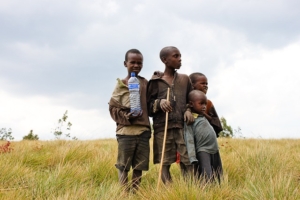 Burundi, a small East African nation, is grappling with a multitude of challenges that have contributed to its status as one of the world’s poorest countries. With over 13 million residents, a staggering 87% of the population lives on less than $1.90 per day, while its Gross National Income (GNI) per capita stands as the lowest globally at $840. The Merankabandi Social Safety Nets program has taken steps to combat this dire situation, offering support and financial guidance. However, Burundi’s struggles with poverty are deeply rooted in a complex history, marked by political instability, a ballooning population, food insecurity and the scars of a tumultuous past, leaving its citizens in need of long-term solutions.
8 Facts About Poverty in Burundi
- Most of the Population Lives in Poverty – Burundi is a small country located in Eastern Africa, with over 13 million people calling it home. It is one of the poorest countries in the world, with 87% of residents living on less than $1.90 per day. Furthermore, the GNI, Gross National Income, is the lowest in the world — $840 per capita. The Merankabandi Social Safety Nets program is actively combating the situation in Burundi by providing means of support, including financial goal-setting and helping to identify activities that will generate income.
- Political Instability Left its Mark – Burundi gained its independence from Belgium in 1962, but the legacy of colonization has been difficult to rectify. Since then, Burundi has dealt with near-constant violence leaving hundreds of thousands dead during the struggle for power. Ethnic conflict between the Tutsi and Hutu remains an issue. While politically motivated killings have declined, political murders have still been documented as recently as 2022. The ethnic battle left even more people dispersed than killed and is one of the biggest reasons for the severe poverty throughout the country.
- Burundi Has a Ballooning Population – The population of Burundi is growing at a rate that is already unsustainable. It is a landlocked country with dwindling natural resources and one of the highest birth rates in the world: five per woman. What is most concerning is the average age in Burundi is 16, meaning its young population will have more competition for fewer resources than their parents did. That has the potential to raise the odds of further violence and even higher poverty rates.
- Food Insecurity Is Rampant – The CIA estimates that 90% of the population is reliant upon subsistence farming. Because Burundi is both small and landlocked which means soil degradation is a real concern, especially as the population grows. UNICEF is addressing this through the Creatable project, which teaches students to use bags to grow vegetables instead of planting them in the ground, and it has seen success.
- Burundi is a War-Torn Nation – Poverty in Burundi has been affected by cycles of civil war that have left hundreds of thousands of people dead. Decades-long ethnic conflict between the Hutu and Tutsi reached its climax in the 1990s. A genocide was taking place in Rwanda, north of Burundi, that would wound both countries. In 1994, during peace talks, both Presidents of these countries were shot down and killed because they were Hutus. Revenge was called for on the Hutu side, and that is exactly what happened until 2006 when the civil war concluded.
- Economic Outlook – The constant conflict Burundi faces negatively impacts the agricultural sector, which is responsible for 90% of its economy. It also employs 80% of the country, which is why environmental disasters play a crucial role here. Burundi is prone to both floods and droughts, either of which would devastate the economy. Outside factors like Russia’s invasion of Ukraine and the COVID-19 pandemic have wiped away any positive economic growth.
- Adolescent Life – The child malnutrition rate remains incredibly high pushing 60% with one in two children under 5 being considered chronically malnourished. On top of that, some children find themselves thrown into war as child soldiers for the warring rebel groups. These types of conditions have massive impacts on education, which is offered for free from grades 1–9. The issue is that a birth certificate is needed to qualify, and 62% of children do not have one. The same problem exists for healthcare, which is also free under the previously mentioned conditions. The organization Humanity & Inclusion is working to address education access issues and has already helped nearly 10,000 children gain that access. Since 1992, the NGO has provided vocational training and raised awareness of preventing violence against children in Burundi.
- Development and Foreign Investment – Corruption runs rampant in Burundi, but President Ndayishimiye has made attempts to curb that. He has hosted multiple world leaders in the hope to encourage both development of and investment in the country. Efforts to curb poor governance and a low-skilled workforce are underway, while domestic investment in infrastructure is hoped to be a step in the right direction to attract foreign investors. Poverty in Burundi can be measured using the Human Development Index, in which Burundi ranks incredibly low, at 187 out of 191 countries.
Fighting poverty in Burundi is an uphill battle that requires patience and a long-term outlookTfter decades of chaos, real efforts are being made domestically and internationally to counter all the damage that was done. Children feel the full force of problematic conditions such as severe poverty. Food insecurity remains a crucial issue as the population continues to grow very quickly. However, sustainable farming methods are being taught and implemented. The opportunity for positive change is there — if Burundi leaders are able to learn from the country’s past.
– Benett Crim
Photo: Pixabay
