• Link to X
  • Link to Facebook
  • Link to Instagram
  • Link to TikTok
  • Link to Youtube
  • About
    • About Us
      • President
      • Board of Directors
      • Board of Advisors
      • Financials
      • Our Methodology
      • Success Tracker
      • Contact
  • Act Now
    • 30 Ways to Help
      • Email Congress
      • Call Congress
      • Volunteer
      • Courses & Certificates
      • Be a Donor
    • Internships
      • In-Office Internships
      • Remote Internships
    • Legislation
      • Politics 101
  • The Blog
  • The Podcast
  • Magazine
  • Donate
  • Click to open the search input field Click to open the search input field Search
  • Menu Menu
Blog - Latest News
Global Poverty

Improving Electricity Access in Africa
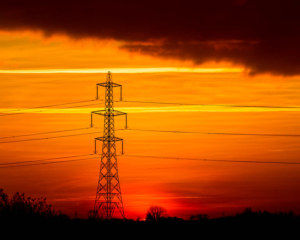
Electricity Access in AfricaIn an effort to better understand anti-poverty initiatives and their effectiveness, a pioneering Stanford University study published in November 2022 has provided some of the strongest evidence yet of the extent to which electrification fuels economic growth in the developing world. Though the research is still developing, rapid advances in computer technology indicate that the ability to collect and analyze such data will only expand in the coming years and decades.

A New Study

Led by PhD candidate Nathan Ratledge, the research relied on innovative techniques, developed at Stanford, that combine satellite imagery and AI to measure and study poverty in countries where data collection has traditionally posed a challenge. The researchers’ findings demonstrate that Machine Learning (ML) techniques can provide more reliable estimates of the causative impact of electricity access in Africa.

Specifically, the study analyzed the impact of Uganda’s expanding electricity grid on livelihoods in the country. Drawing upon vast data, it juxtaposed digitized maps from 2005 to 2016 with satellite-image-based wealth estimates for more than 640,000 houses across 27,000 villages in sub-Saharan Africa. This deep learning model, which trained an algorithm to detect patterns from images, allowed the researchers to visualize the social and economic impacts of electricity in ways not previously possible.

The Findings

Based on the findings, the electrical grid encompassed 41% of Uganda in 2019, marking a significant increase from just 12% in 2010. Furthermore, increased access to electricity correlated with substantial improvements in financial conditions and quality of life, as measured by increases in home construction, appliance use and other tangible markers of growing wealth. Overall, the data showed that the rate of wealth accumulation roughly doubled in Ugandan communities that gained electricity access, as compared with communities that lacked it. 

These findings were published during the November 2022 COP27 in Egypt, which marked the 27th annual meeting of the Conference of the Parties (COP) to the United Nations Framework Convention on Climate Change. The seminal focus of COP27 was overcoming challenges to addressing the pressing global climate crisis. More than 35,000 participants and 100 Heads of State representing governments around the globe attended the conference. One of the key outcomes was an agreement to establish a “loss and damage fund” to mitigate the inordinate effects that high-income countries have had on climate change and, thereby, on the vulnerable nations that suffer the most impact. Many of these nations are in Africa, which has seen continent-wide destruction by droughts, flooding and other climate-related disasters in recent years.

Encountered Problems

Until now, one of the primary problems encountered in measuring electricity access and its relation to poverty in Africa has been a lack of data. As Ratledge stated, “It’s hard in many low-income countries to get any reliable data. It just doesn’t exist.” A model for overcoming this obstacle, the recent Stanford study presents a new way to measure progress in the fight against global poverty.

A Promise of Future Growth

Due to the Stanford research, “we now have this technique to give local-level measurements of key economic outcomes at a broad, spatial scale and over time,” said Marshall Burke, the study’s co-author. Perhaps the most inspiring aspect of the researchers’ work is that all evidence points to an exponential proliferation of understanding. Ongoing technological advancements are expected to make such techniques widely affordable and accessible, allowing researchers to carry out similar work to better understand and combat poverty around the world.

– Gabriel Gathercole
Photo: Flickr
May 13, 2023
Share this entry
  • Share on Facebook
  • Share on X
  • Share on WhatsApp
  • Share on Pinterest
  • Share on LinkedIn
  • Share on Tumblr
  • Share on Vk
  • Share on Reddit
  • Share by Mail
https://borgenproject.org/wp-content/uploads/borgen-project-logo.svg 0 0 Naida Jahic https://borgenproject.org/wp-content/uploads/borgen-project-logo.svg Naida Jahic2023-05-13 07:30:412024-05-30 22:31:03Improving Electricity Access in Africa

Get Smarter

  • Global Poverty 101
  • Global Poverty… The Good News
  • Global Poverty & U.S. Jobs
  • Global Poverty and National Security
  • Innovative Solutions to Poverty
  • Global Poverty & Aid FAQ’s
Search Search

Take Action

  • Call Congress
  • Email Congress
  • Donate
  • 30 Ways to Help
  • Volunteer Ops
  • Internships
  • Courses & Certificates
  • The Podcast
Borgen Project

“The Borgen Project is an incredible nonprofit organization that is addressing poverty and hunger and working towards ending them.”

-The Huffington Post

Inside The Borgen Project

  • Contact
  • About
  • Financials
  • President
  • Board of Directors
  • Board of Advisors

International Links

  • UK Email Parliament
  • UK Donate
  • Canada Email Parliament

Get Smarter

  • Global Poverty 101
  • Global Poverty… The Good News
  • Global Poverty & U.S. Jobs
  • Global Poverty and National Security
  • Innovative Solutions to Poverty
  • Global Poverty & Aid FAQ’s

Ways to Help

  • Call Congress
  • Email Congress
  • Donate
  • 30 Ways to Help
  • Volunteer Ops
  • Internships
  • Courses & Certificates
  • The Podcast
Link to: National Training Week for Vocational Education in Malaysia Link to: National Training Week for Vocational Education in Malaysia National Training Week for Vocational Education in Malaysia Link to: 10 Facts About Poverty in Costa Rica Link to: 10 Facts About Poverty in Costa Rica 10 Facts About Poverty in Costa Rica
Scroll to top Scroll to top Scroll to top