USAID’s Economic Support in the Congo
As one of the poorest countries in the world, the Democratic Republic of the Congo (DRC) consistently deals with the consequences of poverty, such as disease and starvation. The country’s low GDP of $49.87 billion leaves its government with little funds for the infrastructural and industrial development necessary to invigorate its economy and derive profits. At the same time, the Congo contains trillions of dollars in untapped natural resources, which, of course, it cannot extract for sale on the global market because of its economic underdevelopment and consequent lack of industrial power. However, foreign aid can enable the Congo to develop its industries and invest in the machinery needed to cultivate and export its vast natural resources.
Successfully entering the global market promises large profits, economic development and stability and infrastructural development. For the Congo, such economic success entails allocating its profits towards government programs that would eliminate poverty, starvation and disease.
For this reason, the United States Agency for International Development (USAID) has intervened in the Congo, providing $781 million, with $40 million given for this reason alone, in financial and economic support to jumpstart the country’s underdeveloped industries. Furthermore, it has intervened in the Congo’s labor sector to open the ability for women and previously marginalized groups to work in hopes of increasing economic productivity. Details about USAID’s work and overall vision for economic development in the Congo are below.
USAID’s Vision
USAID’s support in the Congo stems from its goal of bringing the country to a place of economic self-reliance. The organization believes it can achieve this goal by localizing agricultural practices, enlarging and empowering the Congo’s workforce, encouraging the expansion of farmable land, influencing local economic participation and introducing stable mining techniques to safely extract the Congo’s natural resources. While USAID’s support in the Congo has led to slow development, it hopes to see drastic economic changes by 2025.
Country Development Cooperation Strategy (CDCS)
The organization’s Country Development Cooperation Strategy aims to transform local enterprise by encouraging economic participation. USAID’s program first intends to do this by enlarging the Congo’s labor force and diversifying its agricultural sphere. The size of the labor force is a driving factor in economic development. Young people and women are also overrepresented in the country’s unemployed population.
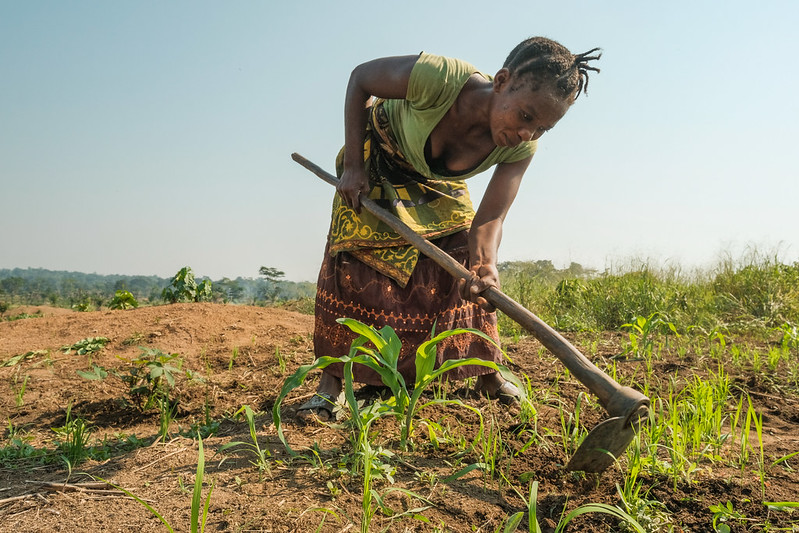
Through its Country Development Cooperation Strategy, USAID desires to increase employment in the Congo, which would not only result in economic productivity but also market participation. Importantly, increased market participation results in the spreading of wealth in which both the buyer and the seller benefit from the exchange. Thus far, USAID has focused on widening the Congo’s labor force by empowering women and previously marginalized groups to work. If citizens become employed, they can adequately farm and harvest foodstuffs, which would bring them the agricultural productivity necessary for economic independence apart from global food imports. Furthermore, by increasing employment, USAID hopes that these workers will expand their local agrarian enterprises to account for the “80 million hectares of arable land” in the Congo that farmers currently only use 10% of. Such an expansion is a necessary step for economic self-reliance.
Another concern is establishing economic productivity in a way that preserves the Congo’s plentiful natural resources without damaging them. It is no secret that resources such as water and forests experience pollution or destruction during aggressive industrial development. Because USAID desires to foster the expansion of farmable land and induce market participation, it is also interested in minimizing “biodiversity and habitat loss.” In effect, safe practices that are conscientious of the environment and reflect sustainable resource management will inevitably “increase economic opportunities for local communities.”
Responsible Minerals Trade (RMT)
USAID’s Responsible Minerals Trade (RMT) program is concerned with commencing a well-regulated minerals sector that focuses on decreasing the likelihood of trafficking and slavery concerning humane economic progression. In the past, the Congo has struggled with a plethora of problems, with blood-diamond mining as the most prevalent issue because of its humanitarian negligence and economic greed. Aside from the strict humanitarian violations, mining agencies that engaged in illegal practices rightfully could not sell their products on the global market and instead sold their minerals on the black market, thereby evading taxes that the government would have profited from and allocated towards industrial development.
However, USAID’s Responsible Minerals Trade program helps the Congo’s government surveil illegal practices and encourages mining companies to adopt legal practices, such as paying their employees and paying their taxes to the government. Consequently, USAID’s support in the Congo, on “both industrial and small-scale, artisanal mines will build on the tax and business reforms” and “will continue to support responsible minerals trade and promote compliance.” If these legal business models become widely adopted, the Congo will continue to derive profits that it can channel towards industrial development, which, in effect, will bolster its economy and render government programs directed towards poverty elimination.
Conclusion
USAID’s support in the Congo has resulted in $781 million in foreign aid and culminated in the formation of the Country Development Cooperation Strategy and the Responsible Minerals Trade, which envision increased employment and high profits through legal and humane market practices. If done properly, the Congo’s economy will grow stronger, empowering it to extract its valuable resources leading to overall economic self-reliance. Because of USAID’s support in the Congo, poverty in the Congo is closer to reaching elimination.
– Jacob Crosley
Photo: Flickr
