The Humanitarian Crisis in Ceuta and Melilla
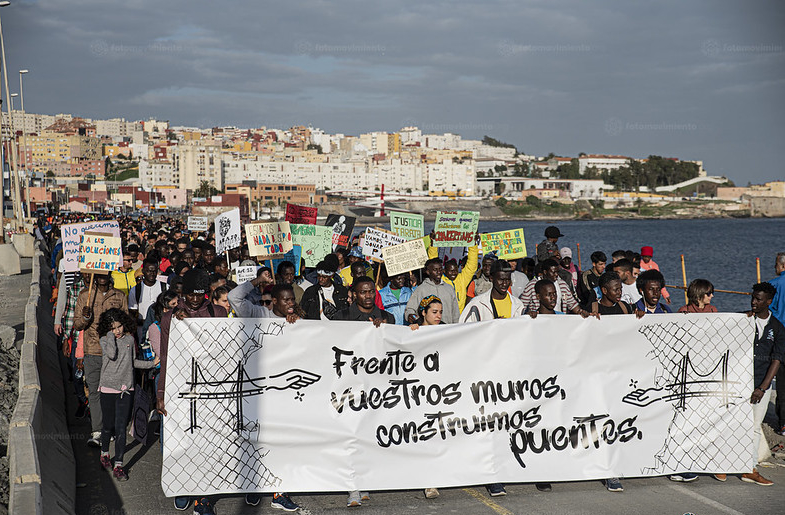 Ceuta and Melilla are two enclave coastal Spanish cities in North Africa. They have often been the final stage for thousands of migrants, refugees and asylum seekers looking to reach Europe. Migrant numbers have been increasing recently, resulting in a humanitarian crisis in Ceuta and Melilla.
History of Ceuta and Melilla
After the 15th century fall of Islamic conquest in Spain, the Spanish Christians retook the Iberian Peninsula and widened the territory to include Ceuta in 1479 and Melilla in 1668. Both cities entered European Union (EU) territory along with Spain in 1986.
In 2005, Spain erected a 20-foot-high fence surrounding Ceuta and Melilla to stop migrants from entering the cities. The fence is topped with barbed wire, hundreds of surveillance cameras and approximately a thousand police and Guardia civil units. Since the fence’s construction, the number of migrants crossing through the cities has only increased. In May, 8-10,000 migrants crossed the borders. Some migrants even swam around the fence that separates Morocco from Ceuta and Melilla.
Reasons for Increased Migration
There are two major reasons behind this increase in migrants. The first reason is the COVID-19 pandemic. COVID-19 severely affected the Moroccan economy. Hence, thousands of citizens crossed the Spanish border looking for better economic conditions and social stability.
The second reason is illegal smuggling. Morocco recently took action against the smuggling trade. Illicit smuggling negatively impacted the country’s economy. Despite this harm, smuggling was the main economic source for Ceuta and Melilla along with many northern Moroccan cities. The full shutdown of this trade left citizens in extreme financial deprivation, which led many of them to migrate.
Government Actions
The influx of thousands of migrants and asylum-seekers into Spain’s enclaves created panic among Spanish authorities, who sent the military to deal with the crisis. Subsequently, the military attacked, beat and tear-gassed migrants to deter them from entering the Spanish cities. This reaction to the humanitarian crisis in Ceuta and Melilla has sparked backlash, especially from nonprofit organizations due to violations of EU law and other legal procedures.
A spokeswoman for the nonprofit organization CEAR said that Spanish authorities sent back thousands of migrants, including children, who were supposed to have protection under Spanish law. The President of Catalonia, Pere Aragonès, said that the autonomous community in Spain is willing to shelter migrant children as a “moral imperative” during a parliamentary debate. In contrast, the far-right Vox party’s Ignacio Garriga supported the army’s use of violence against migrants. Additionally, the Euro-Mediterranean Human Rights Monitor warned Spain against violence and suggested providing safe and legal procedures to migrants pursuing protection during the humanitarian crisis in Ceuta and Melilla.
Volunteer Actions
American Red Cross spokeswoman Isabel Brasero, who helped fatigued migrants in Ceuta, said “the city has the means to take care of all the people that arrived at its shores, but you never imagine that you will face this type of situation.” After the military intervention, volunteers in Ceuta donated clothes and cooked food for the migrants. Locals in Ceuta showed solidarity with the migrants and attended the funeral of a teenager who died swimming around the breakwater to Ceuta.
Ceuta and Melilla witnessed a humanitarian crisis that created chaos and outrage in Spain, which caused military action. Nonprofits, volunteers and many others are actively working to help migrants affected by the aftermath of the crisis.
– Zineb Williams
Photo: Flickr
