Nationalism and Genocide: The Bosnian War
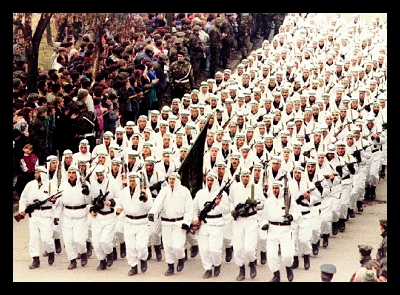
The Bosnian War was an ethnic conflict that ravaged the former Yugoslavia from 1992-1995. The Bosnian War was marked by the systematic mass rape and murder of Bosnian Muslims by Serbian nationalists. In order to understand the genocide in Bosnia, however, one must first examine the recent history of the torn Balkan region.
At the conclusion of World War II, Bosnia became a federal republic of Yugoslavia when Yugoslavia was united under the authoritarian dictator Josip Broz Tito. Under Tito, strict policies were instituted that dampened tensions between the three main ethnic groups in the newly formed republic: The Bosnian Muslims (or Bosniaks), the Catholic Croats, and the Orthodox Serbs. When Tito died in the early 1980s, Yugoslavia disintegrated, fanning the fire of ethnic hostility.
The Serbian President Slobodan Milošević was the driving force behind the genocide. Milošević ascended to power in 1989 on a platform of emotional rhetoric that appealed to his supporters. Milošević propagated a message of extreme Serbian nationalism, calling for the expansion of the Serbian state into Bosnian territory. In a 1988 Belgrade speech, Milosevic identified Bosniaks as the “internal enemy,” a gesture eerily similar to Hitler’s pre-WWII demonization of the Jews in Germany.
Wary of Serbia’s aggressive ambitions, Bosnia declared independence in 1992. A Serb army was quickly formed in Bosnia by Radovan Karadžić with the support of Milošević in Belgrade. The purpose of this army was to cleanse Bosnia of “non-Serbs” who were predominantly Bosniaks. After Bosnia’s declaration of independence, Serbian forces sieged Sarajevo and began the extermination of thousands of Bosniaks that continued for three years.
NATO intervened in 1995 and conducted military strikes that decimated the Serbs, forcing them into a disadvantageous position. In November of the same year, the presidents of Bosnia and Herzegovina, Serbia, and Croatia signed the Dayton Accords, formally bringing the war to a close. The number of Bosniaks killed is estimated at about 100,00. The population was dramatically reduced through ethnic cleansing.
How could seemingly normal human beings commit such heinous acts of violence in the name of the state? Surely nationalism was the driving force behind the genocide in the Bosnian War, but loyalty to one’s flag should never result in atrocities of this magnitude. History, however, has proven that nationalism has the ability to motivate average people to do terrible things. In the case of the Bosnian War, the Serbian commitment to ethnic cleansing and state expansion resulted in the genocide of innocent men, women, and children.
– Josh Forgét
Sources: Wikipedia, Gendercide.org, Love Thy Neighbor: A Story of War, The Three Yugoslavias
Photo: Military Photos
