Innovations in Poverty Eradication in Rwanda
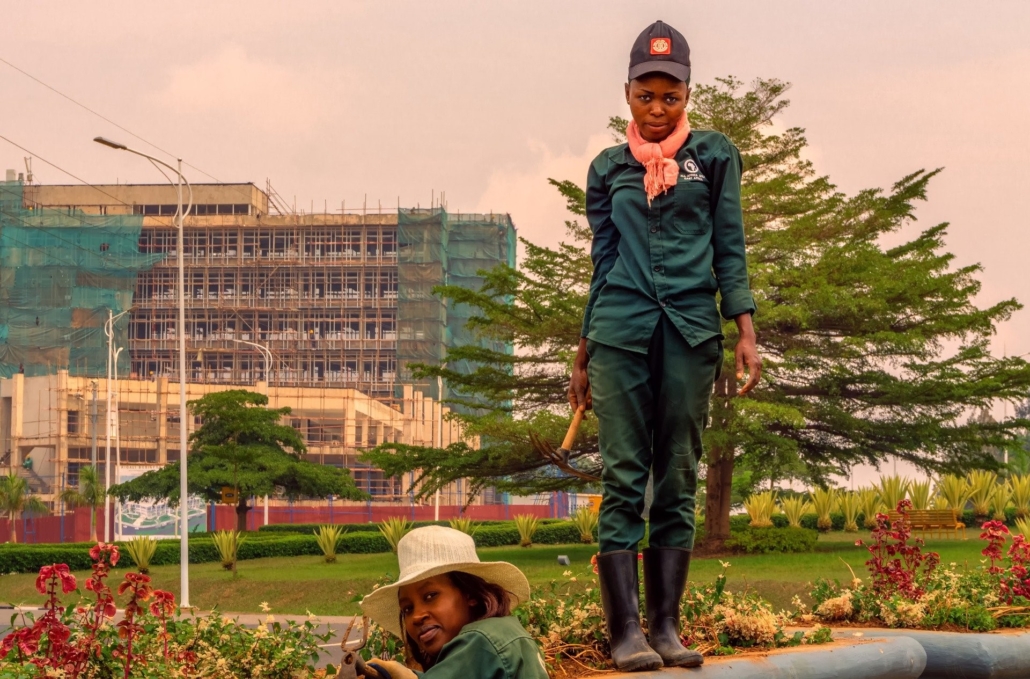
Rwanda is a low-income country in East Africa with a population of 12.6 million as of 2019. The World Bank and the IMF have supported Rwanda’s economic development, which has been remarkable throughout the past decade. Following years of conflict that destabilized national progress, particularly the 1990-1994 genocide that claimed almost 1 million lives, there have been exemplary innovations in poverty eradication in Rwanda.
In 2013, the Government of Rwanda drew its second Economic Development and Poverty Reduction Strategy (EDPRS II) as part of its Vision 2020 for socio-economic transformation, which included targets of a GDP growth of 11.5% and a 20% reduction in poverty levels. The Vision 2020 also aimed for an annual creation of 200,000 new jobs, 50% of them in non-agricultural sectors. The Government also founded the Rwanda Development Board (RDB) to further drive economic development. In 2019, RDB recorded $2.46 billion USD in investment commitments to Rwanda, with the U.S. being the top investor. Energy, water, manufacturing and the service industry attracted the highest investment. Notably, 46.5% of people in Rwanda were employed as of November 2019 with 61% of the total workforce in the agricultural sector. Here are some of the effective innovations in poverty eradication in Rwanda.
4 Innovations in Poverty Eradication in Rwanda
- e-Soko: e-Soko is an Agricultural Market Pricing Information System that the World Bank has funded. It seeks to empower farmers to make more informed decisions on farming by allowing them to access pricing information through ICT. The program also connects the Ministry of Agriculture with the farmers in sharing key information and continues to provide weekly market prices of farm produce available online. In 2019, the World Bank scored Rwanda a trading food indicator of 69.19 out of 100, which is a measure of domestic farmers’ use of regulatory processes for agricultural production. In 2020, RDB and FAO partnered in a three-year project dubbed “Support local suppliers’ capacity development and promote e-commerce in Rwanda” for smart solutions in horticulture, livestock and agribusiness.
- Girinka: Loosely translated as “may you have a cow,” Girinka is an initiative to alleviate poverty in rural communities that the Rwandan Government spearheaded in 2006 in collaboration with several NGOs. Based on the Rwandan traditional practice of giving cows as gifts, the Rwandan Government granted heifers which provided milk to combat malnutrition in children, commodity through sale of dairy products and improved agricultural output through their organic manure. By 2017, 85% of the projected households had received a heifer each with a total of 298,859 heifers distributed. A survey from 2012 showed that 79% of the households were food secure. The initiative, also known as One Cow per Poor Family, has been a success story among the innovations in poverty eradication in Rwanda.
- The One Laptop per Child Initiative: The Ministry of Education in Rwanda is committed to providing equitable, quality education for a skilled workforce in order to drive socio-economic development. To achieve this, the Government introduced changes in basic education such as a new Competence Based Curriculum that emphasizes social skills and application skills; the curriculum aims to reach a developing a workforce that is more productive. In line with this, in 2008, the Government launched an ICT program for primary schools labeled as the One Laptop per Child Program to increase understanding in mathematics, sciences and technology. As of 2019, 58% of primary schools, 85.4% of secondary schools and 51% of tertiary institutions in Rwanda were using ICT in teaching and learning. For the primary schools, 79.9% had science kits and 25.5% had a science laboratory. As of 2020, RDB put Rwanda’s literacy rate at 73.2%.
- Mobile Employment Services: In 2019, RDB introduced the Kora Portal, an online employment site that is one of the innovations in poverty eradication in Rwanda. RDB further provided buses and ICT experts to take the services to remote parts of Rwanda. By 2020, the portal had registered 965 jobs, 62 employers and 4,800 job seekers. The portal also has a skills database that recorded 95,000 graduates. This was in line with the Government’s aim to create 1.5 million jobs by 2024. As of November 2019, Rwanda’s unemployment rate was at 15.4% in comparison to 14.3% in February 2018.
Prospects
Rwanda aims to become a middle-income country by 2035 and a high-income country by 2050. In its Vision 2050, the RDB’s National Skills Development and Employment Promotion Strategy seeks to boost investment in the country, advance skills in the workforce and build on emerging technologies all to transform Rwanda’s socioeconomic status. The World Bank Group projected Rwanda’s annual GDP growth rate to be at 6.9% in 2021 in comparison to a low of 2% in 2020 from a high of 9.4% in 2019. Through the innovations in poverty eradication in Rwanda, the country’s socio-economic status should keep growing.
– Beth Warūgūrū Hinga
Photo: Pixabay
