• Link to X
  • Link to Facebook
  • Link to Instagram
  • Link to TikTok
  • Link to Youtube
  • About
    • About Us
      • President
      • Board of Directors
      • Board of Advisors
      • Financials
      • Our Methodology
      • Success Tracker
      • Contact
  • Act Now
    • 30 Ways to Help
      • Email Congress
      • Call Congress
      • Volunteer
      • Courses & Certificates
      • Be a Donor
    • Internships
      • In-Office Internships
      • Remote Internships
    • Legislation
      • Politics 101
  • The Blog
  • The Podcast
  • Magazine
  • Donate
  • Click to open the search input field Click to open the search input field Search
  • Menu Menu
Blog - Latest News
Sanitation, Technology

The Future of Toilets in Poor Countries
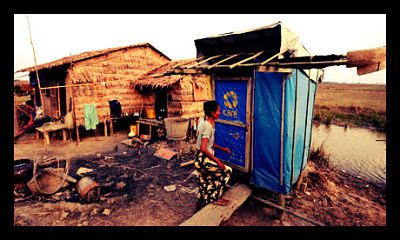
The future of toilets in poor countries
What does the future of toilets in poor countries look like? The Gates Foundation hosted a competition to reinvent the toilet to process human waste without utilizing piped water, sewer or electrical connections and to transform waste into useful resources like water and energy.

The grand prize design was a solar-powered toilet that creates hydrogen and electricity. The second place prize was taken by a toilet that creates biological charcoal, minerals and clean water. A toilet that sanitizes feces and urine and recovers resources and creates clean water won third place.

Why all the excitement about toilets? In a nutshell, return on investments in sanitation is huge. For every dollar spent on sanitation, 5.5 dollars are returned. At a national level, lack of access to proper sanitation costs countries up to 7 percent of their GDP. In addition to being a smart investment, investing in sanitation is also a moral imperative. Diarrhea is the cause of an estimated 5000 child deaths every day. In areas where people defecate in the open or share large community bathrooms, women and girls are more frequently victimized.

Despite these striking numbers, improved sanitation is neglected at every political level. Without a drastic shift in strategies and the courage to undertake this stigmatized issue, the Millennium Development target of cutting the proportion of the population without access to clean water and basic sanitation by a half will be missed by a long shot.

In addition to the Reinvent the Toilet Challenge, the government of India is running multiple campaigns to improve sanitation such as the “No toilet, no bride” campaign and an information and shaming campaign aimed at changing the culture of open-space defecation.

The World Bank also recently wrapped up a sanitation hackathon where mobile phone application developers were challenged to create apps to improve sanitation. Many involved mapping public toilets and reporting malfunctioning toilets. Several were designed as games to teach children good sanitation.

– Katherine Zobre


Sources: Gates Foundation , Global Poverty Project
Photo: The Guardian

May 8, 2013
Share this entry
  • Share on Facebook
  • Share on X
  • Share on WhatsApp
  • Share on Pinterest
  • Share on LinkedIn
  • Share on Tumblr
  • Share on Vk
  • Share on Reddit
  • Share by Mail
https://borgenproject.org/wp-content/uploads/borgen-project-logo.svg 0 0 Borgen Project https://borgenproject.org/wp-content/uploads/borgen-project-logo.svg Borgen Project2013-05-08 10:00:102024-05-24 23:49:57The Future of Toilets in Poor Countries

Get Smarter

  • Global Poverty 101
  • Global Poverty… The Good News
  • Global Poverty & U.S. Jobs
  • Global Poverty and National Security
  • Innovative Solutions to Poverty
  • Global Poverty & Aid FAQ’s
Search Search

Take Action

  • Call Congress
  • Email Congress
  • Donate
  • 30 Ways to Help
  • Volunteer Ops
  • Internships
  • Courses & Certificates
  • The Podcast
Borgen Project

“The Borgen Project is an incredible nonprofit organization that is addressing poverty and hunger and working towards ending them.”

-The Huffington Post

Inside The Borgen Project

  • Contact
  • About
  • Financials
  • President
  • Board of Directors
  • Board of Advisors

International Links

  • UK Email Parliament
  • UK Donate
  • Canada Email Parliament

Get Smarter

  • Global Poverty 101
  • Global Poverty… The Good News
  • Global Poverty & U.S. Jobs
  • Global Poverty and National Security
  • Innovative Solutions to Poverty
  • Global Poverty & Aid FAQ’s

Ways to Help

  • Call Congress
  • Email Congress
  • Donate
  • 30 Ways to Help
  • Volunteer Ops
  • Internships
  • Courses & Certificates
  • The Podcast
Link to: Countries Starting to Reach Development Goals Link to: Countries Starting to Reach Development Goals Countries Starting to Reach Development Goals Link to: Ethical Fashion Link to: Ethical Fashion Ethical Fashion
Scroll to top Scroll to top Scroll to top