Understanding Hunger in Türkiye
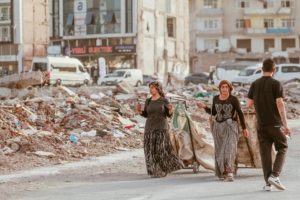 Türkiye is a country with major economic influence in the Middle East, and it is ranked as the 17th most prolific economy worldwide. In 2024, 2.5% of the population was undernourished, a percentage that has remained steady over the last five years. Despite this, the proportion of people living below the international upper middle-income poverty threshold of $6.85 per day decreased from 16% in 2012 to 7.8% in 2022.
However, a 2023 report from the Turkish Statistical Institute revealed that nearly one in three people in Türkiye faces the risk of poverty or social exclusion.
Persistently High Inflation
Türkiye’s inflation rate remains high at around 70%, significantly impacting the cost of essential goods, including food. In some instances, prices have doubled, with people struggling to afford basic products.
Moreover, the minimum wage often falls below the hunger threshold, making it difficult for families to meet their nutritional needs.
Children are particularly affected by the worsening economic conditions. Approximately one-third of Turkish children live in poverty, with many experiencing malnutrition, stunted growth and increased rates of child labor.
Economic hardship has led to increased child poverty, with many children forced to work to support their families. This not only affects their education and development but also reflects the broader issue of food insecurity within households.
Natural Disasters
Natural disasters, such as earthquakes, have disrupted food production and distribution networks. For instance, the devastating earthquake in February 2023 caused significant infrastructure damage, aggravating food insecurity in affected regions. The earthquake resulted in over 50,000 deaths, injured 107,000 people, and either damaged or destroyed 1.9 million homes, leaving 3.3 million people displaced—two million of whom required emergency shelter. The cost of recovery and reconstruction is estimated at $81.5 billion, adding strain to an already fragile situation.
The Long Term Impact of Refugees
Türkiye is home to one of the largest refugee populations globally, with over 3.1 million Syrians and nearly 300,000 refugees and asylum seekers from other countries. Since 2011, the country has allocated nearly €10 billion to support both refugees and the communities that host them, with the help of EU funds.
The long-term presence of Syrian refugees in Türkiye has brought both challenges and benefits, affecting the economy, labor market and society. Syrian refugees, many of whom are employed in the informal sector, have intensified competition for low-skilled jobs—particularly in agriculture and construction—affecting Turkish workers in these fields. However, some studies indicate that their presence has also contributed to the creation of formal, higher-wage employment opportunities. In areas with large refugee populations, rising demand has driven up prices for housing and services. Despite these challenges, refugees have helped boost the Turkish economy through increased consumption and investment, positively impacting GDP in certain sectors, accounting for around 2% of the country’s GDP in 2017. Their presence also led to a production boost of 30.6 billion TL across various sectors, which resulted in about 20.9 billion TL in added economic value—equivalent to 1.51% of GDP.
Organizations Fighting to Eradicate Hunger in Türkiye
Several organizations are actively working to address hunger and food insecurity in Türkiye:
- World Food Programme (WFP): WFP provides cash assistance to over 30,000 refugees each month to help alleviate hunger and insecurity.
- International Fund for Agricultural Development (IFAD): IFAD supports isolated rural communities by helping resource-poor farmers transition from subsistence to commercial farming. Their programs emphasize gender equality, community empowerment, and climate-resilient agricultural practices.
- Food and Agriculture Organization (FAO): FAO focuses on improving nutrition and social protection for disadvantaged groups, promoting sustainable agricultural development, and strengthening climate resilience, particularly in rural areas. FAO supports smallholder farmers, especially women, with market access and climate-smart practices.
- Action Against Hunger: In response to the February 2023 earthquake, Action Against Hunger assisted over 80,000 people by providing essential water, sanitation, and hygiene services.
While notable progress was made in reducing poverty and hunger in Türkiye over the past decade, the country continues to face challenges related to hunger, driven by high inflation and natural disasters. Through targeted support, sustainable development strategies, and humanitarian aid, there is a path forward to reduce hunger in Türkiye and help vulnerable communities access the food, resources and opportunities they need to thrive.
– Arianna Distefano
Photo: Pexels
