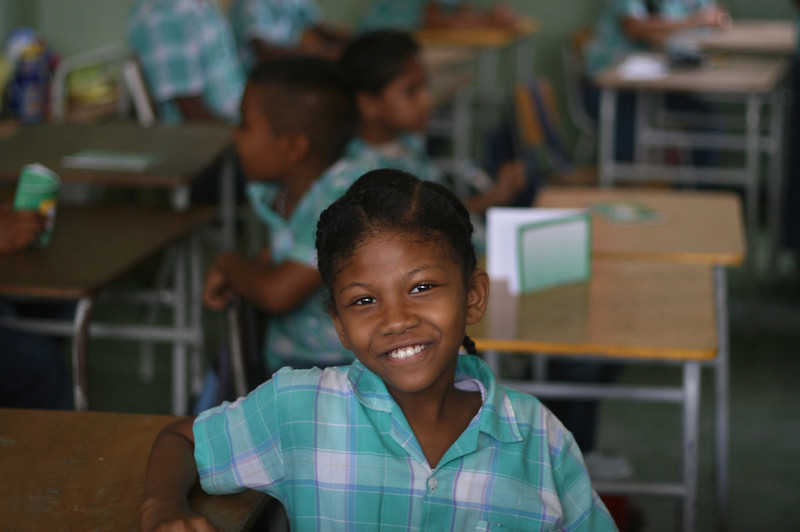
In Suriname, a South American nation of rich ethnic and geographic diversity, education holds enormous promise, but also deep challenges. While nearly all children now begin primary school, very few finish upper-secondary education. According to the latest data, only around 20.2% of adults aged 25+ have completed upper secondary education. The country’s adult literacy rate stood at 95% in 2021, up from earlier years. These figures indicate that, though access is strong, progression, quality and equity remain major obstacles.
Access, Progression and Uneven Outcomes
Primary enrollment in Suriname is near-universal: gross primary enrollment is above 110%. Net enrollment remains high at nearly 93% in 2016. However, the journey beyond primary is far more bumpy. Data from the Education Inequalities Platform reveal that at the lower secondary level, completion rates for the poorest quintile plunge to approximately 39.7%, compared with 96.4% for the richest quintile. The gap is starker at upper secondary: only 6% of the poorest students complete upper secondary, versus 52% of the richest. Geography deepens the divide – interior districts such as Sipaliwini, Coronie and Brokopondo often lack upper secondary schools entirely, making completion very difficult for children in rural and indigenous-Maroon communities. In the words of one rural educator: “Many children in the interior must travel by boat for hours, and by the time they arrive, they’ve already missed vital classes.”
Ethnicity adds another hurdle. The Maroon population consistently suffers higher dropout rates (over 56% did not complete primary school in recent assessments) compared to other ethnic groups, such as the Creole population at 14%. Gender trends also diverge from many global patterns. Specifically, boys, rather than girls, are more likely to drop out at multiple levels, a phenomenon linked to labor expectations and community norms.
Reform Agenda, Challenges Ahead and the Path Forward
Suriname is shifting from purely access-driven metrics toward outcomes and equity. In September 2024, the government approved the new National Education Policy 2024–2031, a strategic framework created to ensure all students develop relevant skills for the 21st century, with emphasis on inclusive and multilingual learning. The policy sets targets aligned with SDG 4: universal completion of free primary and secondary education as well as a significant increase in youth with relevant vocational and tertiary skills.
Early reform efforts are producing promising signals. For example, children out of school at the primary level dropped to around 5.29% in 2016, down from higher historical levels. To support remote and indigenous communities, the Ministry of Education partnered with the NGO, VVOB, to bolster rural teacher training and curriculum adaptation. A teacher involved in the pilot claimed, “When we started using tailored bilingual materials, even timid learners began volunteering; they felt their home language was respected.”
Despite reform momentum, Suriname still fulfills just 61.6% of its potential for the right to education. This underperformance shows that enrollment is necessary but not sufficient. Key quality issues include repetition rates; for primary grades, the repetition rate was about 16%. Out-of-school rates for youth of upper-secondary age hover near 37.9%, and for the poorest rural quintile near 59%. There’s also a need to modernize curriculum and accelerate access to digital and early-childhood education.
Suriname has built strong foundations in primary access, near-universal literacy, and a new national policy. The next goal is converting that access into completion and a meaningful opportunity. If the country is able to achieve this, education can become a true driver of social mobility, not a reinforcement of existing inequality. The new policy, if implemented with transparency and backed by strong monitoring, may turn Suriname’s educational promise into inclusive progress for generations to come.
– Jeff Zhou
Photo: Flickr
