Living Conditions in Saint Pierre and Miquelon
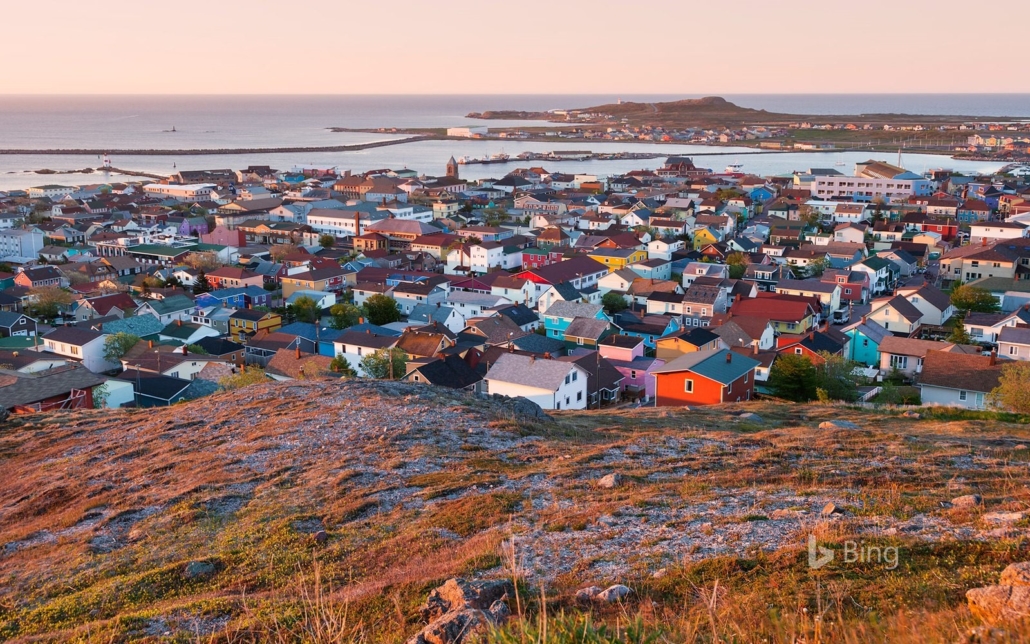
A short distance from the Canadian province of Newfoundland and Labrador lies Saint Pierre and Miquelon, an overseas collectivity of France. Its remoteness and obscurity marks it as culturally, economically and demographically distinct from the rest of North America. Living conditions in Saint Pierre and Miquelon compare well with much of the developed world in some respects, but not all. Below are the top 10 facts about living conditions in Saint Pierre and Miquelon.
10 Facts About Living Conditions in Saint Pierre and Miquelon
- Economic Disputes Disrupted the Fishing Industry – Fishing quota disputes with neighboring Canada have devastated the islands’ traditional economic reliance on the fishing industry. Moreover, in response to rampant overfishing, the International Arbitration Tribunal of New York’s prohibition on deep-sea cod fishing in 1992 ended centuries of this practice, contributing to the decline in living conditions in Saint Pierre and Miquelon.
- The Service and Energy Sectors and Government Employment Supplanted Fishing – With the decline of the fishing industry, the service sector and government employment dominate the economy. As of 2010, the services sector comprised 86 percent of the islands’ GDP, while 2006 data indicates that (as of that year) agriculture constituted two percent of the GDP and industry comprised 15 percent. The construction of a thermal power plant in 2015 precipitated the expansion of the extractive industries and energy sector.
- Sex Ratios Differ Between Age Groups in this Aging Population – As of July 2018, the population of Saint Pierre and Miquelon stood at 5,471. At 41.44 percent of the total population, citizens 25 to 54 years old comprise the largest share of the population. Citizens 55 to 64 years old are 13.69 percent and citizens 65 years and older are 21 percent of the population. In younger age groups, the sex ratio skews in favor of males, a characteristic shared with citizens 55 to 64 years old but not with those 25 to 54 years old or 65 years and older.
- A Transforming Economy Impacts Unemployment Rates – Unemployment in the islands decreased from 9.9 percent of the labor force in 2008 to 8.7 percent of the labor force in 2015. The marginalization of the traditional fishing industry and the rise of the service sector and certain industries influence employment rates.
- Most Inhabitants are French-Speaking Catholic Basques and Bretons – As an overseas collectivity of the Republic of France, French is the official language of the islands. Most of the population descends from Basque and Breton fishermen. An estimated 99 percent of the population identifies as Roman Catholic.
- With Little Arable Land, the Population is Overwhelmingly Urban – As of 2018, 90.2 percent of the population resided in urban centers, mostly concentrated on Saint Pierre Island. Agriculture constituted two percent of the GDP as of 2006, although it employs as much as 18 percent of the labor force. As of 2011, only 8.7 percent of the land qualified as arable.
- Fertility is Low, While Life Expectancy is High – Estimates in 2018 indicated that total life expectancy was 80.7 years, 78.4 years for men and 83.2 years for women. Infant mortality lies at 6.4 deaths per 1,000 live births, 7.4 per 1,000 for male births and 5.3 per 1,000 for female births. However, the fertility rate is low, averaging at 1.57 children born per woman as of 2018.
- The Health Care System Functions Well – Saint-Pierre and Miquelon boasts a universal health care system. Until 2015, pursuant to an agreement between France and Canada, islanders could seek medical treatment in St. John’s, the capital of the Canadian province of Newfoundland and Labrador. Starting in 2015, Saint-Pierre and Miquelon began probing for an alternative to this prior arrangement as a result of increasing costs.
- The Educational System Conforms to Metropolitan France – Saint Pierre and Miquelon provides mandatory and free education from the ages of six to 16. Primary education lasts five years and secondary education lasts up to seven years, following the French model. Secondary education consists of a four-year program followed by three further years of study and the bestowal of a baccalaureate degree.
- Citizens Directly Elect Representatives to a Local Autonomous Legislature – As an overseas collectivity of the French Republic, Saint Pierre and Miquelon governs itself through a unicameral territorial council elected by absolute majority vote. This legislative body consists of 19 seats, 15 from Saint Pierre and four from Miquelon. An electoral college vote guarantees representation in the French Senate by a single senator for five-year terms.
Though living conditions in Saint Pierre and Miquelon are not intolerable, opportunities for improvement exist. The archipelago’s relative remoteness allows it to avoid the attention of outsiders, yet it has not escaped the forces of globalization, of which the economic and cultural consequences have been tremendous. These top 10 facts about living conditions in Saint Pierre and Miquelon ought to dispel any notion that this is an inconsequential territory.
– Philip Daniel Glass
Photo: Flickr
