10 Facts About Corruption in Afghanistan
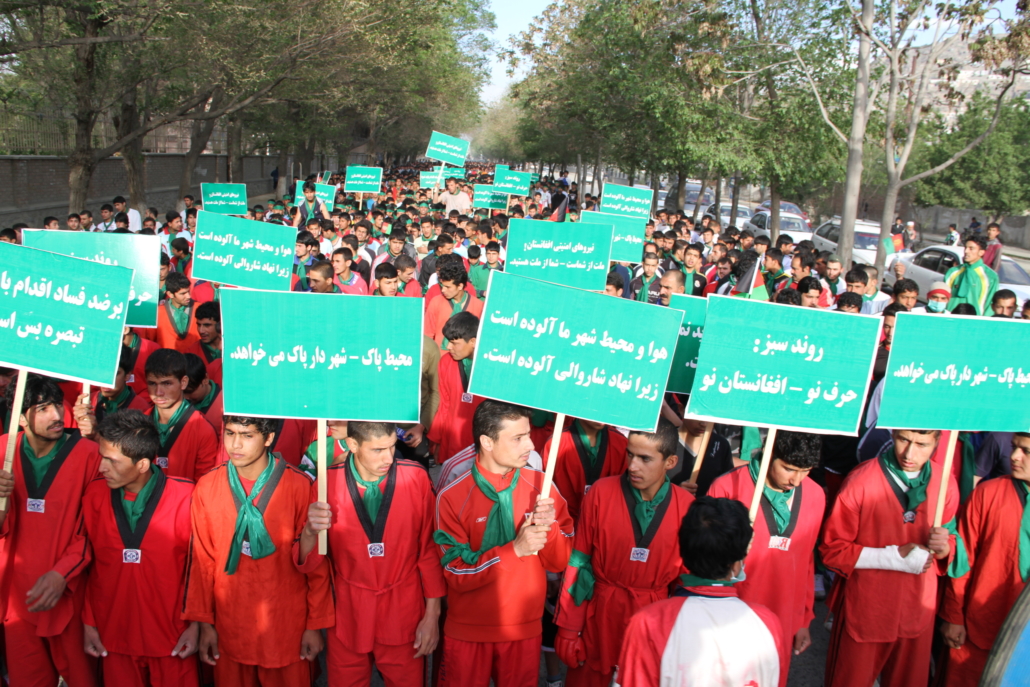 War has plagued the Islamic Republic of Afghanistan, a South Asian nation of approximately 35 million people, for 40 years. The near-constant state of conflict produced immense corruption, which persists during the extended NATO mission there today. Listed below are 10 facts about corruption in Afghanistan.
10 Facts About Corruption in Afghanistan
- Afghanistan is one of the 10 most corrupt nations in the world. According to Transparency International, it ranks 172 out of 180 total countries and accompanies Sudan and North Korea near the bottom of the list. There are some signs of gradual improvement, but Afghanistan has a long way to go to ascend the list.
- Afghan government corruption reduces the effectiveness of American reconstruction aid. The Special Inspector General for Afghanistan Reconstruction (SIGAR) reported to the U.S. Congress in April 2019 that corruption was the foremost issue dooming restoration efforts. Unfortunately, through the government’s anti-corruption campaigns, the SIGAR also discovered that certain international standards are not always met, such as cooperation between agencies.
- Corruption significantly impacts business development in Afghanistan. The World Bank interviewed 410 firms in 2014 and 16.2 percent stated that corruption was the largest impediment to business. It ranked only below political instability in the survey, a telling indicator of its prevalence. Gifts became fundamental for businesses wanting to grow. Acquiring a government contract necessitated bribes 46.9 percent of the time, and 79.3 percent of plumbing requests required bribes.
- The 2010 Kabul Bank Theft. Bank executives stole millions of dollars of Afghans’ money and crippled Afghanistan’s already shaky financial system. Kabul Bank’s CEO, Khalilullah Ferozi, and its founder, Sherkhan Farnood, led the fraudulent money laundering operation until the bank’s near collapse. The SIGAR states that this extensive corruption scandal cost the Afghan government an $825 million bailout, an expense which consumed five to six percent of the nation’s GDP. Although the country imprisoned both Ferozi and Farnood, their scam’s repercussions continue. Afghanistan’s government is still repaying debts after the bailout to save the systemically vital institution.
- Public services routinely fall prey to gifts as well. Transparency International reported that 50 percent of Afghans requesting aid from government agencies in 2012 paid a bribe to have their needs met. Bribery demands handicapped the distribution of benefits to all Afghan citizens. According to a U.N. study on the issue, for every five Afghans who paid a bribe, one Afghan could not pay due to lack of funds. As a result, impoverished households received less assistance than wealthier families who could afford bribes.
- Afghanistan’s universities are not immune to the corruption prevalent in the government and banks. Colleges rely on paper records and lack digital verification systems essential to preventing deceit. As a result, the U.N. found that there are approximately 20,000 “ghost students,” or registered students who do not actually exist, in the university system. The Afghan government, believing the students are real, grants loans for education, which university staff steals. U.N. statistics display that university-related scams cost the government 40 percent of potential tax revenue.
- By virtue of their position, Afghanistan’s police force is especially prone to corruption. The U.N. found that 22 percent of bribes that people paid in 2012 were to police, and disturbingly, 24 percent of the bribes people offered to police were to prevent arrest. Falsifying evidence and ignoring drug offenses had similar negative effects on police integrity. The police have personnel verification issues as well. Reuters recently reported that there are 800 “ghost officers” in Zabul province whose salaries disappear into unknown hands.
- Community Based Monitoring (CBM). A civil society organization named Integrity Watch Afghanistan operates several CBM programs to maintain governmental accountability. One of these programs, CBM-Trials, aims to combat corruption by encouraging citizen involvement in public trials and monitoring adherence to procedural rules. Implementation of CBM-Trials included electing monitors who would attend public cases and educating local populations on court procedures with mock trials. From a humble start in two provinces, CBM-Trials expanded to seven provinces by 2014 and managed to monitor 5,019 trials and 775 cases. These numbers exceeded the 1,000 trial a year goal set by the program in 2011. The program continued into 2018 after 50 successful Theater of the Oppressed performances, in which audience members participated in theatrical critiques of court corruption.
- Anti-Corruption Justice Center (ACJC). On May 2016 President Ashraf Ghani’s established the ACJC, which signaled renewed devotion to combating corruption. The ACJC is a special court system that prosecutes corruption cases in the government and military. Most recently, it found success in prosecuting Colonel Abdul Hamid for an $80,000 scam. It is a significant step towards rule of law, even if, according to the SIGAR, ACJC officials still fear the act of prosecuting the most powerful political figures.
- The Afghan government also promotes grassroots efforts to reduce corruption. A February 2019 Hack4Integrity event in Kabul, run by the U.N. Development Programme and Blockchain Learning Group, challenged tech-savvy Afghan youth to develop programs that would fight graft. Over 100 youth participated in the 19 team competition. Officials awarded $30,000 in prize money to the five winners and hope youthful energy will help end a nationwide problem.
The above 10 facts about corruption in Afghanistan portray a long, fraught road toward halting persistent abuses of power. However, they also provide hope for Afghanistan’s future. Progress is slow, but Afghanistan’s civil society, President Ghani’s ACJC and youth programs have opportunities to stamp out corruption. The new commander of Afghanistan’s police force, General Khoshal Sadat, has energetically devoted himself to legitimizing police activities as well. Corruption abounds, but Afghans understand that it does not have to.
– Sean Galli
Photo: Wikipedia Commons
