Understanding the Water Shortage in Chennai
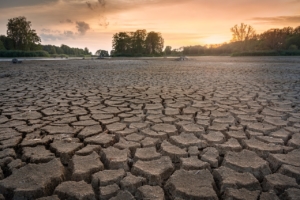 Water has become a scarce commodity for residents in Chennai, India. Reservoirs once teeming with water are now dry lake beds. Water levels in the area are the fifth-lowest recorded in the last 74 years, sparking worry about future water shortages. Drought-like conditions paired with the limited access to water are driving city officials and residents to find alternative sources of water.
Why Access to Water Matters
Water is an integral part of everyday life in Chennai. At least 85 percent of the area is directly dependent on rain to recharge its groundwater. Agriculture is a big part of Chennai’s ecosystem and economy. Rain provides water for irrigation and livestock. Healthy living is another result of easy access to clean water. Rain provides water for drinking, cooking, cleaning and other household needs.
Rainfall is collected, stored and treated in four main reservoirs: Chembarambakkam Lake, Redhills Lake, Poondi Lake and Cholavaram Lake. These bodies of water depend on seasonal rainfall to replenish water levels year after year. At capacity, Chembarmbakkam holds 3,645 million cubic feet (MCFT) of water, Redhills holds 3,330 MCFT, Poondi holds 3,231 MCFT and Cholavarm holds 1,081 MCFT.
Recent records show that combined, all four reservoirs are at 1.3 percent of total capacity. In May 2019, Chembarambakkam only held one MCFT of water, Redhills held 28 MCFT, Poondi held 118 MCFT and Cholavarm held four MCFT. The water shortage is impeding the city’s ability to produce food, creating severe food insecurity and exposing its residents to unsanitary living conditions.
Factors Driving Chennai’s Water Shortage
Various factors are contributing to the water shortage in Chennai. The most observable factor is the lack of rain. Typically, India’s monsoon rain season occurs between June and September. Similar to a hurricane or typhoon, monsoons bring torrential rains across India which replenish the region’s water supply. For the past couple of years, Chennai has experienced lower than normal rainfall. Even monsoon rain levels were recorded to be 44 percent lower than the average in June 2019.
Lower rainfall, combined with scorching temperatures, has created drought-like conditions in the area. To make matters worse, Chennai continues to grow water-guzzling crops like sugarcane, rice and wheat. With no improvements in sight, some Chennai residents have chosen to migrate out of the area to avoid the consequences of the impending water shortage.
Response to the Water Shortage in Chennai
City officials and residents are responding to Chennai’s water shortage and drought. Here are three ways Chennai is increasing and conserving its water levels:
- Water Delivery – Affluent Chennai residents and businesses are relying on the water supply of neighboring cities. They pay trucks to deliver clean water to their homes and places of business. City officials are also following suit. They arranged for 10 million liters of water to be transported by train from Jolarpet, a city 200 kilometers away. The water will be pumped upstream in area lakes. Through the natural gradient, the water will flow downstream and help increase water levels. This practice recharges depleting groundwater in the region. As a result, Chennai will offset the crippling effects caused by the lack of rain as its green cover increases and agriculture receives a boost.
- Rain Harvesting – Non-affluent Chennai residents are digging trenches and embankments in an effort to increase their own access to water. Rain harvesting is a common practice in India, but the high cost of water delivery and below-average rainfall has made the practice more important than ever. While individual trenches and embankments cannot hold large amounts of water, they do give residents a chance to increase water levels in the area. The cost of upkeeping the rain harvesting structures is equivalent to $1.40. As a result, Chennai residents are able to increase their field productivity and maintain healthy livestock at a low cost.
- Micro-Irrigation – Agriculture methods are also changing as part of Chennai’s water shortage. Farmers are finding new methods of irrigation in efforts to conserve water. Recently, 1,000 solar pumps were added to cultivated areas. The solar pumps will help farmers distribute water more efficiently. The solar pumps also offset the cost associated with growing water-guzzling crops like sugarcane.
The Chennai Metropolitan Water Supply and Sewerage Board continues to monitor India’s water situation.
– Paola Nuñez
Photo: Flickr
