8 Ways the African Continental Free Trade Area Agreement Will Impact Intra-African Trade
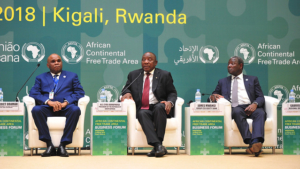 Since 2015, the African Union (AU) has been working to boost intra-African trade. In May 2019, 52 out of the 55 AU member countries signed the African Continental Free Trade Area (AfCFTA) agreement, making Africa the largest free trade area in the world. Africa, as a whole, has struggled with extreme global poverty and economic development. AfCFTA aims to unlock Africa’s economic potential and improve the lives of over 1.2 billion people. Here are eight ways AfCFTA will positively impact Africa.
Eight Ways the African Continental Free Trade Area Agreement Will Impact Africa
- AfCFTA will lower tariffs. Within five years, AfCFTA plans to cut tariffs by 90 percent. Currently, it is easier for AU members to export goods to the U.S. and Europe than to other African countries. Only 15 percent of trade in Africa is intra-regional. In comparison, intra-regional trade accounts for approximately 70 percent of all trade in Europe. By reducing the cost of importing and exporting goods in Africa, AfCFTA hopes to increase trade negotiations between African countries.
- AfCFTA will replace Africa’s Regional Economic Communities. Since 1991, eight sub-regional bodies called Regional Economic Communities (RECs) were the key building blocks for economic growth. RECs were one of the obstacles that prevented intra-regional trade from blooming. Essentially, Africa was home to eight different trading blocks. Each REC followed its own unique set of trade rules and regulations. AfCFTA will replace RECs as the authority over trade and ultimately unify all the RECs into one trading block.
- AfCFTA will standardize trade rules and regulations. Time and money were frequently wasted due to the ambiguity and guesswork required for intra-regional trading. AfCFTA will simplify the process for AU members to trade with each other by standardizing trade rules and regulations. Standardization eliminates the inefficiencies related to intra-regional trading and gives AU members the freedom to build trade relationships with neighboring countries.
- AfCFTA will promote a shift towards industrialization. Africa’s new trade agreement came at the best time. China, the lead producer of industrial goods, is increasing its efforts to move away from industrializations. China’s trade tensions with the U.S. has prompted the country to find other ways to sustain their economy. Many economists have predicted that Africa will become the next hub for industrial goods. By allowing goods to move more freely across the continent, AfCFTA will give AU members an incentive to shift towards industrialization.
- AfCFTA will advance manufacturing opportunities. With the new focus on industrialization, Africa will have to add more factories to produce more goods. AfCFTA gives small and large African countries alike the opportunity to advance manufacturing opportunities. Many economists believe that manufacturing is one of the main drivers of economic growth. Since global trade is based on goods, countries that produce the most goods often have the highest economies. The increase in factories and goods produced in Africa will help drive economic development.
- AfCFTA will replenish Africa’s natural resources. Raw materials, such as oils and minerals are currently one of Africa’s main exports. These extractive exports account for 75 percent of Africa’s external exports. The U.S., Europe and China are the main consumers. The extractive market is a volatile one and severely depletes African countries from valuable natural resources. The shift towards industrialization and manufacturing will help stabilize reserves of oils and minerals in Africa. AfCFTA also opens a new demand for extractives within Africa, allowing for the continent’s natural resources to move freely throughout its borders.
- AfCFTA will create more job opportunities. Employment is another important factor for economic development. Agriculture is the biggest industry in Africa and therefore the source of most employment opportunities. As AfCFTA encourages AU members to invest in industrialization, the labor force will shift from agriculture to manufacturing. Research has shown that one manufacturing job has created an additional job in another sector that supports the work being done by the manufacturers.
- Through AfCFTA, Africa hopes to improve the lives of its citizens. Today, Eritrea remains the only AU country that has not signed the AfCFTA. Benin and Nigeria signed the agreement in early July. Once all 55 countries sign the agreement, it is predicted that intra-African trade will spike up to 52.3 percent. Industrialization and manufacturing opportunities are predicted to develop rapidly in Africa as well.
These changes will not occur overnight. But in a couple of years, through intra-African trade, Africa can expect to see an overall improvement in its economy and a significant dip in extreme global poverty thanks to the African Continental Free Trade Area Agreement.
– Paola Nuñez
Photo: Flickr
