10 Important Facts About Poverty in South America
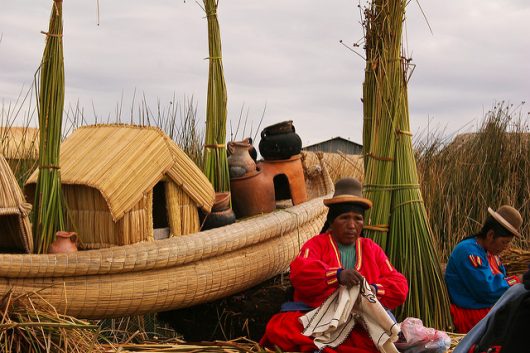
Substantial parts of Africa, Western Asia, South America and the Caribbean are regions that grapple with scant economic growth and poverty. South America alone consists of twelve sovereign states, most of which are subject to low per capita GDP and high rates of poverty. Here are ten facts about poverty in South America:
10 Facts About Poverty in South America
- South America (SA) suffered the onslaught of European colonization roughly from the 15th to the 17th Centuries. The Iberian colonial policies led to uneven distribution of land and insecure property rights, which in turn contributed to persistent economic and political inequality until the 19th and 20th Centuries. Oxfam reported in 2016 that Latin America still has the most unequal distribution of land in the world, which in turn “limits employment; increases urban poverty belts, as people are expelled from rural areas; undermines social cohesion, the quality of democracy, environmental health; and destabilizes local, national and global food systems.”
- In 2016, there was an estimated rise in poverty in SA from 28.5 percent in 2014 to 30.7 percent. In fact, 61 million people live in extreme poverty and 220 million people live on less that $10 a day in this region.
- The entire region of SA was majorly affected by the economic crises of the two largest countries on the continent — Brazil and Argentina between 1998-2002. By 2001, the IMF feared that Argentina’s fiscal policy, public debt and currency board would become unsustainable. The holdouts case in Argentina (2005) and the Petrobras scandal in Brazil (2014) later created a chaotic and fragile economic scenario. In fact, Argentina is still trying to recover from high inflation and its currency crunch. Brazil’s external debt in 2017 was 26.5 percent of its nominal GDP and government debt was 74.04 percent of the GDP. Venezuela’s wavering economic policies, economic collapse and inflation have also contributed to the scale of poverty in the region.
- Of the ten facts about poverty in South America, eco-political causes hold a special mention. Discovery of rampant corruption and bribery in Brazil’s state-controlled oil giant, Petrobras, and other industries led to largescale arrests of company officials and many politicians. This in turn caused a loss of jobs for thousands of employees and a huge economic set-back. A dip in international oil prices further affected the Brazilian economy, as did the the arrest of Odebrecht’s chief executive and lay-offs in 2015. The unemployment rate in Brazil remains at a high of 11.8 percent. Argentina, too, has suffered the economic consequences of a sovereign debt default since 2001. It has encountered a decline in GDP and inflation, resulting in recession. The MIT Billions Project in 2014 quoted an annual inflation rate of 40 percent in Argentina. Venezuela is on the verge of defaulting its foreign debt and has encountered a massive decline in its GDP accompanied by inflation. Ever since the 2014 economic recession, Venezuelans have been suffering from poverty, high mortality rates, unemployment, lack of medical facilities and hunger.
- Large-scale unemployment followed by economic recession, strict government regulations, corruption and other factors have led to the creation of a parallel or informal economy in many of these SA countries. These illegal businesses evade state-regulations, taxation, social security contributions, market standards, minimum wage/work hour policies and thrive as shadow economy. While a certain portion of the money earned is spent directly on the official economy, these underground businesses lead to tax evasion, reduced tax revenue, increased tax rates, lower wages and work hours, corruption and inflation.
- According to the World Hunger Report, despite being successful in tackling food insufficiency, SA saw a rise in undernutrition from 5 percent in 2015, to 5.6 percent in 2016. As of 2018, the economic crisis in Venezuela led to devastating food shortage and starvation. The United Nations Organization for Food and Agriculture estimates that more than 42 million people in South America are suffering from hunger.
- The Word Bank observes that while more children have started going to school, there still remains a disparity in access to education based on the huge income gap in these countries. The other factor affecting education lies in the urban-rural divide, with the latter having lower rates of secondary-school enrolment.
- Brazil and Colombia, which make up a large portion of the region’s population, have been experiencing a decline in fertility and mortality rates alongside new health problems from industrialization and urbanization. The health infrastructure in these countries are not up-to-date and people have limited access to safe water and sanitation facilities. Economic inequality adds to the lack of equal distribution of health services and access to healthcare.
- Despite the scale of poverty in SA, consistent steps are being taken to ameliorate poverty across the region. Oxfam has been urging the governments to redistribute land evenly, protect territorial rights of indigenous communities, prevent depletion of natural resource and establish fair taxation. The U.N.’s Food and Agriculture Organization and the International Fund for Agricultural Development have been proposing ways to end rural poverty and increase employment. Since the 1990s, attempts have been made by the governments to improve the healthcare system through reforms. Several banks have been trying to ease the monetary policies and rates of interests.
- The 2018 World Economic Situation Prospects Report states that the region’s economy has grown by one percent in 2017 and is expected to increase to 2.5 percent in 2019. The recovery will be largely a result of improved economic activity in SA.
Future Efforts
The ten facts about poverty in South America listed here provide a general yet critical understanding of aspects of poverty in the region. Unequal land/wealth distribution, corruption and eco-political instability still remain some of the common and overarching reasons behind the region’s struggle with poverty and its aftereffects.
– Jayendrina Singha Ray
Photo: Flickr
