Prosperity with High Prices: 10 Facts About Poverty in Tianjin
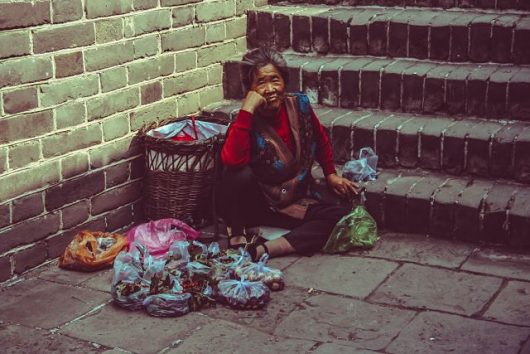 Tianjin is a metropolis in China near Beijing, located in the North China Plain region. It is one of four cities that are directly controlled by the Chinese central government. Tianjin is one of the most populous cities in China, and its economy has been growing at an astonishing speed. In 2016, it achieved the goals of its twelfth Five-Year Plan (2011-15). Its overall GDP reached ¥1.65 trillion, or $252 billion. Its average annual GDP growth during these five years was 12.4 percent.
However, poverty still exists. Despite Tianjin’s overall economic growth, some serious problems hide below the surface and cannot be ignored. These facts about poverty in Tianjin help shed light on these hidden issues.
10 Facts About Poverty in Tianjin
- There are 16 city-governed districts in Tianjin. Each district has a specific economic strength. However, the economic development of Hongqiao District is driven by wholesales and retail, which is not enough to improve the district’s standard of living as the population increases.
- Heping District, Hexi District, Nankai District, Hedong District, Hebei District and Hongqiao District are the six most developed districts in Tianjin. For example, there are many financial activities in Heping District and business trades in Hexi District. Technology development is very significant in Nankai District, and in Hebei District, there are many creative and innovative ideas to facilitate better living standards. The overall quality of life is good in these districts thanks to their prosperity,
- According to research on urban poverty in China, if the income of a household is lower than ¥210 ($33) per capita per month, that household is considered to be living in poverty.
- There are many internal Chinese migrants in Tianjin, and the rate keeps rising. The majority of migrants are around 15 to 59 years old, totaling 77 percent of all migrants. Many of them come to Tianjin to seek job opportunities. However, a large number of them begin with low-income jobs, such as construction workers and bricklayers.
- There is very limited usable water for Tianjin citizens. There are a total 15 million people in the city, but only 4.9 percent of the water is drinkable.
- Since Tianjin is very close to Beijing and Hebei, these three cities comprise the Beijing mega-region. Four years ago, President Xi Jinping announced a plan to integrate rural villages near the mega-region with the three cities. Many farmers in these villages do not have a heating system in the winter, and they even cannot afford firewood to warm themselves. The announced plan redistributes resources equally, so village citizens are consistently provided with basic needs.
- In March, Tianjin Party Chief Li Hongzhong stated that it was no longer feasible for Tianjin to rely on old industries, and that Tianjin should transition to a tech-based economy. Its aim for GDP growth in 2018 is 5 percent. To achieve this goal, there will be a “revolution” in Tianjin government management, and officials will focus more on improving living conditions of households who are below the poverty line.
- There is a plan called the rural settlement which provides living spaces for people in historically impoverished areas and reconstructs the countryside. This plan has had outstanding effects so far. Rural areas are gradually urbanizing, and living conditions are getting better.
- The average housing price in Tianjin in 2017 was ¥26,687 per square meter (around $4,300). However, the average salary in 2017 was only ¥6,733 per month (about $1,100). The huge difference puts a lot of pressure on both urban and rural citizens to afford housing.
- Tianjin Binhai New Area was established in 2009. It is Tianjin’s main urban area. It has followed the economic development pattern of Beijing and Shanghai, and now it is the wealthiest district in Tianjin. Its economy is mainly dominated by business and tourism.
Overall, even though Tianjin’s economy looks good on paper, these 10 facts about poverty in Tianjin illustrate the problems that government officials need to focus on. However, as shown above, the government is taking action to solve these problems, and more policies are being enacted to facilitate this process and improve the lives of those in poverty.
– Judy Lu
Photo: Unsplash
