The Successes of Welfare Programs in Ethiopia
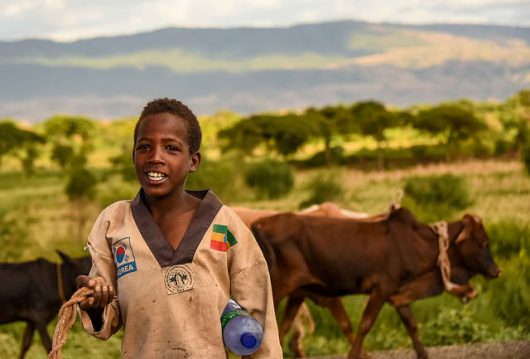
Policy in Ethiopia has overwhelmingly been focused on combating and eliminating poverty in recent years. Many programs in Ethiopia have helped to further the country’s station in terms of poverty reduction. Programs such as the Productive Safety Net Programme (PSNP), the Sustainable Development and Poverty Reduction Program (SDPRP) and the Plan for Accelerated and Sustained Development to End Poverty (PASDEP) have been implemented recently to help Ethiopia meet its short and long-term goals. These goals, known as the United Nations Millennium Development Goals, are to:
- Eradicate extreme poverty and hunger
- Achieve universal primary education
- Gender equality and women empowerment
- Reduce child mortality
- Reduce maternal mortality
- Combat HIV/AIDS, malaria and other diseases
- Ensure environmental sustainability
- Develop a global partnership for development
Correspondingly, according to the United Nations, the Ministry of Finance and Economic Development in Ethiopia report, the World Health Organization and the World Food Programme, Ethiopia has worked towards these goals for several years now and is on track to achieve six of the eight goals listed above so far. The goal of reducing child mortality has already been achieved, and progress is being made on many of the others thanks to the work of the welfare programs in Ethiopia.
Goal One: Eradicate Extreme Poverty and Hunger
Ethiopia is on course to reduce extreme poverty in the country by half. The percentage of people living under the poverty line has decreased from 45.5 percent in 1996 to 29.6 percent in 2010. The welfare programs in Ethiopia have contributed to this progress in different ways. The PSNP has helped families avoid food shortages. The SDPRP focuses on increasing water resource utilization to ensure food security. The PASDEP strengthens human resource development, manages risk and creates employment opportunities.
Goal Two: Achieve Universal Primary Education
The net enrollment ratio for education in grades one through eight has increased from 77.5 percent in 2006 to 85.4 percent in 2011. The attendance ratio has also risen from 30.2 percent in 2001 to 64.5 percent in 2010.
Goal Six: Combat HIV/AIDS, Malaria and Other Diseases
Ethiopia has achieved a greater decrease in disease prevalence than anticipated. In 2010, the prevalence of HIV/AIDS was an estimated 1.5 percent, lower than the Millennium Development Goal of 2.5 percent.
Goal Seven: Ensure Environmental Sustainability
With the Climate Resilient Green Economy strategy, Ethiopia has taken necessary steps towards integrating the principles of sustainable agricultural development. The SDPRP has aided the progress of governance and the transformation of society by improving the framework and provisions enabling environmental and private sector growth. It also focuses on agricultural research, water harvesting and small-scale irrigation.
Goals three and five of the Millennium Development Goals lack progress and are struggling to be realized. Entrenched traditional views of women in the nation are among the obstacles that these programs encounter. However, on the whole, the employment of these programs in Ethiopia has decreased the overall issue of poverty and have moved the country forward in terms of development.
– Lydia Lamm
Photo: Flickr
