5 Important Facts on Development Projects in Guinea
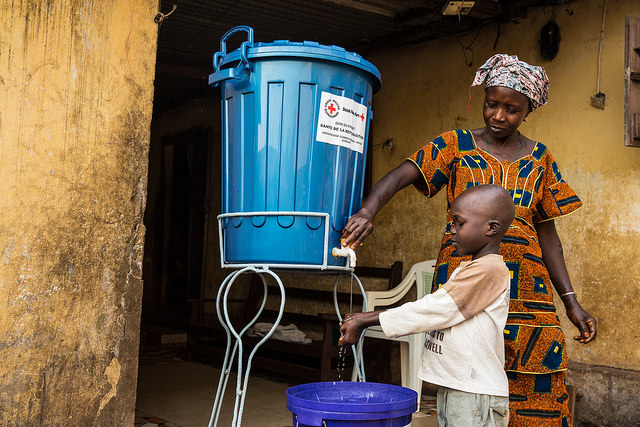 With an abundant range of humanitarian and economic issues, foreign aid and development projects in Guinea impact topics ranging from creating sustainable energy sources to fighting and preventing the spread of the Ebola virus. Here are five projects that have contributed to the improvement of Guinea.
- The installation of the Kaleta hydropower plant in May of 2015
Located on the western African shore and home to over 12.6 million people, Guinea contains a large amount of potential energy through 12 main rivers. With only 26 percent of Guinea’s population living with electricity, the potential for hydroelectric energy to improve the country’s situation is huge. Many development projects in Guinea work toward creating accessible electricity, thereby strengthening the country’s ability to react to emergencies such as Ebola.
According to USAID, in 2015, when Electricité de Guinée (EDG) began its management of the national grid with funding from the World Bank, one huge accomplishment was the installation of the Kaleta hydropower plant. The hydropower plant approximately doubled the output of electricity in Guinea and is beginning to meet the nation’s demand. - China’s response to the Ebola outbreak
The more access to electricity and communication that Guinea has, the more prepared and reactionary it can be to outbreaks like Ebola. According to the World Health Organization (WHO), about 11,310 Ebola-related deaths were confirmed in western African countries like Guinea, Liberia and Sierra Leone. With an insufficient number of medical supplies and personnel, patients were reported dying while waiting in line for treatment.
One of several development projects in Guinea was driven by the Chinese government. The Chinese government gave over $4.5 million to West African countries, including Guinea, to fight the recent Ebola outbreak in 2014. China sent medical supplies as well as personnel to assist Guinea in treating patients. All efforts were directly coordinated with WHO as well as with the United Nations. - StopPalu project
Another disease that wreaks havoc on Guinea’s population is malaria. As a preventable and curable disease, malaria impacts large amounts of Guineans every year following the rainy season, according to USAID. While the disease is treatable, it can be very costly for poor families.
Garambé, a town in Guinea, was plagued with malaria so frequently that people began accepting it as the norm. USAID’s program, the StopPalu project, aimed to strengthen malaria resistance by 50 percent by 2017, and began distributing 3.3 million insecticide-treated bed nets, proven to have drastically reduced the spreading of malaria, in 2013. According to Assietou Diallo, the head nurse at the Garambé health center, the usual 50 malaria patients per month has been reduced to under 10 patients thanks to preventative measures.
StopPalu also has trained about 1,300 volunteer medical personnel to help identify and treat malaria. This measure helps patients in remote villages who cannot travel to medical centers. - Girl-friendly school EAF (Aide et Action)
Another issue that plagues Guinea is the severe lack of education for women and children. About 40 percent of children are out of school, and only about 30 percent of young girls are literate.
One of the reasons that attendance in schools is so low in Guinea is because many children are tasked with taking care of domestic issues and tending to crops. Without a proper education, issues such as poor family planning and the spread of HIV/AIDS rise to the surface of Guinean societies.
Girl-friendly school EAF, which lasted from 2014 to 2017, combated these issues by working to improve educational systems in Guinea. This project aimed to improve education in rural areas by training instructors on better methods of teaching as well as on how to remove obstacles that prevent girls from receiving their education. The Turing Foundation contributed €150,000 to this educational development project. - UNITLIFE
Roughly one out of three children in Guinea are affected by malnutrition and suffer from growth stunts, according to UNICEF. However, several African countries have agreed to a program designed to use micro levies to fund the fight against malnutrition, UNITLIFE, agreeing to use their natural resources to provide nutritious food to hungry children. Adopted in 2015, the levies were predicted to produce $100 million to $200 million in one year.
These development projects in Guinea will pave the way for sustainable prosperity by giving citizens the opportunity to be healthy and well-educated.
– Austin Stoltzfus
Photo: Flickr
