Progress in the Fight Against HIV in Swaziland
 By scaling up testing and treatment efforts in the past years, Swaziland has achieved big successes in the fight against the HIV epidemic. As a new study shows, more than 73 percent of adults living with HIV now have viral load suppression (VLS) and the rate of new infections with HIV in Swaziland has dropped by 44 percent since 2011.
With more than 27 percent of the adult population infected in 2016, Swaziland is the country with the highest HIV prevalence in the world. UNICEF reports that the epidemic’s effects are felt across all aspects of society: the high prevalence of the virus draws financial resources from other priority areas and burdens the country’s health system. It also affects capital accumulation and productivity negatively. Families and communities are disrupted by the virus and the number of orphans and vulnerable children has increased.
In the past years, prevention and treatment to fight the HIV epidemic were scaled up significantly in the small monarchy. The Swazi government received support for these efforts from the U.S. government President’s Emergency Plan for AIDS Relief program (PEPFAR) and the Global Fund to Fight AIDS, Tuberculosis and Malaria.
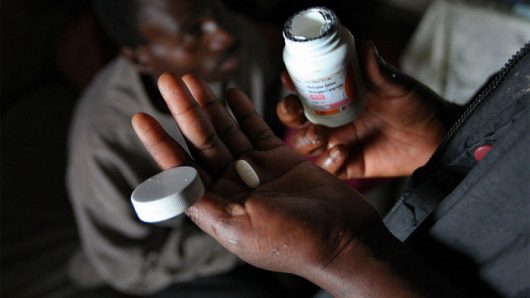
Swaziland’s strategy to contain the further spread of HIV is to dose patients with antiretroviral drugs (ARVs) immediately after they have tested positive, regardless of their health status.
ARVs drive down the HIV level in the blood, therefore reducing the risk of transmission of the virus. The concept of treatment-as-prevention aims to contain the further spread of the HI virus, and is “a major part of the solution to ending the HIV epidemic”, according to the World Health Organisation (WHO). The number of adults with HIV in Swaziland who have their viral load suppressed has doubled in the past five years and is now at more than 73 percent, according to the second Swaziland HIV Incidence Measurement Survey.
PEPFAR director Deborah Birx emphasizes that this method does not eliminate HIV in the country, but it can “contract the epidemic on our way to vaccine and a cure.”
The Swazi Ministry of Health has also developed a plan to encourage boys and men to get circumcised voluntarily. In the past years, an increased number of males opted for circumcision. According to the WHO, there is “compelling evidence” that circumcision lower the risk of female-to-male transmissions by 60 percent.
These up-scaled efforts to fight HIV in Swaziland have come to fruition: compared to 2011, the rate of new infections was cut by 44 percent.
In addition to these successes, the incidence survey also brings light to “key gaps that remain in reaching younger men and women with HIV services,” Birx said. People aged 15 to 24 are lagging behind older age groups; they were found to be less likely to know their status, and of those receiving treatment, a quarter did not suppress their infections.
Not only does the information from the survey offer an opportunity for the Swazi government to improve its efforts further and increase focus on the population groups with the greatest need, but it also adds important scientific evidence to the research about the treatment-as-prevention method.
Sibongile Ndlela-Simelane from the Ministry of Health said, in reaction to the study’s outcomes: “We are very encouraged by this progress. We understand that the battle is not over, and therefore we must maintain the momentum.”
– Lena Riebl
