• Link to X
  • Link to Facebook
  • Link to Instagram
  • Link to TikTok
  • Link to Youtube
  • About
    • About Us
      • President
      • Board of Directors
      • Board of Advisors
      • Financials
      • Our Methodology
      • Success Tracker
      • Contact
  • Act Now
    • 30 Ways to Help
      • Email Congress
      • Call Congress
      • Volunteer
      • Courses & Certificates
      • Be a Donor
    • Internships
      • In-Office Internships
      • Remote Internships
    • Legislation
      • Politics 101
  • The Blog
  • The Podcast
  • Magazine
  • Donate
  • Click to open the search input field Click to open the search input field Search
  • Menu Menu
Blog - Latest News
Children, Global Poverty

The Psychology of Poverty: The Chicken or the Egg
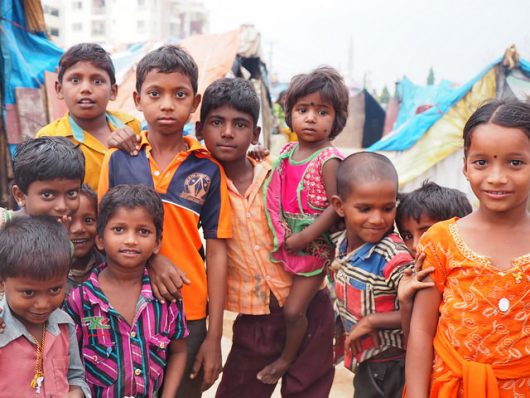

Does poverty lead to a negative state of mind, or does a negative state of mind lead to poverty? Are the two connected at all? What role does psychology play in understanding poverty?

The psychology of poverty is another facet of poverty’s debilitating toll on individuals. An article by the Association for Psychological Science states that people who deal with “stressors” like poverty and discrimination are more susceptible to physical and mental disorders.

Studies have demonstrated that children who grow up poor have lesser amounts of gray matter in their frontal and parietal lobes. Poverty also affects the size of their hippocampus and amygdala, parts of the brain responsible for memory, learning and processing social and emotional information. Furthermore, children from poor families have decreased access to cognitive stimuli. Cognitive stimuli include things such as books, computers and other learning resources. These effects impede a child’s learning ability.

Psychology Problems Linked to Poverty

Living in poverty, especially persistent poverty, increases an individual’s likelihood of suffering from anxiety, depression and attention problems. These are complex symptoms that provide more barriers to escaping poverty.

Martha J. Farah, a University of Pennsylvania professor, says that studies have shown that many people think that those who are poor are poor because they do not try hard enough. She says that neurons should not be blamed, though.

Commenting on Carson’s statement about poverty as a state of mind, Gary Evans, a professor at Cornell University, said that “he’s correct in identifying that there’s this link [between the state of mind and poverty], but I think he’s got the relationships backward.”

The American dream mentality that encourages individuals to pull themselves up by their bootstraps and march onward towards a better life has merit in its promotion of perseverance. Its harms, especially when intermingled with poverty, lie in its tendency to individualize progress. In other words, it may frown upon outside help. Furthermore, it may diminish the complexity of poverty’s hold on households.

The psychology of poverty further demonstrates its complexities. And complex problems rarely have simple solutions. Poverty is a beast that must be tamed collaboratively with individual insight, community collaboration, a national passion and global innovation.

– Rebeca Ilisoi

Photo: Flickr

June 16, 2017
Share this entry
  • Share on Facebook
  • Share on X
  • Share on WhatsApp
  • Share on Pinterest
  • Share on LinkedIn
  • Share on Tumblr
  • Share on Vk
  • Share on Reddit
  • Share by Mail
https://borgenproject.org/wp-content/uploads/borgen-project-logo.svg 0 0 Borgen Project https://borgenproject.org/wp-content/uploads/borgen-project-logo.svg Borgen Project2017-06-16 01:30:302020-04-18 13:09:57The Psychology of Poverty: The Chicken or the Egg

Get Smarter

  • Global Poverty 101
  • Global Poverty… The Good News
  • Global Poverty & U.S. Jobs
  • Global Poverty and National Security
  • Innovative Solutions to Poverty
  • Global Poverty & Aid FAQ’s
Search Search

Take Action

  • Call Congress
  • Email Congress
  • Donate
  • 30 Ways to Help
  • Volunteer Ops
  • Internships
  • Courses & Certificates
  • The Podcast
Borgen Project

“The Borgen Project is an incredible nonprofit organization that is addressing poverty and hunger and working towards ending them.”

-The Huffington Post

Inside The Borgen Project

  • Contact
  • About
  • Financials
  • President
  • Board of Directors
  • Board of Advisors

International Links

  • UK Email Parliament
  • UK Donate
  • Canada Email Parliament

Get Smarter

  • Global Poverty 101
  • Global Poverty… The Good News
  • Global Poverty & U.S. Jobs
  • Global Poverty and National Security
  • Innovative Solutions to Poverty
  • Global Poverty & Aid FAQ’s

Ways to Help

  • Call Congress
  • Email Congress
  • Donate
  • 30 Ways to Help
  • Volunteer Ops
  • Internships
  • Courses & Certificates
  • The Podcast
Link to: 10 Facts About Healthcare in the Philippines Link to: 10 Facts About Healthcare in the Philippines 10 Facts About Healthcare in the Philippines Link to: 10 Facts About H1N1 Link to: 10 Facts About H1N1 10 Facts About H1N1
Scroll to top Scroll to top Scroll to top