5 Ways Poverty Affects the Developing Brain
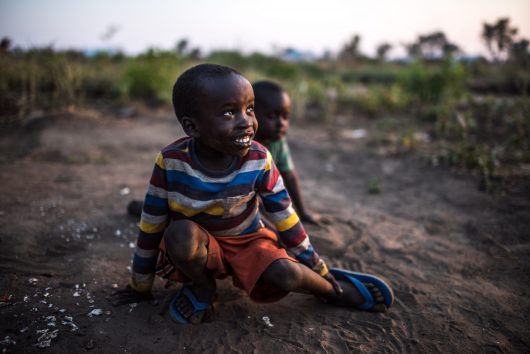
Living in poverty can coincide with numerous social problems — childhood neglect, violence and malnutrition, to name a few. However, there are studies being conducted that show how poverty may potentially affect the developing brain and the cognitive abilities of children. Here are five ways that research is currently showing how poverty affects the brain.
5 Ways Poverty Affects the Developing Brain
- Brain scans of children who grow up in poverty reveal that, overall, their brains develop less gray matter in the frontal and parietal lobe. Serving as the control center for the brain, the frontal lobe manages accessory cognitive functions like planning, focusing, problem-solving, organizing and controlling impulses. The parietal lobe is responsible for processing sensory information. The Institute for Research on Poverty at the University of Wisconsin-Madison reports that less gray matter in these areas, as seen on Magnetic Resonance Imaging (MRI) scans, can impede children’s abilities to learn even before they enter kindergarten. The research demonstrated that throughout brain growth in the first three years of life, children in a lower socioeconomic status (SES) had significantly lower brain volumes than their higher SES counterparts.
- Brains influenced by poverty show a significant decline in cognitive abilities related to memory, reading and language. This is evident through children’s performances on neurocognitive tests as well as brain activity on electroencephalograms (EEG). Research performed by Natalie H. Brito, a postdoctoral research fellow at Columbia University, combined this information along with studies of families to link cognitive abilities to circumstances like neglect, household stress and economic status.
- Similar studies conducted by Elizabeth Sowell from The Children’s Hospital in Los Angeles and Kimberly Noble from Columbia University demonstrate that brains of children in the lowest income brackets (families who make less than $25,000 annually) have six percent less surface area than children from higher income bracket families.
- Developing brains exposed to severe poverty also show smaller hippocampi (the portion of the brain that is central to stress response, memory and learning). Existing research supports the fact that parental caregiving is an important factor in the hippocampal development and childhood wellbeing. Combined with poverty, stressful life experiences result in a lower volume of hippocampi.
- A smaller amygdala is also characteristic of growing brains that have been exposed to poverty. Responsible for emotional processing and social information, a smaller amygdala can result in childhood depression and mood and behavioral problems.
The symptoms of poverty include many factors that can contribute to the modifications of a developing child’s DNA – malnutrition, exposure to violence, lack of cognitive stimulation or less time bonding with parents. Rather than present the solution as “eliminate all poverty,” remedies should focus on policies and programs that seek to mitigate the influence of poverty’s external factors. Research in this area is still developing, as scientists and doctors continue to monitor the neuroscience of poverty as children grow into adults.
Brito agrees when she says, “When I talk to a lot of our participants – always worrying about where their next paycheck comes from, always worrying about if they have enough resources – it takes away time and energy from having meaningful interaction with your child. So in developing countries, making sure that those policies are in place so that parents are available to just interact with their child, just play with their child without worry, really does make a big difference.”
– Tammy Hineline
Photo: Flickr
