10 Ways to Respond to Ethnic Cleansing in South Sudan
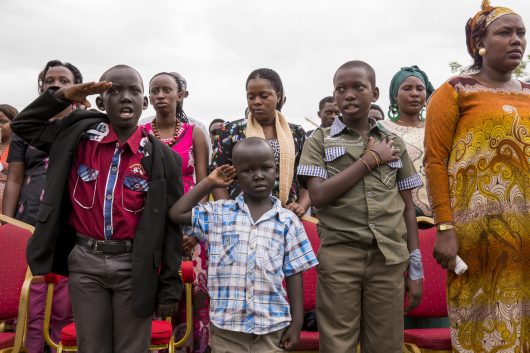
More than two decades after at least 800,000 people were killed in Rwanda, the situation seems poised to repeat itself in the world’s youngest country. More than one million people have fled South Sudan since violence erupted in the country in 2013, creating the largest mass exodus of any Central African conflict since the Rwandan genocide. In light of a new U.N. declaration that the country is on the brink of disaster and that ethnic cleansing is under way, it is imperative that the international community responds differently than it did in 1994. Here are 10 ways that the international community — from leaders to citizens — can respond to ethnic cleansing in South Sudan.
- Impose targeted sanctions and an arms embargo
The United States has pushed for sanctions and an arms embargo against South Sudan, but the U.N. vote on such measures has been pushed back following opposition from Russia, China and others. However, this measure is imperative as it is the simplest and most effective way for the international community to curb ethnic cleansing in South Sudan. - Establish a death toll
Ivan Šimonović, the U.N. Assistant Secretary-General for Human Rights, stressed the importance of a death toll in 2014. He said public information had the power to “deter continued violations of human rights” and keep communities informed. “Only reliable reporting can help them to reconcile, knowing that both sides have been involved as perpetrators as well as victims,” he said. - Deploy regional protection force
The U.N. approved the deployment of a regional protection force in August, and South Sudan finally agreed to the deployment in late November. In an editorial for Al Jazeera, three South Sudanese writers stressed the importance of this force, and suggested that its powers included “monitoring, disarming and demobilizing any armed group targeting civilians”. - Establish a hybrid court
Human rights organizations have expressed concerns that the focus on ethnic cleansing in South Sudan will allow perpetrators of crimes such as destruction of property, rape and murder to go unpunished. Amnesty International has urged the African Union Commission and the South Sudanese government to establish a hybrid court so that all crimes are appropriately prosecuted. - Ensure that new tools and structures put in place to prevent genocide are followed
World leaders must put structures in place to ensure an effective response to genocide. In the U.S., President Obama had the Atrocities Prevention Board created to facilitate a multilateral response to atrocities and genocide globally. But it is the job of citizens to ensure that these structures function as intended. - Establish an early warning system
According to Dr. Gregory H. Stanton, president of Genocide Watch, an early warning system will help prevent further genocides and ensure that countries are able to respond quickly and effectively when a nation is showing warning signs characteristic of genocide. - Confront Power Vacuum
Experts believe that the perceived power vacuum that will be left after president Obama leaves office could be a trigger for ethnic cleansing in South Sudan. It is the job of the new administration to confront this vacuum and ensure that the security of human rights remains a global priority. - Keep pressure on political leaders to respond to the crisis in South Sudan
Congressional leaders must continue to fight to hold human rights abusers to account, and promote peace, by passing bills like the recently-approved Global Magnitsky Human Rights Accountability Act. - Members of the U.N. Security Council- Prioritize genocide prevention in South Sudan
The United Nations must continue to monitor and prioritize the situation in South Sudan, offering aid, guidance, and resolutions in pursuit of peace. - Media- Prioritize genocide prevention in South Sudan
- In 1994, the media failed to give the Rwandan genocide adequate coverage. The media must not make that same mistake by failing to report on the situation in South Sudan.
– Eva Kennedy
Photo: Flickr
