• Link to X
  • Link to Facebook
  • Link to Instagram
  • Link to TikTok
  • Link to Youtube
  • About
    • About Us
      • President
      • Board of Directors
      • Board of Advisors
      • Financials
      • Our Methodology
      • Success Tracker
      • Contact
  • Act Now
    • 30 Ways to Help
      • Email Congress
      • Call Congress
      • Volunteer
      • Courses & Certificates
      • Be a Donor
    • Internships
      • In-Office Internships
      • Remote Internships
    • Legislation
      • Politics 101
  • The Blog
  • The Podcast
  • Magazine
  • Donate
  • Click to open the search input field Click to open the search input field Search
  • Menu Menu
Blog - Latest News
Global Poverty

The Role of Unofficial Diplomacy in Peacekeeping
The Role of Unofficial Diplomacy in Peacekeeping
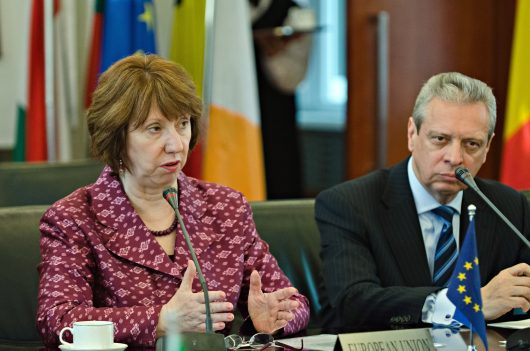
The role of unofficial diplomacy, also known as Track II diplomacy, became increasingly helpful for state crafting. This method of diplomacy started in the U.S. by a group of academics, state department bureaucrats and public intellectuals during the 1970s.

The methods grew out of the conflicts of the Cold War including Soviet-U.S. spy scandals and the Arab-Israeli conflict. By the 1980s and 1990s, many individuals and public institutions were taking part of unofficial diplomacy. Currently, Track II diplomacy is taught in several graduate programs.

The method encourages negotiators and private individuals to meet in an informal and unofficial setting to make common ground where normal diplomatic negotiators can’t.

Governments started worrying that Track II diplomacy is taking over freelance diplomacy but scholars insist that unconventional problems require unconventional solutions. Track II diplomacy efforts help to bring solutions to problems such as in Kashmir, China and North Korea.

An example where Track II diplomacy is used to resolve conflict is in India. For decades, India and Pakistan are fighting for the disputed Kashmir. The tension could escalate again into a conflict between the two countries.

In order to prevent such a situation, Track II diplomacy could bring more stakeholders to the negotiations table. According to the Diplomat, a genuine people-to-people approach would only help reach long-term peace among the two nuclear countries.

In order for unofficial diplomacy process to succeed in the conflict of Kashmir, Track II efforts should include groups who are not necessarily on either side. This includes diverse media and not just local media of both sides.

Also, diplomacy efforts should be conducted in local areas of the conflicts. This includes suburban towns that are not major cities. Agendas for prospective agreements should be open and not limited to biased goals.

A more practical example of the use of unofficial diplomacy is the resolved disputes between the U.S. and Iran. The tensions were high after the Iranian revolution and the hostage crisis.

However, during the time from 1997 to 2005, Track II diplomacy efforts were taken to provide space for productive talk. These talks provided ground to discuss topics that government officials were not ready or willing to discuss. This was unique since the governments were not willing to discuss many issues.

Through implementing frequent use, the role of unofficial diplomacy will aid in the ability to civilly resolve disputes.

– Noman Ahmed

Photo: Flickr

November 10, 2016
Share this entry
  • Share on Facebook
  • Share on X
  • Share on WhatsApp
  • Share on Pinterest
  • Share on LinkedIn
  • Share on Tumblr
  • Share on Vk
  • Share on Reddit
  • Share by Mail
https://borgenproject.org/wp-content/uploads/borgen-project-logo.svg 0 0 Borgen Project https://borgenproject.org/wp-content/uploads/borgen-project-logo.svg Borgen Project2016-11-10 05:51:192024-12-13 17:55:57The Role of Unofficial Diplomacy in Peacekeeping

Get Smarter

  • Global Poverty 101
  • Global Poverty… The Good News
  • Global Poverty & U.S. Jobs
  • Global Poverty and National Security
  • Innovative Solutions to Poverty
  • Global Poverty & Aid FAQ’s
Search Search

Take Action

  • Call Congress
  • Email Congress
  • Donate
  • 30 Ways to Help
  • Volunteer Ops
  • Internships
  • Courses & Certificates
  • The Podcast
Borgen Project

“The Borgen Project is an incredible nonprofit organization that is addressing poverty and hunger and working towards ending them.”

-The Huffington Post

Inside The Borgen Project

  • Contact
  • About
  • Financials
  • President
  • Board of Directors
  • Board of Advisors

International Links

  • UK Email Parliament
  • UK Donate
  • Canada Email Parliament

Get Smarter

  • Global Poverty 101
  • Global Poverty… The Good News
  • Global Poverty & U.S. Jobs
  • Global Poverty and National Security
  • Innovative Solutions to Poverty
  • Global Poverty & Aid FAQ’s

Ways to Help

  • Call Congress
  • Email Congress
  • Donate
  • 30 Ways to Help
  • Volunteer Ops
  • Internships
  • Courses & Certificates
  • The Podcast
Link to: António Guterres Named U.N. Secretary-General Link to: António Guterres Named U.N. Secretary-General António Guterres Named U.N. Secretary-General Link to: Poverty Reduction Through Entrepreneurship Link to: Poverty Reduction Through Entrepreneurship Poverty Reduction Through Entrepreneurship
Scroll to top Scroll to top Scroll to top