• Link to X
  • Link to Facebook
  • Link to Instagram
  • Link to TikTok
  • Link to Youtube
  • About
    • About Us
      • President
      • Board of Directors
      • Board of Advisors
      • Financials
      • Our Methodology
      • Success Tracker
      • Contact
  • Act Now
    • 30 Ways to Help
      • Email Congress
      • Call Congress
      • Volunteer
      • Courses & Certificates
      • Be a Donor
    • Internships
      • In-Office Internships
      • Remote Internships
    • Legislation
      • Politics 101
  • The Blog
  • The Podcast
  • Magazine
  • Donate
  • Click to open the search input field Click to open the search input field Search
  • Menu Menu
Blog - Latest News
Global Poverty

Islamic Microfinance: Boldly Going Where No Credit Has Gone Before
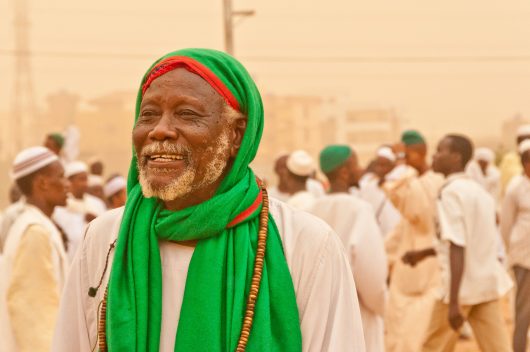
Islamic Microfinance
While poverty is a global phenomenon, the Muslim world is disproportionately affected. According to Iran’s Mehr News Agency, 46 percent of the world’s poor live in countries where Islam is the dominant religion. Since Islamic microfinance responds to the needs and preferences of Muslims, it can play a vital role in reducing poverty in the Muslim world.

Many Muslims avoid traditional finance because Islam prohibits usury, also known as Riba. While usury generally refers to unreasonably high interest rates that unfairly benefit lenders, some argue that the term covers any interest charged on loans.

This aversion towards non-concessional loans is what Islamic financial products can circumvent. At this year’s International Conference on Best Practices in Rural and Agricultural Finance in Kigali, Rwanda, Muhammad Zubair Mughal, CEO of the Al-Huda Center of Islamic Banking and Economics (CIBE), highlighted the utility of Islamic microfinance in agriculture and manufacturing.

“Islamic finance has specialized financial solutions for each segment of rural poverty,” according to Mughal. Riba-free contracts, such as Bai Salam and Modarabas, can provide funding to farmers to purchase seed and equipment, Mughal said.

Non-Muslim majority countries can also benefit from Islamic microfinance. Uganda, where only 14 percent of the population is Muslim, may begin making small loans compliant with Islamic law in 2017, according to a Bloomberg article from July 25, 2016. The loans form part of an initiative by Uganda’s Microfinance Support Center to increase employment and income in the country’s rural regions.

To alleviate poverty, Muslims have also begun raising money in other innovative ways. August saw the launch of WaqfWorld, the world’s first Islamic crowdfunding platform. The organization will use new technology to improve the flow of waqfs, donations of money or property in Islamic law, to charities with the goal of promoting community and economic development.

“Financial inclusion” is the central theme of the 6th Global Islamic Microfinance Forum, which is taking place in Nairobi, Kenya from Nov. 8 to 9. The poverty-reducing potential of Islamic financial products cannot be understated, and one of its primary advantages is that it benefits those excluded from traditional aid on account of their religion.

– Philip Katz

Photo: Flickr

October 24, 2016
Share this entry
  • Share on Facebook
  • Share on X
  • Share on WhatsApp
  • Share on Pinterest
  • Share on LinkedIn
  • Share on Tumblr
  • Share on Vk
  • Share on Reddit
  • Share by Mail
https://borgenproject.org/wp-content/uploads/borgen-project-logo.svg 0 0 Borgen Project https://borgenproject.org/wp-content/uploads/borgen-project-logo.svg Borgen Project2016-10-24 01:30:462020-05-29 12:33:59Islamic Microfinance: Boldly Going Where No Credit Has Gone Before

Get Smarter

  • Global Poverty 101
  • Global Poverty… The Good News
  • Global Poverty & U.S. Jobs
  • Global Poverty and National Security
  • Innovative Solutions to Poverty
  • Global Poverty & Aid FAQ’s
Search Search

Take Action

  • Call Congress
  • Email Congress
  • Donate
  • 30 Ways to Help
  • Volunteer Ops
  • Internships
  • Courses & Certificates
  • The Podcast
Borgen Project

“The Borgen Project is an incredible nonprofit organization that is addressing poverty and hunger and working towards ending them.”

-The Huffington Post

Inside The Borgen Project

  • Contact
  • About
  • Financials
  • President
  • Board of Directors
  • Board of Advisors

International Links

  • UK Email Parliament
  • UK Donate
  • Canada Email Parliament

Get Smarter

  • Global Poverty 101
  • Global Poverty… The Good News
  • Global Poverty & U.S. Jobs
  • Global Poverty and National Security
  • Innovative Solutions to Poverty
  • Global Poverty & Aid FAQ’s

Ways to Help

  • Call Congress
  • Email Congress
  • Donate
  • 30 Ways to Help
  • Volunteer Ops
  • Internships
  • Courses & Certificates
  • The Podcast
Link to: Jill Stein Equates NAFTA to Global Poverty Link to: Jill Stein Equates NAFTA to Global Poverty Jill Stein Equates NAFTA to Global Poverty Link to: 10 Facts About Poverty in Latin America Link to: 10 Facts About Poverty in Latin America 10 Facts About Poverty in Latin America
Scroll to top Scroll to top Scroll to top