How Can Companies Improve Global Education?
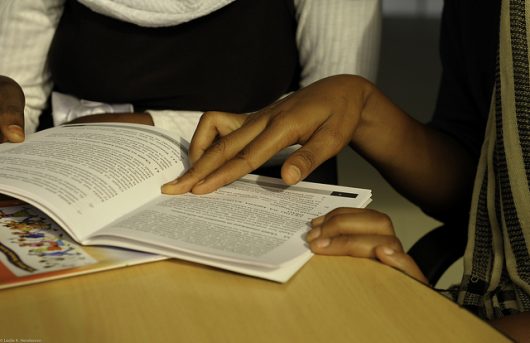
Many CEOs don’t realize that helping improve global education is an investment in the future — not in an abstract future, but in their future. The more educated a country’s population is, the higher its gross domestic product (GDP) usually becomes.
With increased capital, more people can buy more products: someone living on less than a dollar a day will likely not buy Colgate toothpaste or Axe body wash, for example, because that money is reserved for food.
So how can companies help improve global education?
Justin W. van Fleet, director of the International Commission on Financing Global Education Opportunity, lists five strategies businesses can use when helping improve global education. Two important approaches are discussed below.
Prioritize Global Education
Companies can’t make a difference if they don’t prioritize doing so. Recognizing that alleviating global poverty — whether through health concerns or through education concerns — is investing in businesses’ futures, companies like Coca Cola have already made global poverty concerns a priority.
Coca Cola decided to invest in Tanzania in 1952, and the company has reaped benefits ever since. Coca Cola now has a presence in a previously untapped community.
“Whatever has to do with improvement of the Tanzania community it also touches improvement of, and welfare of, our company,” said a Coca-Cola Kwanza manager.
Education is integral to a healthy community, so businesses that prioritize developing countries’ education prioritize their own futures.
Collaborate with Governments
Governments are the largest sources of funding for education in developing countries. If businesses partner with government programs, then businesses may receive money for improving global education. In addition, not all funding efforts have to be out of pocket for companies.
Businesses and governments can work together in other ways, too. In 2006, for example, the Hess oil company invested $20 million in an Equatorial Guinea national educational initiative. Equatorial Guinea’s government matched that investment.
According to Brookings, “It is estimated that the program has reached roughly half of the students enrolled in primary school in Equatorial Guinea.”
Hopefully, more companies will adopt these strategies and others to improve global education in the future.
– Tyler New
Photo: Flickr
