• Link to X
  • Link to Facebook
  • Link to Instagram
  • Link to TikTok
  • Link to Youtube
  • About
    • About Us
      • President
      • Board of Directors
      • Board of Advisors
      • Financials
      • Our Methodology
      • Success Tracker
      • Contact
  • Act Now
    • 30 Ways to Help
      • Email Congress
      • Call Congress
      • Volunteer
      • Courses & Certificates
      • Be a Donor
    • Internships
      • In-Office Internships
      • Remote Internships
    • Legislation
      • Politics 101
  • The Blog
  • The Podcast
  • Magazine
  • Donate
  • Click to open the search input field Click to open the search input field Search
  • Menu Menu
Blog - Latest News
Disease, Global Health, Global Poverty

Smartphones: The Future of Disease Detection and Diagnosis
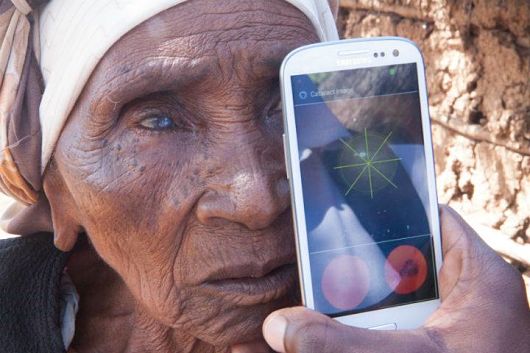
Smartphones_Healthcare Disease DetectionDr. Aydogan Ozcan is revolutionizing disease detection and diagnosis. The electrical engineer and bioengineer from the University of California, Los Angeles has developed a microscope that utilizes smartphones.

Smartphones seem a simple alternative to expensive lab equipment. “We have close to six billion cell phone subscribers today,” Ozcan said on the timeliness of his development. Of these users, 70 percent come from developing countries that have a greater need for this microscope.

The system weighs about 200 grams and is able to identify particles as small as 100 nanometers. According to Charles Choi of Scientific American, the microscope can also detect relatively large viruses like HIV and harmful bacteria present in food and water.

The device is easy to use, which means more people can use the smartphone microscope for their benefit. The portability and cost-effectiveness of the device may prove invaluable in remote areas without easy access to medical facilities or trained personnel.

How exactly does the microscope function?

Instead of lenses, this device creates images electronically, according to a New York Times article by Anne Eisenberg. Choi explains that molecules known as fluorophores “[that] fluoresce under certain wavelengths of light” identify and locate the target particles to which they attach.

A blue laser shined onto the particles excites them, creating a hologram from which information can be extracted. The hologram may prove quicker than microscopes in disease detection and diagnosis, according to Eisenberg.

This speed and effectiveness could play a crucial role in future research by, for instance, facilitating the screening of entire regions. This could help gather information on how diseases spread and subsequently inform future responses, Ozcan said.

Ozcan continues to develop his research for the betterment of global healthcare. Holomic LLC, a start-up he founded, “aims to commercialize the computational microscopy.” Commercialization may give his and similar innovations a greater reach and applicability.

– Jocelyn Lim

Sources: Anna Eisenberg, Charles Q. Choi, Holomic, National Geographic, Biophototonics
Picture: Google Images

January 18, 2016
Share this entry
  • Share on Facebook
  • Share on X
  • Share on WhatsApp
  • Share on Pinterest
  • Share on LinkedIn
  • Share on Tumblr
  • Share on Vk
  • Share on Reddit
  • Share by Mail
https://borgenproject.org/wp-content/uploads/borgen-project-logo.svg 0 0 Borgen Project https://borgenproject.org/wp-content/uploads/borgen-project-logo.svg Borgen Project2016-01-18 01:30:072024-12-13 18:05:33Smartphones: The Future of Disease Detection and Diagnosis

Get Smarter

  • Global Poverty 101
  • Global Poverty… The Good News
  • Global Poverty & U.S. Jobs
  • Global Poverty and National Security
  • Innovative Solutions to Poverty
  • Global Poverty & Aid FAQ’s
Search Search

Take Action

  • Call Congress
  • Email Congress
  • Donate
  • 30 Ways to Help
  • Volunteer Ops
  • Internships
  • Courses & Certificates
  • The Podcast
Borgen Project

“The Borgen Project is an incredible nonprofit organization that is addressing poverty and hunger and working towards ending them.”

-The Huffington Post

Inside The Borgen Project

  • Contact
  • About
  • Financials
  • President
  • Board of Directors
  • Board of Advisors

International Links

  • UK Email Parliament
  • UK Donate
  • Canada Email Parliament

Get Smarter

  • Global Poverty 101
  • Global Poverty… The Good News
  • Global Poverty & U.S. Jobs
  • Global Poverty and National Security
  • Innovative Solutions to Poverty
  • Global Poverty & Aid FAQ’s

Ways to Help

  • Call Congress
  • Email Congress
  • Donate
  • 30 Ways to Help
  • Volunteer Ops
  • Internships
  • Courses & Certificates
  • The Podcast
Link to: The “Three Delays” at the Root of Maternal Mortality Link to: The “Three Delays” at the Root of Maternal Mortality The “Three Delays” at the Root of Maternal Mortality Link to: “Orange the World”: Calls for an End to Violence Against Women Link to: “Orange the World”: Calls for an End to Violence Against Women “Orange the World”: Calls for an End to Violence Against Women
Scroll to top Scroll to top Scroll to top