• Link to X
  • Link to Facebook
  • Link to Instagram
  • Link to TikTok
  • Link to Youtube
  • About
    • About Us
      • President
      • Board of Directors
      • Board of Advisors
      • Financials
      • Our Methodology
      • Success Tracker
      • Contact
  • Act Now
    • 30 Ways to Help
      • Email Congress
      • Call Congress
      • Volunteer
      • Courses & Certificates
      • Be a Donor
    • Internships
      • In-Office Internships
      • Remote Internships
    • Legislation
      • Politics 101
  • The Blog
  • The Podcast
  • Magazine
  • Donate
  • Click to open the search input field Click to open the search input field Search
  • Menu Menu
Blog - Latest News
Global Poverty, Poverty Reduction

Textile Traditions: How the Handloom Can Fight Poverty in India
Handloom
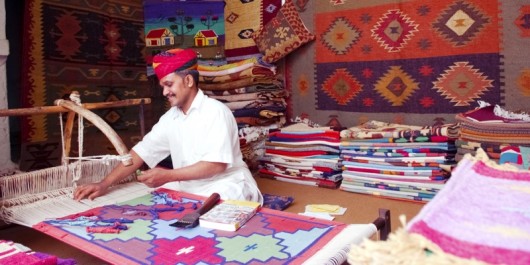
In early August of this year, Indian Prime Minister Modi launched the first National Handloom Day in Chennai, championing traditional textiles as a tool to fight poverty in India.

Last year in October, Modi called upon the film industry to highlight textile products, asking them to include at least one product in their films. According to the government, textile sales rose nearly 60 percent as a result of the added exposure.

The Indian government has also recently announced that it is establishing a policy framework to additionally promote handloom products in the e-marketplace, aiming to popularize the “India Handloom” as a brand.

Handmade textiles are still commonly used for special occasions such as weddings, but Modi says popularizing the textiles as fashion pieces could be a real boost to the Indian economy.

“People wear handloom clothes on social occasions. We need to popularize this among youth. This will give much-needed boost to the handloom sector,” Modi said of the e-commerce avenue.

A number of famous handloom products were born in India, like the Kani shawl of Kashmir and the sarees of Tamil Nadu. According to the prime minister, if the use of handloom products was raised just 5%, turnover would increase by 33%.

In total, the textile industry accounts for 27% of the foreign exchange from exports and makes up three percent of India’s total GDP. The textile sector employs around 35 million people or about 21% of total employment in India. The promotion of high quality, handmade products represents a large, relatively untapped yet significant source of income for the country.

Grassroots efforts have also sprung up to “give handlooms some love.” The hashtag #ILoveHandlooms has been started by GoCoop, India’s first online marketplace for weavers and artisans. The group invites people to share their love for handloom products on social media by posting photos of their favorite items.

– Gina Lehner

Sources: The Hindu, India Times, Business-Standard
Photo: Your Story

October 5, 2015
Share this entry
  • Share on Facebook
  • Share on X
  • Share on WhatsApp
  • Share on Pinterest
  • Share on LinkedIn
  • Share on Tumblr
  • Share on Vk
  • Share on Reddit
  • Share by Mail
https://borgenproject.org/wp-content/uploads/borgen-project-logo.svg 0 0 Borgen Project https://borgenproject.org/wp-content/uploads/borgen-project-logo.svg Borgen Project2015-10-05 01:30:402024-12-13 18:05:02Textile Traditions: How the Handloom Can Fight Poverty in India

Get Smarter

  • Global Poverty 101
  • Global Poverty… The Good News
  • Global Poverty & U.S. Jobs
  • Global Poverty and National Security
  • Innovative Solutions to Poverty
  • Global Poverty & Aid FAQ’s
Search Search

Take Action

  • Call Congress
  • Email Congress
  • Donate
  • 30 Ways to Help
  • Volunteer Ops
  • Internships
  • Courses & Certificates
  • The Podcast
Borgen Project

“The Borgen Project is an incredible nonprofit organization that is addressing poverty and hunger and working towards ending them.”

-The Huffington Post

Inside The Borgen Project

  • Contact
  • About
  • Financials
  • President
  • Board of Directors
  • Board of Advisors

International Links

  • UK Email Parliament
  • UK Donate
  • Canada Email Parliament

Get Smarter

  • Global Poverty 101
  • Global Poverty… The Good News
  • Global Poverty & U.S. Jobs
  • Global Poverty and National Security
  • Innovative Solutions to Poverty
  • Global Poverty & Aid FAQ’s

Ways to Help

  • Call Congress
  • Email Congress
  • Donate
  • 30 Ways to Help
  • Volunteer Ops
  • Internships
  • Courses & Certificates
  • The Podcast
Link to: The Philippines Education System Improves Link to: The Philippines Education System Improves The Philippines Education System Improves Link to: Internet Access: Ending Extreme Poverty Link to: Internet Access: Ending Extreme Poverty Internet Access: Ending Extreme Poverty
Scroll to top Scroll to top Scroll to top